How to Get Rid of Aphids Naturally: 7 Methods That Actually Work
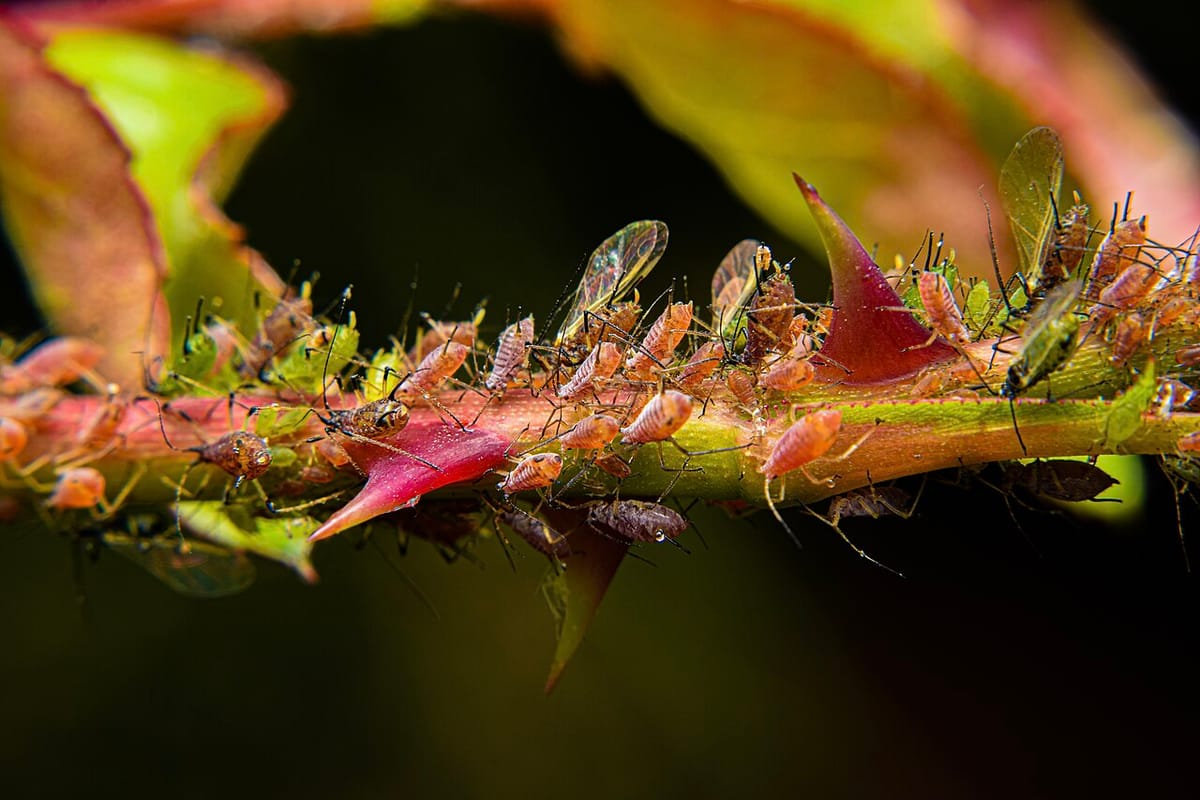
Every gardener meets aphids eventually, usually on the newest, tenderest growth of a favorite plant: a huddle of soft-bodied specks — green, black, gray, or pink depending on species — packed stem-to-stem along a shoot tip or the underside of a leaf, drinking sap through needle mouths. A small colony is barely worth a shrug. The trouble is that aphids don’t stay small: females give birth to live young without mating, those daughters are born already pregnant, and a dozen aphids in May is a thousand by June.
The good news is that aphids sit at the very bottom of the pest toughness scale. They’re slow, soft, flightless in most generations, and beloved prey for half the beneficial insects in your garden. That’s why reaching for a broad-spectrum insecticide is not just unnecessary but counterproductive — it kills the free workforce that was handling the problem. Below are seven methods that work, deliberately ordered from gentlest to strongest. Start at the top; most infestations never require the bottom of the list.
First, confirm it’s aphids
Thirty seconds of identification prevents wasted effort:
- The insects: 1–3 mm, pear-shaped, soft-bodied, in crowded clusters on new growth, buds, and leaf undersides. Look for two tiny tailpipe-like tubes (cornicles) at the rear — aphids’ signature feature.
- The damage: curled, puckered, or yellowing new leaves; stunted shoot tips; deformed buds.
- The residue: shiny, sticky “honeydew” coating leaves below the colony, sometimes followed by an ugly black film (sooty mold, which grows on the honeydew, not the plant tissue).
- The company: ants marching to and from the colony — more on those below, because they change your strategy.
Cast-off white skins stuck in the honeydew are molted shells, often mistaken for a second infestation. And if you spot a fat brown aphid frozen in place with a neat round hole in its back — excellent news. That’s an aphid “mummy,” the exit wound of a parasitic wasp, and it means nature’s cavalry has already arrived.
Method 1: A hard blast of water (start here, seriously)
It sounds too simple to be advice, which is why people skip past it to sprays. Don’t. A firm jet of water from the hose knocks aphids off the plant, and aphids are terrible at reboarding — most knocked-down individuals die on the ground or fall to predators before relocating the stem. University extension programs list water sprays among the first-line treatments for good reason.
How to do it properly:
- Use a hose nozzle with a firm (not bark-stripping) jet.
- Hit the colony directly — which means aiming up into leaf undersides and along stem tips, not politely watering the top of the plant.
- Repeat every two or three days for a week or two. You’re not trying for a knockout; you’re suppressing the colony’s exponential math until predators and plant growth outpace it.
- Spray in the morning so foliage dries by evening.
On sturdy plants — roses, fruit trees, mature vegetables — this alone resolves a majority of early infestations. On delicate seedlings, use a gentler spray bottle version or move to method 2.
Method 2: Fingers (the two-second treatment)
For the small colony you catch early — one curled leaf, one crowded rose bud — simply crush the cluster between gloved finger and thumb, or pinch off the single worst shoot tip and drop it in soapy water. Unpoetic, immediate, and 100% selective: no beneficial insect is harmed. Make it part of your regular garden walk-through; the whole treatment happens between noticing and finishing your coffee.
Alt: Gardener crushing a small aphid colony on a shoot tip between gloved fingers
Caption: Caught early, an aphid problem is a ten-second problem.
Method 3: Insecticidal soap (the workhorse)
When water and fingers aren’t keeping pace, insecticidal soap is the standard next step. It kills soft-bodied insects on contact by disrupting the waxy coating they need to retain moisture — then dries and becomes inert, leaving no residue that harms bees, ladybugs, or you.
The rules that make it work:
- Contact is everything. Soap only kills what it wets. Coat the colony — especially leaf undersides — until dripping. A misted plant with dry aphids under the leaves is a placebo.
- Repeat. Soap has zero residual action, and eggs and missed aphids reboot the colony. Spray every 4–7 days, two or three rounds.
- Time it kindly: early morning or evening, never on drought-stressed plants or in blazing heat, which risks leaf burn.
- Test sensitive plants (ferns, some tomatoes’ new growth, anything fuzzy-leaved) on one leaf and wait two days.
On the DIY question: yes, mild soap solutions can be mixed at home (about a tablespoon of pure soap per quart of water), but modern dish detergents are degreasers with additives that burn foliage unpredictably. A bottle of commercial insecticidal soap costs about as much as a sandwich and takes the variability out. Either way, what you’re buying is the technique, not the chemical: thorough, repeated contact.
Method 4: Recruit the professionals (beneficial insects)
A single ladybug larva — a spiky black-and-orange creature that looks nothing like its parent — eats dozens of aphids a day. Hoverfly larvae, lacewing larvae, and tiny parasitic wasps (the mummy-makers from earlier) do comparable work around the clock. In an unsprayed garden, these are not occasional visitors; they are a standing army that just needs feeding and housing.
How to hire them:
- Plant small-flowered nectar plants among and around your crops: sweet alyssum, dill, cilantro left to bloom, fennel, yarrow, cosmos. Adult predators eat nectar and pollen even when their larvae eat aphids; flowers are the signing bonus.
- Stop spraying broadly. Every broad-spectrum treatment — including organic ones like pyrethrin — resets your predator population to zero while aphids, with their absurd reproduction, recover first. This is how gardens end up dependent on spraying.
- Tolerate small colonies. A few aphids are livestock for your ladybugs. A garden with zero pests supports zero predators, and is one aphid flight away from an unopposed outbreak.
On buying ladybugs: mostly skip it. Commercially sold adults are typically wild-caught, sometimes parasitized, and famously fly away within days. If you want to purchase help, lacewing eggs establish better — but flowers and restraint outperform both for free.
Method 5: Break up the ant protection racket
Here’s the strategy most aphid articles miss. Many aphid colonies are actively farmed by ants, which harvest the sugary honeydew aphids excrete and, in return, bodyguard them — physically driving off ladybugs, lacewings, and parasitic wasps. Research and extension guidance agree: where ants patrol, natural enemies fail.
Check the stems below any persistent colony. If there’s an ant highway:
- Band the stem or trunk with a sticky barrier (fabric tree wrap coated with a horticultural sticky product — applied over wrap, not bare bark, on trees and roses).
- Prune bridges — any branch, weed, or stake touching a fence or wall becomes an ant on-ramp around your barrier.
- Then simply wait. With the bodyguards gone, predators typically collapse the aphid colony within a couple of weeks, no spraying required.
It’s the closest thing pest control has to a judo move: you don’t fight the aphids at all — you fire their security team.
Method 6: Neem and horticultural oils (the step up)
For persistent or repeated infestations, oils add a heavier tool that still stays in the organic kit. Horticultural oil smothers aphids (and their eggs — useful on fruit trees in late winter); neem oil both smothers and, absorbed by the plant surface, disrupts feeding and reproduction of pests that ingest it.
Use like soap — thorough contact, repeat applications — with extra cautions: never spray oils in heat above about 90°F or on stressed plants, keep them away from open blooms to protect bees (spray at dusk after pollinators retire), and follow label rates exactly. “Natural” is not “unlimited”; the label is the instruction manual, not a suggestion.
Method 7: Prevention — the method that replaces the others
Gardens that rarely have aphid problems (everyone has aphids) share habits:
- They don’t over-fertilize. Nitrogen-pushed plants produce exactly the soft, sappy growth aphids exist to drink. Feeding modestly — compost-first, as in our composting guide — grows tougher tissue.
- They inspect new growth weekly. Aphid math punishes delay; the colony you catch in week one is a finger-squish, in week four a campaign. Tomato tips, rose buds, basil crowns, and kale undersides are the usual first landing zones.
- They keep flowers among the vegetables — the predator payroll from method 4.
- They use row cover on vulnerable seedlings, excluding aphids (and worse) from young brassicas and greens until plants are big enough to shrug.
- They quarantine new plants — indoors and out, a week of separation catches hitchhikers before they meet your collection.
The escalation path, on one page
- See aphids → confirm, check for ants, look for mummies and predators already working.
- Small colony → crush or prune it out today.
- Established colony, sturdy plant → water blasts every 2–3 days.
- Ants present → sticky-band them out of the picture and let predators finish it.
- Still growing → insecticidal soap, thorough and repeated.
- Persistent/large-scale → add neem or horticultural oil, pollinator-safe timing.
- All season, every season → modest feeding, weekly inspection, flowers everywhere.
Aphids are the training-wheels pest: visible, slow, fragile, and generous with second chances. Handle them with the light touch they deserve, and you’ll have practiced the exact instincts — observe first, escalate gently, protect your allies — that manage every harder problem the garden will eventually send you.
Frequently asked questions
What is the fastest way to get rid of aphids?
A hard blast of water from the hose, today, repeated every couple of days for a week. Aphids are weak crawlers — most that get knocked off never find their way back, and repeated blasts break the colony's growth curve. For heavier infestations, follow the water with insecticidal soap sprayed directly on the survivors.
Does dish soap spray kill aphids?
Soapy water does kill aphids on contact by disrupting their outer coating. But dish detergents contain degreasers and additives that can burn leaves, and they vary batch to batch. Commercial insecticidal soap costs little, is formulated for plants, and removes the guesswork — if you do improvise, use a mild pure soap at about 1 tablespoon per quart, test one leaf, and wait 48 hours.
Do aphids bite people or harm pets?
No. Aphids feed only on plant sap through a needle-like mouthpart that can't pierce skin. They don't bite, sting, or carry anything that affects humans or pets — the damage they do is strictly botanical.
Why are there ants all over my aphid-infested plant?
The ants are farming them. Aphids excrete a sugary waste called honeydew that ants harvest, and in exchange ants aggressively defend aphids from ladybugs and other predators. If you see ants patrolling a colony, controlling the ants — usually with a sticky barrier band on the stem or trunk — is often the single most effective aphid move you can make.
Should I buy ladybugs to release in my garden?
Usually not. Most purchased ladybugs are wild-harvested, may carry parasites, and — the practical problem — the majority fly away within days of release. A better investment is planting the small-flowered plants (sweet alyssum, dill, cilantro, yarrow) that attract wild ladybugs, hoverflies, and lacewings, and then not spraying broadly so they stay.
How do I treat aphids on indoor plants?
Isolate the plant first — aphids spread between houseplants readily. Then wash the colony off in the sink or shower, and follow with insecticidal soap, repeating weekly until clear. Indoors there are no natural predators to help, so persistence matters more; check neighboring plants weekly for a month.
Will aphids kill my plant?
Rarely, on an established plant — healthy plants outgrow moderate aphid pressure, which is why the first response can afford to be gentle. The real risks are to seedlings and young transplants, which small colonies can genuinely stunt, and to certain crops where aphids transmit plant viruses. Both argue for early detection, not panic spraying.