How to Grow Basil Indoors and Out (and Keep It Producing All Season)
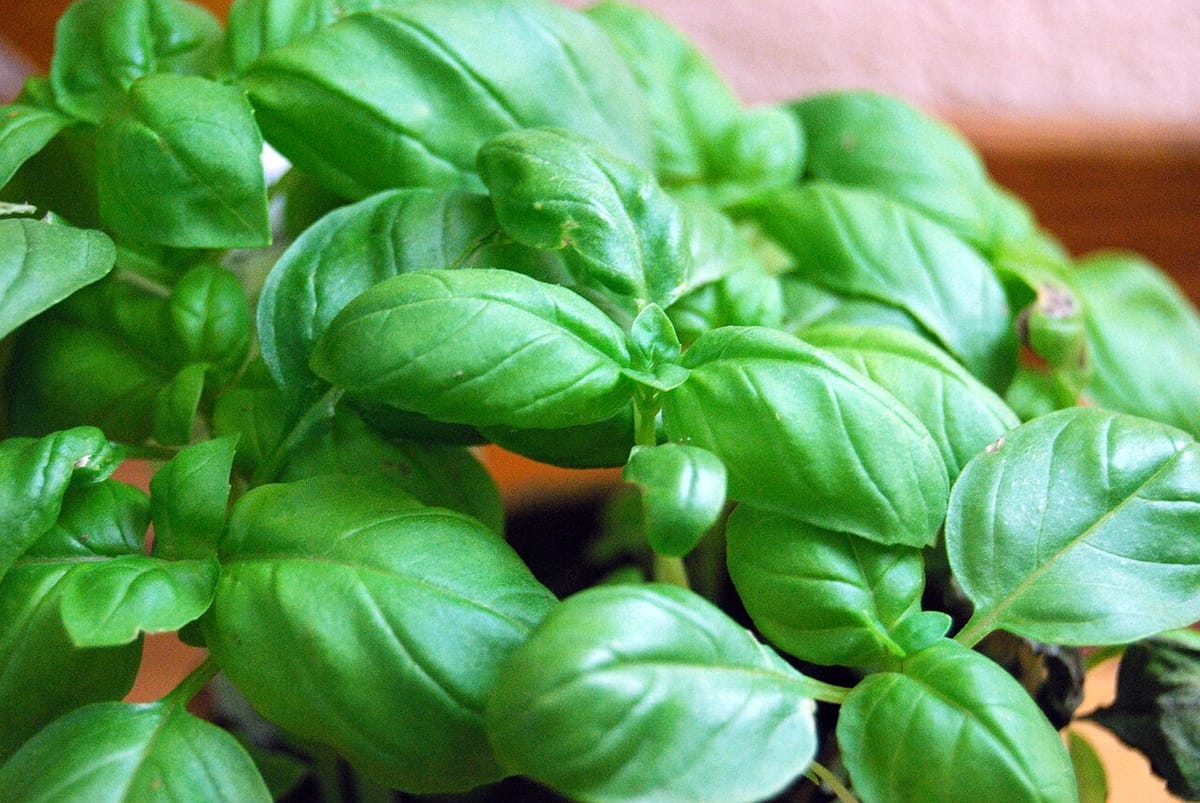
Basil is the herb people most want to grow and the one they most consistently grow badly — not because it’s difficult, but because it’s misunderstood. Gardeners treat it like a leafy green when it’s a heat-worshipping tropical; they let it grow tall when it wants to be pinched short; they baby it into flowering and then wonder where the flavor went.
Get three things right — real warmth, real sun, and ruthless pinching — and a couple of plants will bury you in fragrant leaves from June to September. This guide covers the whole run: starting from seed or store plants, growing in beds and pots, the pinching technique that changes everything, harvesting without harming, and keeping something green on the windowsill through winter.
Basil’s three non-negotiables
Everything else in this article is adjustable. These aren’t:
- Warmth. Basil is native to tropical Asia and acts like it. Growth stalls below 60°F (15°C), and leaves blacken after a single night in the low 40s — well above frost. Whatever your tomato-planting date is, basil’s is a week later. Cold, more than any pest, is what kills spring basil.
- Sun. Six to eight hours of direct light outdoors. Indoors, a south window at minimum — and in winter, a grow light, no matter what the seed packet implies.
- Moisture with drainage. Basil drinks steadily and wilts dramatically when dry, but sitting in soggy soil rots its stem at the soil line. Rich, well-drained soil, mulched, watered at the base when the top inch dries.
Choosing a variety
For a first plant, Genovese is the answer — the classic Italian sweet basil, big-leaved, vigorous, and what every pesto recipe assumes. Beyond it, a short field guide:
- Sweet/Italian large-leaf types: interchangeable with Genovese for the kitchen.
- Thai basil: anise-clove flavor, purple stems, stands up to cooking heat; essential for Southeast Asian dishes.
- Lemon and lime basil: citrusy; wonderful with fish and in summer drinks.
- Purple types (‘Dark Opal’, ‘Purple Ruffles’): stunning, slightly milder; they read as ornamental but eat fine.
- Compact/globe types (‘Spicy Globe’, ‘Pistou’): naturally dome-shaped, ideal for small pots and edging.
- Downy-mildew-resistant hybrids (‘Prospera’, ‘Rutgers Devotion’): the pragmatic choice where humid summers have made mildew a recurring heartbreak (more under troubleshooting).
Starting plants: three doors in
From seed indoors (cheapest, most variety). Start four to six weeks before your after-frost planting date. Sow a quarter-inch deep in seed-starting mix, keep at 70–80°F — germination takes five to ten days, faster with warmth — and give seedlings strong light immediately. Pot up when the first true leaves appear.
From seed outdoors (simplest, latest). Once soil is warm and nights hold above 50°F, sow directly a quarter-inch deep and thin to 8–12 inches. You lose a few weeks versus transplants and lose nothing else.
From a nursery or supermarket pot (fastest). Nursery seedlings are straightforward — plant after hardening off. Supermarket “living basil” pots are secretly a bargain: they contain twenty or more seedlings crammed together for shelf appeal. Tease the root ball apart into three or four clumps, pot each into its own container, and you’ve turned one $3 purchase into a summer’s supply.
However you start, plant out only when nights are reliably warm, into soil enriched with compost, 8–12 inches apart (18 for big Genovese types you intend to keep pinching).
Alt: Supermarket basil plant divided into four separate clumps for repotting
Caption: One store pot, four real plants. The crowding that dooms it on your counter is undone in two minutes.
Pinching: the technique that makes the plant
If you learn one thing about basil, learn this. Basil’s growth is apical — the tip of each stem suppresses the buds below it. Remove the tip, and the pair of buds at the leaf junction beneath it both fire, turning one stem into two. Repeat and two become four, four become eight.
The method:
- When a young plant has three pairs of true leaves, pinch or snip the stem just above the second pair. It looks brutal. Do it anyway.
- Every week or two afterward, pinch the tips of new stems the same way — always just above a leaf pair.
- Eat everything you pinch. Pinching is harvesting.
Within six weeks you’ll have a dense, dome-shaped plant with dozens of growing tips instead of a single stalk — and because you’re constantly removing tips, the plant struggles to ever assemble a flower. Pinching is simultaneously the harvest method, the shaping method, and the anti-bolting method. It is the whole game.
About flowers: the moment basil blooms, leaf production slows and flavor coarsens (fine for pollinators, disappointing for pesto). The instant you see a bud cluster forming at a tip — it looks like a tiny green pinecone — pinch it off along with the top pair of leaves. A plant pinched weekly essentially never gets the chance.
Harvesting without killing the plant
Two rules separate a season-long producer from a stripped stick:
- Take tips, not leaves. Plucking individual big leaves from the bottom leaves bare stems that won’t regrow. Cutting stem tips above a leaf pair triggers regrowth every time.
- Never take more than a third at once. A hard harvest is fine — basil regrows from a one-third cutback within two weeks — but stripping more stalls it.
Harvest in mid-morning, after dew dries but before heat wilts the leaves, for the strongest oils. For big pesto harvests, cut whole stems back to two or three leaf pairs from the base, and the plant will do it all again in a fortnight.
Keeping the harvest: fresh basil hates the refrigerator — cold blackens it within a day. Stand cut stems in a glass of water on the counter like a bouquet (they’ll last a week and often root). For longer storage, blend leaves with olive oil and freeze in ice-cube trays; frozen cubes carry summer’s flavor into January far better than dried basil, which loses most of what makes basil worth having.
Basil in containers
Basil may be the single best container herb — pots give you control over its two vulnerabilities, cold and drainage, and put the harvest an arm’s reach from the cutting board.
- Pot: at least 8 inches deep and wide for one plant; a 12-inch pot suits three compact types. Drainage hole mandatory.
- Mix: quality potting mix, never garden soil (it compacts in pots — the full reasoning is in our container gardening guide).
- Water: pots dry fast; daily checks in high summer. Basil wilting at 4 p.m. on a 90-degree patio is normal and recovers by evening — water if it’s still limp at dusk.
- Feed: half-strength balanced liquid fertilizer every two or three weeks. Go easy: overfed basil grows big, bland leaves.
- Mobility is the superpower: wheel pots against a warm wall on cool nights in spring and fall, stretching the season by weeks on both ends.
Basil also earns its keep in the vegetable bed — it partners well with tomatoes in the kitchen, and interplanting adds diversity that makes pest outbreaks less likely, whatever the stronger companion-planting legends claim. Plant it where you grow tomatoes and harvest the caprese together.
Troubleshooting
Blackened leaves after a cool night. Cold injury, not disease. Remove damaged leaves; protect the plant (or bring pots in) when nights dip below 50°F. Plants usually outgrow one mild event.
Yellowing leaves with gray-purple fuzz underneath. Basil downy mildew, the one bad basil disease. It arrives on wind and infected seed, thrives in humid stillness, and cannot be cured — remove and trash (don’t compost) affected plants. Prevention: resistant varieties, generous spacing, morning-only watering at the base, and full sun.
Wilting despite moist soil. Bad sign — likely fusarium wilt or root rot, especially if one branch wilts first or the stem shows brown streaking. Remove the plant; don’t replant basil in that exact spot for a few years.
Leggy, sparse growth. Not enough light, not enough pinching, or both. The fixes are in this article’s title and section three, respectively.
Holes in leaves. Japanese beetles and slugs love basil almost as much as people do. Hand-pick beetles into soapy water in the morning; for slugs, see the usual suspects and traps in our pest guides. Aphids on tips get a hard water spray — escalation options live in our natural aphid control guide.
Winter basil, honestly
Every fall, gardeners pot up a garden basil plant, put it on the kitchen windowsill, and watch it decline into a stick by December. The plant isn’t failing — the light is. Winter window light in most temperate places is a fraction of what basil needs.
The honest options:
- A grow light. One small full-spectrum LED, 12–14 hours on a timer over a pot or two, produces useful basil all winter. This is the only method that delivers lushness.
- Fresh starts over old survivors. Sow new seed indoors in early fall rather than dragging in a tired, possibly pest-carrying garden plant. Young plants adapt to indoor life far better.
- The freezer. Those oil cubes from August out-flavor any struggling January windowsill plant.
Come spring, start again from seed — basil is an annual sprinter, not a marathon houseplant, and it’s at its best when you run it hard for one hot season, pinching all the way.
Frequently asked questions
Why does my basil keep flowering, and is that bad?
Flowering (bolting) is basil's response to maturity and heat, and it matters because flavor declines and leaf production slows once flowers form. Pinch off flower buds the moment you see them — squeeze the tip cluster off with your fingers — and the plant returns to leaf-making. Pinching weekly delays bolting almost indefinitely.
How do I make basil bushy instead of tall and stringy?
Pinch the growing tip. When a stem is cut just above a pair of leaves, the two buds at that leaf pair each grow into a new stem — every pinch doubles the branches. Start when the plant has three sets of true leaves and repeat every week or two. A never-pinched basil grows one sad stalk; a pinched one becomes a shrub.
Why did my basil turn black after a cold night?
Basil is a true tropical and shows cold damage — blackened, water-soaked leaves — after nights below about 45°F (7°C), well above freezing. Don't plant out until nights reliably hold above 50°F, and harvest heavily before the first cool autumn nights rather than trying to stretch the season.
Can I grow basil indoors in winter?
Yes, with honesty about light: basil needs far more than a winter windowsill provides in most climates. A south window plus a small full-spectrum LED grow light running 12–14 hours a day yields usable harvests all winter. Without the light, expect a leggy, slowly declining plant — still fragrant, never lush.
Are supermarket basil pots worth buying and replanting?
Yes, with a trick. Those pots are actually dozens of seedlings sown thickly for one-time sale, doomed by crowding. Divide the root ball gently into three or four clumps, pot each separately, and grow them on in good light. Each clump becomes a real plant within weeks.
What are the black or brown spots on my basil leaves?
Cold exposure causes blackened patches; fungal issues cause browning with yellow halos. The serious one is basil downy mildew — yellowing across the leaf top with gray-purple fuzz underneath — which is airborne, incurable, and reason to remove the plant. Resistant varieties like 'Prospera' and 'Rutgers Devotion' are worth seeking if it's been a problem locally.
How much basil should I plant for regular pesto?
A dedicated pesto habit wants six to twelve plants — one batch of pesto uses two packed cups of leaves, roughly a full month's output of a single well-pinched plant. For garnish-and-caprese use, two or three plants are plenty.