How to Grow Sunflowers: Giants, Branching Types, and Everything Between
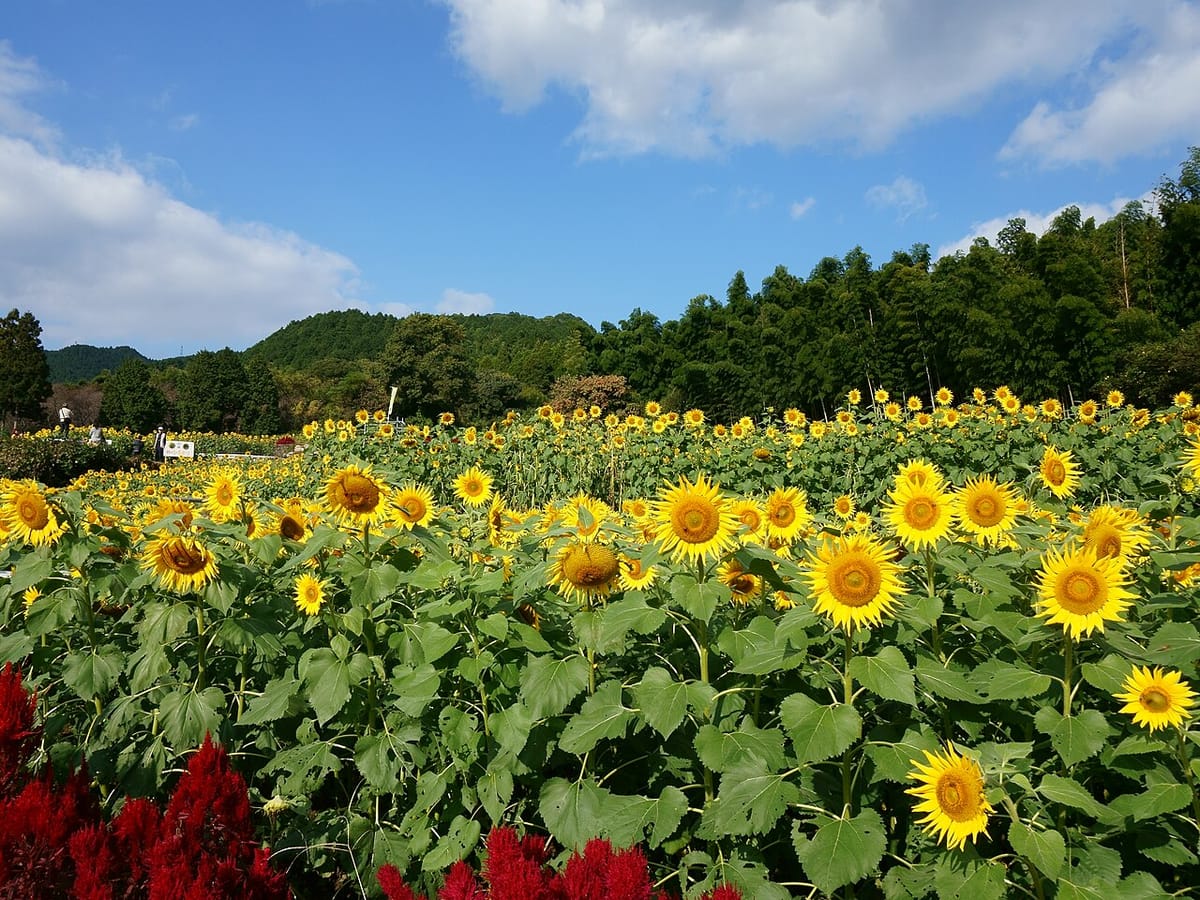
No plant delivers more spectacle per seed than a sunflower. In roughly a hundred days, a seed you could lose in a coat pocket becomes a stem like a broom handle holding a flower head the size of a serving platter — a transformation so reliable that sunflowers are how half of us met gardening, usually in a paper cup in a kindergarten window.
That kindergarten reputation undersells them. Modern sunflowers run from knee-high patio varieties to sixteen-foot competition giants, from the classic gold to lemon, rust, burgundy, and near-black, from single monster heads to branching types that produce dozens of vase-perfect blooms all summer. And the growing really is as easy as the reputation says — provided you match variety to goal, give them the sun their name demands, and know the three or four moments where things go wrong.
First decision: one giant head, or armloads of flowers?
Sunflower varieties split into two families with different plans, and most disappointment starts with mixing them up:
Single-stem types put everything into one stalk and (mostly) one head. This family includes the giants — ‘Mammoth’, ‘Russian Giant’, ‘Titan’, ‘American Giant’ — grown for height, spectacle, and seed harvest. Also here are the single-stem cutting varieties (‘ProCut’, ‘Sunrich’ series) that flower fast and uniform for florists. One seed, one show: for continuous bloom you succession-sow.
Branching types — ‘Autumn Beauty’, ‘Velvet Queen’, ‘Italian White’, ‘Soraya’ — grow four to six feet tall as a candelabra of side stems, each producing modest-sized flowers for months. One plant becomes a summer-long bouquet factory. These carry the interesting colors, too: rusts, wines, bicolors.
There’s also a note on the packet worth checking if you keep bees or want seeds: pollenless varieties (bred for florists — no pollen to shed on tablecloths) offer nectar but no pollen, and produce little or no seed. For wildlife and snack harvests, grow pollen-bearing kinds.
Dwarf types (‘Teddy Bear’, ‘Sundance Kid’, ‘Elf’) pack the whole sunflower experience into two or three container-friendly feet — the right answer for balconies and small kids’ first gardens.
Sowing: direct, warm, and shallow-rooted ambitions aside
Sunflowers build a taproot, and taproots resent pots. Skip indoor starts and sow directly where plants will grow, one to two weeks after last frost, when soil has warmed to about 60°F:
- Site: full sun, — six hours minimum, eight-plus for giants. The clue is in the name. Mind the shadow, too: a north-side row of twelve-footers shades nothing, while a row on the bed’s south edge shades everything behind it. (For vegetable-bed placement logic, our garden startup guide covers sun mapping.)
- Soil: average garden soil is fine; giants appreciate deeper, richer ground with compost worked in — they’re building scaffolding, and they’re hungry doing it.
- Depth and spacing: 1 inch deep. Space by ambition — 18–24 inches for maximum-size giants, 12 inches for standard singles, 6–12 inches for branching types and flower hedges. Spacing is the throttle on head size: crowded giants come out standard, and tightly sown singles make a charming small-flowered screen.
- Protect the row. Birds and squirrels excavate sprouting seeds with supernatural accuracy. Net or row-cover the row until seedlings stand a few inches tall; then they’re safe until harvest season.
- Succession-sow a short row every two to three weeks until about 10–12 weeks before your first fall frost, and the tower show runs July to October.
Germination takes seven to ten days in warm soil. Thin (with scissors, not by pulling) once seedlings have two sets of true leaves.
Alt: Garden row protected by netting from squirrels while sunflower seeds germinate
Caption: The first two weeks are a heist movie; netting is the vault door.
Growing season care: water the scaffolding
Established sunflowers are drought-tolerant survivors — but “surviving” and “twelve feet with a dinner-plate head” are different budgets. For the full show:
- Water deeply once a week in dry spells, more for giants in sandy soil. The critical windows are the twenty days around bud formation and flowering; drought then means smaller heads and weaker stems. Water the base, not the leaves.
- Feed modestly. Compost at sowing plus, for giants, a balanced feeding when knee-high covers it. Over-nitrogened sunflowers grow tall, soft, and floppy — lush stalk, delayed flower.
- Staking: most sunflowers stand unaided; their stems are impressive engineering. Stake giants in windy sites or loose rich soil — a tall stake driven at sowing time (not later, through the root zone), soft-tied at two heights. Hilling a few inches of soil around the stem base adds bracing roots.
- Weeds: mulch or hoe shallowly early on; once sunflowers hit stride they shade out competition themselves.
A word on the famous sun-tracking: young buds really do swing east-to-west daily and reset overnight. Once flowers open, the motion stops and heads settle facing east — so plant your viewing row where you’ll see morning faces, not afternoon backs.
The modest pest list
Sunflowers carry few serious problems in home gardens:
- Birds and squirrels — covered above at sowing; at seed-ripening time, bag chosen heads (paper bag, cheesecloth, pillowcase — never plastic, which molds) once petals drop.
- Aphids sometimes crowd stem tips; a hard hose blast and the ladybug patrol handle them — the escalation ladder is in our aphid guide.
- Powdery mildew dusts late-season leaves in humid years; spacing and base-watering delay it, and late-summer mildew on a plant that’s already bloomed costs you nothing.
- Deer treat young sunflowers as salad. Where deer walk, fence the row for its first month.
Harvest one: cut flowers all summer
For the vase, cut when petals are just lifting off the face but not fully flat — they’ll finish opening in water and last a week-plus. Morning cutting, a bucket carried to the row, and stems recut underwater is florist protocol and worth copying. Strip leaves below the waterline. Branching types get better with every cut: like the annuals in our easy flowers lineup, cutting is the maintenance — each harvested stem signals the plant to branch and rebloom.
Harvest two: seeds for snacks and birds
Left standing, heads ripen seed through late summer. Readiness signals: the head’s back turns yellow-brown, petals wither and drop, the little florets covering the seed face rub away, and seeds show mature color (gray-and-white stripes on eating types; black on oilseed).
- Bag heads as ripening starts if wildlife pressure is high — the birds’ calendar matches yours exactly.
- Cut heads with a foot of stem attached; hang in a dry, ventilated place for one to two weeks.
- Rub seeds free over a bucket (two heads rubbed against each other works fast). Dry the loose seed another few days spread on trays.
- For snacking: soak overnight in salted water, drain, and roast at 325°F until lightly golden. For the birds: store dry and dole out all winter, or simply leave a few heads standing in the garden — goldfinches will handle the harvesting through November, which is its own show.
Save a handful of the best seeds from your favorite plant for next year — open-pollinated varieties come back true, and a self-perpetuating sunflower patch is the cheapest garden tradition there is.
End of season: the cleanup that matters
Sunflower stalks are the closest a garden gets to lumber. Chop them for the compost pile (a lopper or machete moment your neighbors will respect), or leave a few standing as winter bird perches. Do clear the hull litter under seed heads and feeders, though — sunflower hulls contain mildly allelopathic compounds that can suppress germination in next spring’s small-seeded plantings. It’s a modest effect, but no reason to sow lettuce into last year’s hull carpet.
Then file the important note in your garden journal: however many sunflowers you grew this year, the correct number next year is more. It always is.
Frequently asked questions
Do sunflower heads really follow the sun all day?
Only while young. Growing buds track the sun east to west daily (heliotropism), driven by the growth of the stem itself. Once the flower opens and the stem stiffens, tracking stops and mature heads settle facing east — which is why a row of blooming sunflowers all stare in the same direction at dawn.
How far apart should I plant sunflowers?
It depends on your goal. For maximum head size on giant varieties, give each plant 18–24 inches. For a dense flowering hedge of branching types, 6–12 inches works. Crowding giants shrinks them dramatically — spacing is the single biggest lever on final size.
When should I plant sunflower seeds?
Direct-sow one to two weeks after your last spring frost, once soil has warmed to about 60°F. Sunflowers dislike transplanting — their taproot resents pots — so sowing in place beats starting indoors. Succession-sow every two to three weeks until midsummer for blooms into fall.
How do I keep birds and squirrels from eating my sunflower seeds?
At sowing, cover the seeded row with netting or row cover until seedlings are up — birds pull sprouting seeds. At harvest time, tie a paper bag, cheesecloth, or old pillowcase over ripening heads once petals wither. Or plant extra and split the crop with the wildlife, which is half the point of sunflowers anyway.
Do sunflowers need staking?
Most don't — the stems are engineered for the job. Stake when growing giants in windy, exposed sites, in rich loose soil, or when a heavy head starts leaning: a sturdy stake and soft ties at two heights. Hilling soil around the base and consistent watering (drought-stressed stems weaken) prevent most flopping.
When are sunflower seeds ready to harvest?
When the back of the head turns from green to yellow-brown, the petals have dried and dropped, and seeds show their mature color (striped for eating types, black for oilseed). Cut with a foot of stem, hang the head in a dry, airy place for a week or two, then rub the seeds free.
Is it true sunflowers harm plants growing near them?
Partially. Sunflowers are mildly allelopathic — their hulls and residues release compounds that can suppress germination of some plants nearby, and the effect is strongest under bird feeders where hulls pile up. In practice, established neighbors are rarely bothered; just don't sow small seeds directly beneath them, and compost spent stalks rather than leaving them in the bed.