Snake Plant Care: The Complete Guide to a Nearly Unkillable Houseplant
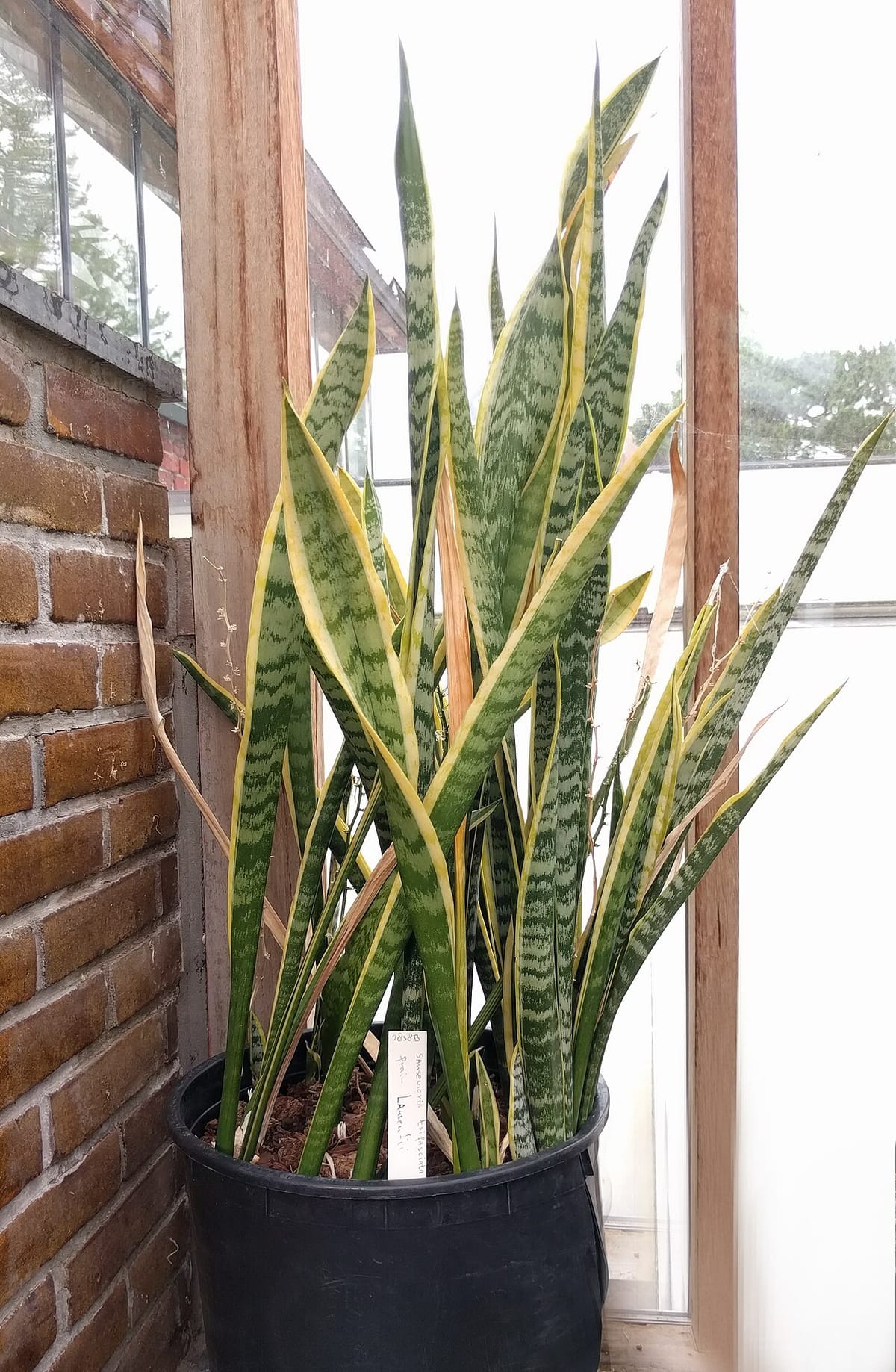
The snake plant has survived a century of changing décor, three renamings by botanists, and untold millions of neglectful owners. Formerly Sansevieria trifasciata, now officially Dracaena trifasciata (old habits die hard — most garden centers still say sansevieria), it remains what it has always been: the plant you give to people who kill plants.
Its toughness is real but frequently misunderstood. Snake plants don’t thrive on neglect so much as they thrive on the specific kind of neglect that matches their biology — infrequent water, tolerance of dim corners, indifference to dry air. Give them the opposite kind of attention, especially generous watering, and this unkillable plant dies faster than a fern. This guide covers the full picture: light, water, soil, repotting, propagation, and the short list of things that go wrong.
Know your plant: a succulent in disguise
Snake plants are native to arid, rocky regions of tropical West Africa. Those thick, upright, sword-shaped leaves are water storage — the same strategy as an aloe or agave. The plant also uses a water-thrifty form of photosynthesis (CAM, for the curious) that lets it keep its leaf pores closed during the day to conserve moisture.
Every care instruction below follows from that one fact: treat it like a succulent that happens to tolerate shade, not like a leafy tropical.
Popular varieties, all cared for identically:
- ‘Laurentii’ — the classic: gray-green bands with yellow leaf margins.
- ‘Zeylanica’ — banded green, no yellow edge; arguably the toughest.
- ‘Moonshine’ — broad silvery leaves; keeps its pale color best in decent light.
- ‘Hahnii’ (bird’s nest) — compact rosettes under a foot tall, perfect for desks.
- Cylindrical types (D. angolensis) — round, spear-like leaves, sometimes braided by growers.
Light: from dim corner to full sun
Snake plants have one of the widest light tolerances in the houseplant world. They survive in low light — the dim corners we ranked them highly for in our low-light houseplants guide — and they grow noticeably faster and sturdier in bright indirect light or even a few hours of direct sun.
Practical placement, in order of what the plant would vote for:
- Bright indirect light (near an east or south window, out of the harshest beam): steady growth, upright habit, best leaf color.
- Some direct sun: fine, even good — just acclimate gradually. A plant moved abruptly from a dark corner to a blazing sill can scorch, showing bleached or brown patches.
- Low light: completely viable. Expect very slow growth, slightly darker leaves, and dramatically lower water needs — maybe monthly at most.
The one thing it can’t do is darkness. A windowless bathroom will slowly starve it over a year or two, however healthy it looks at first.
Watering: the entire skill in one section
Overwatering is the cause of virtually every dead snake plant. Not “watering too much at once” — the plant enjoys a thorough drench — but watering too often, before the soil has fully dried.
The method:
- Check first. Push a finger (or a chopstick) to the bottom third of the pot. Any coolness or clinging soil means wait. Snake plants want the soil completely dry between waterings — not “top inch dry,” bone dry.
- Water thoroughly. When it’s time, water slowly until it runs from the drainage hole. This wets the whole root zone and flushes accumulated salts.
- Drain completely. Never let the pot stand in a saucer of water. Empty the saucer after ten minutes.
- Avoid the leaf rosette. Water the soil, not the center of the leaf clusters — water pooled in the rosette invites rot.
In practice that means every two to four weeks in spring and summer, stretching to four to six weeks in winter, when cool temperatures and short days nearly halt the plant’s metabolism. Winter is when most snake plants are killed: same watering habit, half the demand.
Two reliable signals, both visible from across the room:
- Wrinkled, slightly curled leaves = thirsty. Water; it recovers in days.
- Mushy, flopping, or yellowing leaves at the base = drowning. Emergency — see troubleshooting below.
Notice the asymmetry: thirst is a note, rot is an ultimatum. When unsure, wait.
Alt: Comparison of underwatered wrinkled snake plant leaf versus overwatered mushy leaf base
Caption: Left: thirsty, fixable in a week. Right: rotting, fixable only with surgery.
Soil and pots: engineered to dry out
Everything about the container should help water leave:
- Soil: a gritty, fast-draining mix. Commercial cactus/succulent mix works as-is; or make your own from two parts regular potting mix to one part perlite or coarse sand. Standard potting soil alone holds moisture too long.
- Pot material: terracotta is ideal — it wicks moisture out through its walls, shortening the danger window after watering. Plastic and glazed ceramic are workable if you water accordingly less often.
- Drainage hole: mandatory. No exceptions, no gravel-layer workarounds (a gravel layer raises the waterlogged zone into the roots).
- Size: snug. Snake plants grow best slightly root-bound, and a too-large pot holds a too-large mass of wet soil. When repotting, go up only one pot size (an inch or two wider).
Repot every two to three years, or when roots crack the pot — which vigorous snake plants do; the rhizomes are strong enough to split terracotta. Spring is the best time. It’s also your propagation opportunity.
Feeding: nearly optional
A balanced houseplant fertilizer at half strength, once or twice during spring and summer, covers a snake plant’s entire annual appetite. Skip fall and winter completely. If you never feed it at all, it will grow slightly slower and hold no grudge. Overfeeding shows up as browning tips and soft, floppy growth — a rare case of too much dinner making the diner weaker.
Propagation: one plant becomes five
Snake plants multiply readily by two methods:
Division (fast, keeps variegation)
Mature plants spread by underground rhizomes, producing pups around the mother. At repotting time, pull or cut the root mass apart into clumps, each with leaves and roots attached, and pot each separately. Divisions are essentially instant new plants — and this is the only method that preserves the yellow edges of ‘Laurentii’ and similar variegated types.
Leaf cuttings (slow, oddly satisfying)
- Cut a healthy leaf into 3-inch sections with a clean blade.
- Mark which end was down — cuttings only root from the end that originally pointed toward the soil. Upside-down cuttings sit there indefinitely, mocking you.
- Let sections dry for a day or two so the cut calluses.
- Stand them an inch deep in barely moist gritty mix (or an inch of water, changed weekly).
- Wait. Roots take four to eight weeks; new pups push up from the base weeks after that. The parent section eventually withers as the pup takes over.
Variegated leaves propagated this way revert to plain green — a quirk of where the plant’s color-making tissue lives.
Troubleshooting the short list of real problems
Mushy leaves / rot (the emergency). Caused by overwatering, cold-plus-wet, or waterless drainage. Act immediately: unpot, shake off soil, and cut away every soft, brown, or foul-smelling root and leaf base back to firm white-green tissue. Let the survivor air-dry for 24–48 hours, then repot in fresh dry gritty mix and don’t water for a week. Simultaneously take a few healthy-leaf cuttings as a lifeboat.
Drooping or splaying leaves. Usually one of: too little light (the plant loses the strength to stand at attention), overwatering softening the leaf bases, or a badly root-bound plant with nowhere to anchor. Check soil moisture first, light second, roots third.
Brown tips. Almost always historical — a past drought stress, a fertilizer overdose, or fluoridated water. The brown is permanent (trim it with clean scissors just inside the dead zone, following the leaf’s shape) but new growth arriving clean tells you the underlying issue is resolved.
Pests. Rare, but spider mites and mealybugs occasionally visit, especially in dry winter rooms. Mites leave fine stippling and webbing; mealybugs look like tiny cotton tufts in leaf crevices. Wipe leaves with a damp cloth, follow with insecticidal soap, and quarantine the plant from its neighbors until clear.
No growth at all. In winter: completely normal — the plant is essentially dormant. In summer: check light. A snake plant in a dark corner isn’t dying, it’s waiting, and it can wait longer than you can.
The one-paragraph version
Put your snake plant somewhere with decent light (it will settle for less), in gritty soil in a snug terracotta pot with a drainage hole. Water it thoroughly but only when the soil is completely dry — every few weeks at most, half that often in winter. Feed it once or twice a year if you remember. Divide it when it cracks the pot. Ignore nearly everything else you were planning to do for it. Treated this way, a snake plant doesn’t just survive — it becomes the oldest resident of your shelf, and eventually the ancestor of every snake plant you gift for a decade.
Frequently asked questions
How often should I water a snake plant?
When the soil is completely dry — typically every 2–4 weeks in the growing season and as little as every 4–6 weeks in winter. Frequency depends on light, pot size, and season, so check the soil rather than the calendar. When in doubt, wait another week; a thirsty snake plant recovers, a soaked one rots.
Are snake plants toxic to cats and dogs?
Yes, mildly. Snake plants contain saponins that cause drooling, nausea, and vomiting if chewed. They're rarely dangerous in small nibbles because the bitter taste discourages a second bite, but keep them away from persistent chewers and contact a vet if a pet eats a significant amount.
Why are my snake plant's leaves mushy at the base?
Mushy, soft leaves at the soil line mean root or basal rot from overwatering — the one serious snake plant emergency. Unpot immediately, cut away all soft roots and leaves with a clean blade, let the plant dry for a day or two, and repot in fresh, gritty, barely damp soil. Healthy remaining leaves can also be rooted as cuttings for insurance.
Why are my snake plant's leaves wrinkled or curling?
Vertical wrinkling and inward curling usually mean genuine thirst — the plant is drawing down its water reserves. It's the opposite problem to mushiness and far easier to fix: water thoroughly until it drains, and leaves typically smooth out within a week or two.
Do snake plants really clean the air?
Only trivially. The famous NASA study measured plants in small sealed chambers; in a real room you'd need a jungle's worth of snake plants to measurably change air quality. Grow it because it's handsome and forgiving — the air-purifying claim is marketing.
Can I propagate a snake plant from one leaf?
Yes, two ways: stand 3-inch leaf sections upright in water or moist gritty mix (keep them right-way-up — cuttings planted upside down won't root), or divide the plant at the roots. Note that leaf cuttings of variegated types like 'Laurentii' lose their yellow edges; division is the only way to keep variegation.
Does a snake plant ever flower?
Occasionally, and it surprises everyone. A mature, mildly root-bound plant in good light can send up a tall stalk of pale, sticky-sweet fragrant flowers, usually in spring. It's harmless and doesn't mean the plant is dying — cut the spent stalk at the base and carry on.