Blossom End Rot on Tomatoes and Peppers: Causes and the Real Fix
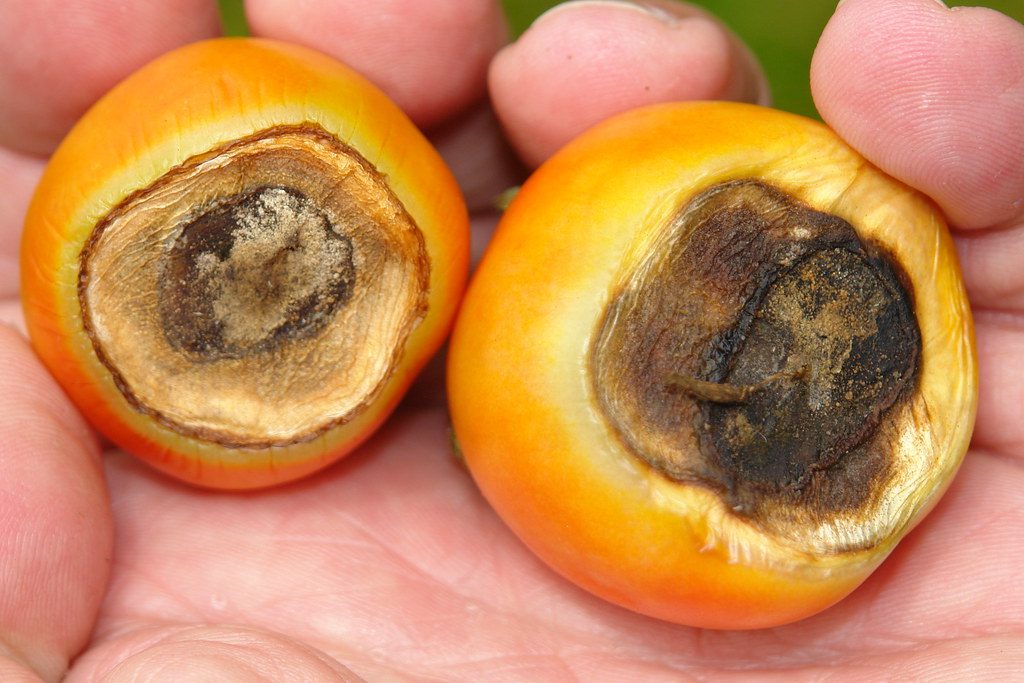
There’s a specific kind of dread in turning over a ripening tomato and finding the bottom collapsed into a flat, leathery, dark brown patch — the rest of the fruit looking completely normal, as if something reached up from underneath and rotted it from the inside. That’s blossom end rot, and despite how alarming it looks, it isn’t a disease, a pest, or a sign your soil is bad. It’s a plumbing problem, and once you understand what’s going wrong, it’s one of the more fixable issues in the vegetable garden.
What blossom end rot is
Blossom end rot is a physiological disorder, not an infection — no pathogen is involved, and it can’t spread to other plants the way tomato diseases like early blight or septoria leaf spot can. It shows up as a sunken, water-soaked-looking patch at the blossom end of the fruit (the end opposite the stem, where the flower used to be), which then dries into a flat, dark, leathery scar as the fruit continues ripening around it.
The mechanism is a localized calcium deficiency in the rapidly expanding tissue at the fruit’s bottom end. Calcium moves through a plant almost entirely via water transport, riding along with the plant’s normal water uptake rather than being actively pumped to wherever it’s needed most. When water uptake is inconsistent — heavy rain followed by a dry stretch, or irregular hand-watering — calcium delivery to the fastest-growing tissue gets disrupted even if the soil itself has plenty of calcium in it. The developing fruit tip, which needs a steady calcium supply to build strong cell walls as it expands, is usually the first tissue to suffer when that supply gets interrupted.
Why “just add more calcium” usually doesn’t work
This is the most common misunderstanding about blossom end rot, and it leads a lot of gardeners toward home remedies — crushed eggshells worked into the soil, calcium foliar sprays, antacid tablets dissolved in water — that have limited evidence behind them as an actual fix. Most garden soils already contain more than enough calcium for healthy fruit development. The problem almost always isn’t supply, it’s transport, and transport depends on consistent water, not on how much additional calcium is sitting in the soil or sprayed onto the leaves.
Foliar calcium sprays in particular struggle to reach the fruit at all, since calcium applied to leaves doesn’t reliably translocate down into developing fruit tissue — the plant’s calcium delivery system for fruit runs through root uptake and water movement, not through the leaves. If blossom end rot is a recurring problem, the far more effective lever is addressing watering consistency directly rather than adding more calcium to a soil that likely doesn’t need it.
The real fix: consistent soil moisture
Since the underlying issue is inconsistent water delivery disrupting calcium transport, the actual fix is straightforward, if not always easy to execute perfectly:
- Water deeply and on a consistent schedule rather than shallow, frequent sips or long gaps followed by a heavy soak. Deep, regular watering keeps soil moisture more stable between waterings, which is exactly what prevents the swings that trigger blossom end rot.
- Mulch heavily. A consistent layer of organic mulch — straw, shredded leaves, or wood chips — moderates soil moisture swings far more effectively than watering schedule adjustments alone, buffering against both a sudden dry spell and a heavy rain event. This is arguably the single highest-leverage change a gardener can make for blossom end rot specifically.
- Avoid drastic swings from drought stress to overwatering. A plant that’s been allowed to wilt and dry out, then given a heavy soak to compensate, experiences exactly the kind of moisture whiplash that disrupts calcium delivery to fruit. Steady is better than perfect — a slightly-under-watered-but-consistent schedule beats an inconsistent one that averages out to “enough” water.
- Consider consistent watering method over volume. Drip irrigation or soaker hoses that deliver water slowly and steadily tend to produce fewer blossom end rot problems than overhead watering or occasional heavy hand-watering, simply because they’re easier to keep consistent day to day.
Why it often hits early fruit hardest
Blossom end rot has a frustrating habit of showing up heavily on the first flush of tomatoes in a season and then largely disappearing as the season goes on, even without the gardener changing anything dramatic. This tracks with the underlying mechanism: early-season fruit is often growing fastest, right as gardeners are still dialing in a new watering rhythm for the season, and young root systems are less established and more sensitive to moisture swings than a mature plant’s deeper, more extensive roots later in the season. By midsummer, established plants with deeper roots and gardeners with a settled watering routine typically see blossom end rot taper off substantially, even without any deliberate intervention beyond the consistency that naturally develops over the season.
It’s not just tomatoes
Blossom end rot affects the same broad category of rapidly fruiting plants well beyond tomatoes — peppers, cucumbers, summer and winter squash, watermelon, and eggplant are all susceptible under the same conditions. On peppers, it often shows up as a similar sunken, tan-to-dark leathery patch near the blossom end and is sometimes mistaken by first-time growers for a fungal disease, when the cause and fix are identical to the tomato version: inconsistent water disrupting calcium transport to fast-growing fruit tissue.
If you’re growing several of these crops together, addressing watering consistency garden-wide — rather than plant by plant — tends to resolve blossom end rot across all of them simultaneously, since the mechanism is the same regardless of which fruit it shows up on.
What to do with affected fruit right now
Existing blossom end rot damage won’t heal or reverse — once the tissue has collapsed and browned, that portion of the fruit is done. The good news is that the rest of the fruit is completely unaffected and safe to eat; simply cut away the damaged portion and use the rest normally. Leaving badly affected fruit on the vine for too long can invite secondary mold or soft rot into the damaged tissue, so it’s worth harvesting and trimming affected fruit promptly rather than waiting, both for food safety and to keep the plant’s energy focused on developing fruit that’s still healthy.
New fruit that sets and develops after you’ve established consistent watering typically comes in normal, since blossom end rot responds to conditions at the specific moment each individual fruit is in its most rapid growth phase, not to some permanent, whole-season plant condition. Most gardeners who tighten up their watering routine see the problem taper off within a couple of weeks, which is often the clearest confirmation that watering — not soil calcium — was the actual cause all along.
How much water is “consistent”?
“Water consistently” is easy advice to give and harder to execute without a concrete target. For an in-ground tomato or pepper plant, roughly 1 to 1.5 inches of water per week — from rainfall and irrigation combined — is a reasonable baseline during active fruiting, delivered in one or two deep sessions rather than several shallow ones. A simple rain gauge or even a straight-sided can left in the garden gives a rough read on how much rainfall has already been delivered, so supplemental watering can fill the actual gap rather than guessing.
The deeper point behind the number: shallow, frequent watering is worse than less-frequent deep watering, even if the total weekly volume ends up similar. Shallow watering wets only the top few inches of soil, which dries out again quickly and creates exactly the swings between wet and dry that disrupt calcium transport. Deep watering that reaches 6 to 8 inches down encourages roots to grow deeper too, giving the plant access to a more stable moisture reserve that buffers against a missed watering day or an unexpected hot stretch.
Does soil pH or a soil test matter here?
Testing soil calcium levels directly is rarely useful for diagnosing blossom end rot, precisely because the problem is almost never a genuine calcium shortage in the soil. That said, soil pH does matter indirectly — calcium becomes less available to plant roots in soil that’s notably acidic, generally below a pH of about 6.0, even when total calcium content is adequate. A basic soil pH test, available cheaply through most university extension offices or garden centers, is worth doing once if blossom end rot is a recurring, garden-wide problem despite consistent watering — correcting significantly acidic soil with garden lime can improve calcium availability in that specific scenario. For most gardens with reasonably neutral soil, though, pH isn’t the bottleneck, and watering consistency remains the far more common actual cause.
Root damage and excess nitrogen make it worse
Two secondary factors compound blossom end rot risk on top of inconsistent watering, and both are worth ruling out if the problem persists despite steady moisture:
Root damage from overly aggressive cultivation, hoeing too close to the stem, or transplant shock reduces a plant’s overall capacity to take up water and calcium, making it more vulnerable to any moisture inconsistency that does occur. Handling transplants gently and cultivating shallowly near the base of established plants avoids adding this extra stress on top of normal watering challenges.
Excess nitrogen fertilizer, especially early in the season, pushes rapid leafy growth that competes with fruit for the plant’s limited water and calcium transport capacity, and fast vegetative growth in general increases a plant’s overall calcium demand at exactly the moment fruit is also trying to draw on the same supply. A balanced, moderate fertilizing approach — leaning on compost and a modest, balanced fertilizer rather than heavy high-nitrogen feeding — reduces this competition and is one more reason “more inputs” isn’t automatically the answer to blossom end rot.
Some varieties are simply more prone to it
Not all tomato varieties are equally susceptible. Paste and plum tomato varieties, including Roma and San Marzano types, along with many large beefsteak varieties, tend to show blossom end rot more readily than smaller cherry and grape tomato varieties, largely due to their fruit shape and faster early growth rate placing higher demand on calcium transport during expansion. This doesn’t mean these varieties should be avoided — they’re popular for good reason — but it does mean a gardener growing mostly paste or beefsteak tomatoes may see more blossom end rot than a neighbor growing mostly cherry types, even with identical watering practices, and shouldn’t necessarily read that difference as a sign something else is wrong.
The container-growing wrinkle
Blossom end rot tends to be even more common in container-grown tomatoes than in-ground plantings, for a simple reason: containers dry out faster and swing between wet and dry more dramatically than garden soil, especially in hot weather or with undersized pots. If you’re growing in containers and dealing with recurring blossom end rot, the mulch-and-consistent-watering advice above matters even more — a layer of mulch on top of container soil, combined with checking moisture daily during hot stretches rather than watering on a fixed calendar schedule, addresses the faster moisture swings that make containers particularly prone to this problem.
Blossom end rot looks alarming precisely because it appears on fruit that otherwise looks perfectly healthy, but it’s one of the more mechanically understandable and fixable problems a home gardener encounters. Once watering settles into a consistent rhythm — helped along by a solid layer of mulch — it typically resolves itself within a couple of weeks, without any need for calcium supplements, soil amendments, or treating it like a disease that needs to be managed all season long.
Frequently asked questions
What causes blossom end rot?
Blossom end rot is caused by a localized calcium deficiency in the developing fruit, but the root cause is almost always inconsistent watering rather than a lack of calcium in the soil itself. Uneven moisture disrupts the plant's ability to move calcium to the fastest-growing tissue — the bottom of a developing fruit — even when there's plenty of calcium present in the soil.
Do I need to add calcium to my soil to fix blossom end rot?
Usually not — most soils already contain adequate calcium, and the problem is typically delivery, not supply. Foliar calcium sprays and eggshell additions are popular home remedies but have limited research support for actually preventing new blossom end rot, since consistent soil moisture is what actually restores normal calcium transport to the fruit.
Can I still eat tomatoes with blossom end rot?
Yes, as long as you cut away the affected portion — blossom end rot is a physiological disorder, not a pathogen, and it doesn't make the rest of the fruit unsafe to eat. The cut-away area may attract secondary mold or rot if left too long, so it's best to harvest and trim affected fruit promptly rather than leaving it on the vine.
Why does blossom end rot show up on some fruits but not others on the same plant?
Blossom end rot tends to hit whichever fruits are growing fastest at the moment a watering inconsistency occurs, since rapidly expanding tissue has the highest calcium demand and the least buffer against a temporary supply gap. This is why it often appears on the first flush of fruit in a season, when plants are growing quickly and gardeners are still dialing in a watering rhythm.
Does blossom end rot affect peppers and cucumbers too?
Yes — blossom end rot affects the same fruiting nightshades and cucurbits broadly, including peppers, cucumbers, squash, watermelon, and eggplant, anywhere fruit tissue is expanding rapidly under inconsistent moisture. Peppers show it as a similar sunken, leathery patch near the blossom end, often mistaken for a disease when it's the identical underlying watering issue.
Will blossom end rot go away on its own?
Existing affected fruit won't recover, but new fruit set after watering becomes consistent typically develops normally, since the disorder responds to conditions at the time each individual fruit is rapidly expanding rather than being a permanent plant-wide condition. Most gardeners see blossom end rot clear up within a couple of weeks of establishing steady watering.
Does mulch help prevent blossom end rot?
Yes, significantly — a consistent layer of mulch moderates soil moisture swings between waterings and during weather changes, which is the single biggest lever for preventing blossom end rot. It's a much more reliable fix than calcium sprays, since it addresses the actual mechanism (inconsistent water) rather than treating the symptom.