Tomato Diseases: How to Identify and Treat the Most Common Ones
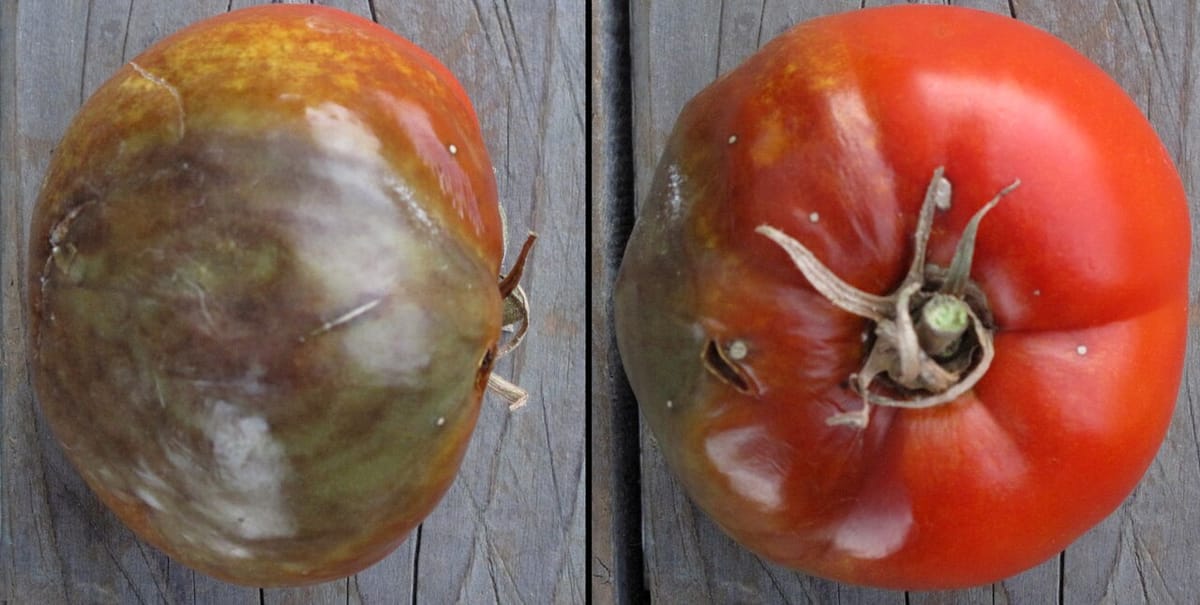
Nothing tests a gardener’s nerve quite like a tomato plant that starts looking wrong in July, right as the first fruit is finally sizing up. Spots, wilting, curling, rot on the fruit itself — tomatoes are magnets for a long list of afflictions, which is the price of being the most popular vegetable in the home garden and one that’s been bred, in some cases, for flavor and yield ahead of disease resistance. The good news is that the handful of problems that show up in most backyard gardens are recognizable once you know what to look for, and most of them are manageable if caught early.
This guide walks through the tomato diseases and disorders you’re likely to encounter, how to tell them apart (since the treatments differ significantly), and the prevention habits that matter more than any cure.
First, rule out the impostor: blossom-end rot
Before diagnosing a disease, check the fruit itself for blossom-end rot — a flat, sunken, dark brown to black leathery patch on the bottom (blossom end) of the fruit, often appearing while the rest of the tomato looks perfectly healthy. This is the most common tomato problem gardeners encounter, and it’s not a disease at all.
Cause: Blossom-end rot is a physiological disorder caused by localized calcium shortage in the developing fruit — almost always the result of inconsistent watering (calcium moves through the plant dissolved in water, so irregular soil moisture disrupts its delivery to fast-growing fruit) rather than an actual lack of calcium in the soil. Drought stress, sudden heavy watering after a dry spell, and root damage from overly deep cultivation are the usual triggers.
Fix: Consistent, even watering is the real cure — deep watering on a regular schedule rather than letting the soil swing between bone-dry and soaked, plus a layer of mulch to buffer soil moisture. Affected fruit won’t recover, but new fruit set after watering stabilizes is typically fine. It’s not contagious and doesn’t require removing the plant. Our tomato growing guide covers the watering consistency that prevents this from the start.
Early blight — the common, slow-moving one
What it looks like: Dark brown to black spots with a distinctive target pattern of concentric rings, starting on the oldest, lowest leaves and working upward over several weeks. Affected leaves often yellow around the spots and drop, and in advanced cases, dark lesions appear on stems and fruit as well.
Why it happens: A fungus that overwinters in soil and plant debris, splashing up onto lower leaves during rain or overhead watering. Warm, humid weather and crowded plants with poor airflow accelerate its spread. It’s extremely common — most home gardens see at least mild early blight by late summer.
What to do: Remove affected leaves promptly, especially any touching the ground, and avoid overhead watering from that point on. Mulching under plants prevents the soil-splash that spreads spores upward in the first place. A copper-based fungicide or one containing chlorothalonil, applied at the first signs and repeated per label instructions, slows progression on plants with significant fruit still to ripen, though for many home gardeners a mild case simply gets managed through leaf removal since it rarely kills the plant outright before the season’s harvest is in.
Late blight — rare but dangerous
What it looks like: Irregular, water-soaked, gray-green to brown patches on leaves (often starting at leaf edges or tips), sometimes with a fuzzy white fungal growth on the underside in humid conditions. Unlike early blight’s slow, patterned spots, late blight spreads fast and can collapse large sections of a plant within days, especially during cool, wet weather.
Why it happens: The same pathogen responsible for the Irish potato famine — a fast-moving fungus-like organism that thrives in cool, damp conditions and spreads readily by wind-blown spores over surprising distances, including between separate gardens in a region during a bad outbreak year.
What to do: Move quickly. Remove and destroy (bag for trash, never compost) any plant showing late blight symptoms to protect neighboring plants, including any potatoes nearby, since the same pathogen affects both. There’s no reliable cure once established — prevention through resistant varieties and avoiding wet foliage is far more effective than trying to treat it after the fact. Regional extension services often issue late blight alerts during outbreak years; checking with yours during a wet summer is worthwhile if you’ve had it before.
Fusarium and verticillium wilt — the soil-borne ones
What it looks like: Yellowing and wilting that often affects one side of the plant or one branch at a time (a useful tell, since most other problems are more symmetrical), progressing upward, frequently starting with the lower leaves. A telltale confirmation: slice the stem near the base — internal brown discoloration in the vascular tissue indicates one of these wilts rather than a leaf-surface disease.
Why it happens: Both are soil-dwelling fungi that enter through the roots and clog the plant’s internal water-conducting tissue, effectively causing the plant to wilt from the inside regardless of how much water is available. They can persist in soil for years, which is why they show up repeatedly in the same bed if tomatoes are grown there every season.
What to do: There’s no effective treatment once a plant is infected — remove it to prevent further soil buildup of the pathogen. Prevention is entirely about resistant varieties (look for V and F on seed packets and plant tags, indicating verticillium and fusarium resistance bred in) and crop rotation, since replanting tomatoes in the same infected soil year after year is the single biggest risk factor.
Alt: Cross-section of tomato stem showing brown vascular discoloration from fusarium wilt compared to a healthy stem
Caption: The stem-slice test: brown streaking inside means a soil-borne wilt, not a surface disease.
Septoria leaf spot — early blight’s smaller cousin
What it looks like: Numerous small, circular spots with dark edges and pale, tan-gray centers, often with tiny black dots visible within the spot itself under close inspection. Unlike early blight’s target-ring pattern, septoria spots are smaller and more uniform, and tend to appear in high numbers rather than a few larger lesions.
Why it happens: Another fungus that overwinters in soil and debris, favoring warm, wet, humid conditions and spreading via splashing water exactly like early blight.
What to do: The management is nearly identical to early blight — remove affected foliage, avoid overhead watering, mulch to prevent soil splash, and improve airflow through proper spacing. The two diseases often appear together in the same garden and respond to the same cultural fixes.
Curling leaves with no spots: usually not disease at all
If tomato leaves are curling — often upward, taco-style — with no spots, discoloration, or other symptoms, the most likely explanation is physiological leaf curl, triggered by heat stress, inconsistent watering, or as a common (and harmless) response after heavy pruning. This resolves on its own as conditions moderate and doesn’t require treatment.
Curling that comes with yellowing, mottled or mosaic-patterned discoloration, or noticeably stunted new growth is a different story and points toward a viral infection (several tomato viruses, often spread by aphids or thrips, cause this combination). Viruses have no cure — affected plants should be removed to limit spread to others, and aphid control (covered in our natural aphid guide) helps prevent the insects that transmit many of these viruses in the first place.
The prevention checklist that covers most of this list
A handful of habits, mostly established at planting time, prevent or reduce the severity of nearly every disease above:
- Rotate tomato beds to a different location each year — most fungal pathogens and both wilts persist in soil where tomatoes (and their relatives: peppers, eggplant, potatoes) have grown, so a three- to four-year rotation starves them out.
- Choose resistant varieties. Letter codes on tags and seed packets (V, F, N, T, and others) indicate bred-in resistance to verticillium, fusarium, nematodes, and tobacco mosaic virus respectively — a meaningfully easier season is often just a seed-packet choice away.
- Water at the soil level, never overhead, and in the morning so any incidental leaf wetness dries quickly — the same principle covered in our summer garden care guide.
- Mulch under plants to prevent rain and irrigation water from splashing soil-borne spores up onto lower leaves — arguably the single highest-value habit on this list, detailed in our complete mulching guide.
- Space and stake for airflow. Crowded, sprawling plants trap humidity around the foliage, extending the window fungal spores have to establish; staking or caging keeps leaves up off the ground and improves circulation.
- Clean up thoroughly in fall. Remove all plant debris at season’s end rather than leaving it to overwinter and reinfect next year’s planting — bag and discard anything that showed disease symptoms rather than composting it in a typical home pile that may not get hot enough to kill the pathogen.
When to call in your extension office
Any tomato disease can be diagnosed with real confidence from a clear photo of the affected leaves, stem, or fruit, submitted to your state’s cooperative extension service — most offer this free, and many respond within a day or two with an accurate identification and specific local treatment advice. For anything spreading fast, affecting fruit you were counting on, or simply not matching any description in this guide clearly, that’s the most reliable next step — far better than guessing and applying the wrong treatment to the wrong problem.
Frequently asked questions
What's the difference between early blight and late blight?
Early blight is common, slow, and rarely fatal — dark concentric-ringed spots starting on lower, older leaves that spread gradually over weeks. Late blight is uncommon but devastating — irregular water-soaked gray-green patches that can collapse an entire plant within days, especially in cool, wet weather, and can spread rapidly to neighboring plants and even potatoes.
Is blossom-end rot a disease?
No — it's a physiological disorder, not an infection, caused by inconsistent calcium delivery to developing fruit, almost always driven by uneven watering rather than an actual calcium shortage in the soil. It shows as a flat, dark, leathery patch on the fruit's blossom end and isn't contagious to other plants.
Can I save a tomato plant with late blight?
Rarely, once it's established — late blight moves too fast for the plant to outrun, and the priority shifts to removing and destroying the infected plant (never composting it) to protect any others nearby. Prevention through resistant varieties, spacing, and avoiding overhead watering is far more reliable than treatment after the fact.
Why do my tomato leaves curl without any spots or discoloration?
Simple leaf curl with no other symptoms is often physiological, triggered by heat stress, inconsistent watering, or after pruning or transplanting — it's usually not a disease and resolves on its own as conditions moderate. Curling accompanied by yellowing, mottling, or stunted growth points toward a virus or genuine disease instead and is worth investigating further.
How do I know if my tomato problem is a disease or a nutrient deficiency?
Diseases usually show as spots, lesions, or wilting with a distinct pattern (often starting on one part of the plant and spreading), sometimes with visible fungal growth. Nutrient deficiencies tend to show as more uniform discoloration across similarly aged leaves without spotting or lesions — yellowing between green veins (magnesium), or overall pale older leaves (nitrogen). When in doubt, a photo submitted to your local extension office gets a free, accurate answer.
Should I remove diseased tomato leaves or the whole plant?
For early blight and similar fungal leaf spots caught early, removing just the affected leaves (and any that have touched the ground) often slows the spread enough to finish the season productively. For late blight, verticillium or fusarium wilt, or any disease that's clearly spreading fast and unstoppably, remove and destroy the entire plant to protect the rest of the bed.
How can I prevent tomato diseases next season?
Rotate tomato beds to a different spot each year (most tomato pathogens overwinter in soil), choose disease-resistant varieties (look for letter codes like V, F, N, T on tags and packets), water at the soil level rather than overhead, space plants for airflow, mulch to prevent soil from splashing onto leaves, and remove all plant debris at the end of the season rather than leaving it to overwinter.