The Complete Mulching Guide: Materials, Depths, and Timing
Mulch is the closest thing gardening offers to a genuine cheat code: a single layer applied once or twice a year suppresses weeds, cuts watering by a third or more, moderates soil temperature, prevents erosion, and — with organic materials — feeds the soil as it breaks down. It’s also one of the most misapplied practices in home gardening, piled too thick, too thin, against tender stems, or in the wrong material for the job. This guide covers what mulch does, how to choose the right material, the depth and placement rules that make the difference between help and harm, and the timing that matters more than most gardeners realize.
What mulch does (and why it works)
Mulch is any material spread over bare soil, and its benefits come from a few straightforward mechanisms:
- Blocks light from weed seeds. Most weed seeds need light to germinate; a sufficiently thick, opaque layer prevents that trigger, stopping the majority of weeds before they ever sprout — far less labor than pulling them after the fact.
- Slows evaporation. Bare soil loses moisture rapidly to sun and wind; a mulch layer shades the surface and blocks air movement across it, meaning beds need watering less often and more of each watering reaches the roots instead of evaporating.
- Moderates soil temperature. Mulched soil swings less between hot days and cool nights, and stays several degrees cooler in summer heat — a real benefit for heat-stressed plants and the beneficial soil organisms living in the top few inches.
- Prevents erosion and soil crusting. Bare soil compacts under heavy rain, forming a crust that sheds water instead of absorbing it; mulch breaks the impact of raindrops and keeps the surface permeable.
- Feeds the soil, if organic. Wood chips, straw, and shredded leaves slowly decompose, feeding earthworms and soil microbes and gradually building the organic matter that improves soil structure — mulch and compost work toward the same goal on different timelines.
Choosing a material: match the mulch to the job
Not all mulch does the same job equally well. The right choice depends on where it’s going and what you’re prioritizing.
Shredded or chipped wood (arborist wood chips, bark mulch)
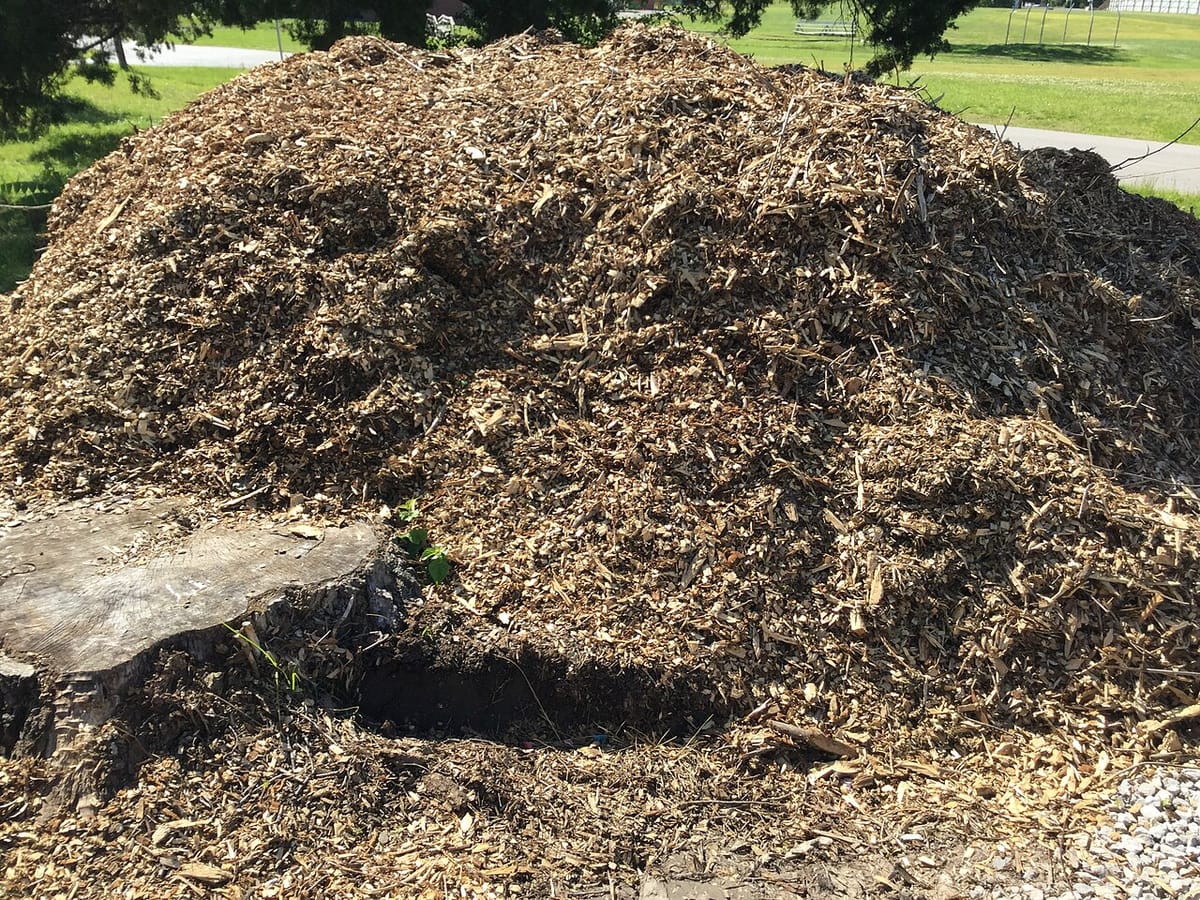
The best all-around choice for perennial beds, shrub borders, and paths. Breaks down slowly (a year or more), suppresses weeds effectively at a proper depth, and looks tidy. Arborist wood chips — the kind tree services often give away free from recent job sites — are usually the best value and, despite an old myth to the contrary, don’t rob nitrogen from soil when kept on the surface rather than tilled in (the nitrogen competition only happens when woody material is mixed into the soil, not left on top of it). Avoid using fresh wood chips in vegetable beds that get tilled annually, since incorporating them does cause temporary nitrogen tie-up; keep them as a surface layer instead.
Straw
The classic choice for vegetable gardens — light, easy to spread, breaks down within a season (adding it to the soil’s organic matter each year), and doesn’t compete for nitrogen the way wood products can if incorporated. Make sure it’s straw, not hay — hay is often full of weed and grain seeds that will sprout throughout the bed, while straw (the stripped stalks left after grain harvest) is largely seed-free.
Shredded leaves
Essentially free if you have deciduous trees nearby, and excellent for both vegetable and ornamental beds. Whole leaves can mat into a soggy, water-shedding layer, so running them through a mower first (shredding them into smaller pieces) makes a much better mulch that stays airy and breaks down faster, feeding the soil generously in the process.
Grass clippings
Fine and fast-decomposing — useful in vegetable beds, but only applied in thin layers (half an inch to an inch at a time), since a thick pile of fresh clippings mats down, excludes air, and turns slimy and smelly as it decomposes anaerobically. Let clippings dry for a day before applying, and never use clippings from a lawn recently treated with herbicide, which can carry over and damage garden plants.
Pine needles (pine straw)
Lightweight, slow to break down, and a good fit for beds of acid-loving plants (azaleas, blueberries, rhododendrons) since they add mild acidity as they decompose — though not enough to meaningfully shift the pH of beds not already suited to those plants, despite a persistent myth that pine needles alone can turn soil acidic.
Compost as mulch
A thin layer (an inch or so) of finished compost spread on the surface functions as mulch while delivering more direct nutrition than other organic materials — often used as the first layer beneath a thicker wood chip or straw mulch, combining feeding and weed suppression in one application. Our composting guide covers building the supply.
Landscape fabric and gravel
Useful for permanent, non-growing areas — pathways, under gravel patios, around structures — but a poor fit for growing beds. Fabric degrades and tears within a few years, weeds eventually root through and into it (making future removal harder, not easier), and it blocks the organic matter exchange that makes mulch valuable for soil health in the first place. Reserve these for hardscape, not planting beds.
Alt: Comparison of different mulch materials including wood chips, straw, shredded leaves, and pine needles
Caption: Six materials, six different jobs — matching mulch to bed matters more than brand or price.
Depth and placement: the two rules that prevent most mulch mistakes
Depth: two to three inches for most organic mulches. This is the range that reliably blocks weed-seed germination without suffocating roots or holding excessive moisture against the soil. Thinner than two inches lets enough light through for weeds to sprout anyway, defeating much of the purpose; thicker than four inches (especially with fine materials that compact) can create an overly wet, low-oxygen zone that stresses roots rather than helping them. Fine materials like grass clippings and compost should stay on the thinner end (half an inch to one inch per application), applied more frequently rather than piled deep all at once.
Placement: keep mulch off the stems. Leave a two-to-three-inch gap of bare soil directly around the base of every plant and, especially, every tree trunk. Mulch piled directly against bark — sometimes called a “mulch volcano” when done to excess around trees — traps moisture against the trunk, creating conditions that invite rot, bark disease, and easy access for burrowing pests, and can encourage the tree to grow shallow roots up into the mulch layer instead of down into the soil where they belong. This single mistake, seen constantly in commercial landscaping, undoes much of mulch’s benefit and actively shortens the life of the plant it was meant to help.
Timing: when to mulch and when to wait
Spring vegetable and flower beds: wait until warm-season plants are up and the soil has warmed before applying a thick mulch layer. Mulching too early insulates the cold soil underneath, slowing the very warmth that seeds and transplants need to get growing — the same principle covered in our summer garden care guide, which recommends mulching right after warm-season planting rather than before.
Perennial beds, shrubs, and trees: mulch can go down anytime the soil is workable and free of frost, and benefits from a fresh layer in late fall, after the ground has cooled but before hard winter sets in. A fall mulch layer insulates roots against extreme cold and the freeze-thaw cycles that can heave shallow-rooted perennials right out of the ground over winter.
Refreshing existing mulch: most organic mulch needs topping up once a year as it decomposes and settles — you’re rarely removing old mulch, just adding enough new material on top to restore the two-to-three-inch depth. Only fully remove old mulch if it’s matted into an impermeable crust, showing signs of a problem like artillery fungus (a wood-decomposing fungus that flings tar-like spore masses onto nearby siding — a nuisance more than a plant threat, but worth avoiding near light-colored house walls), or if repeated top-ups have built up an excessive combined depth.
A note on cost: the free options are often the best ones
Municipal composting programs, tree services doing removals nearby, and your own fall leaf pile are frequently free sources of high-quality mulch that outperform anything bagged and sold by volume. Many cities offer free bulk wood-chip pickup from municipal tree operations specifically because they need somewhere to put the material — a quick search for your city or county’s website usually turns up the program. Arborist companies doing removal work nearby will often dump a full truckload of fresh chips for free rather than paying a disposal fee themselves, if you’re willing to take a large, unscheduled delivery; several tree-service-focused wood chip exchange services online connect gardeners with companies looking to offload chips locally.
The one habit worth building
If mulching feels like one more task competing for attention in an already busy garden calendar, treat it as the highest-leverage one available: a properly applied layer of mulch does the weeding, a meaningful share of the watering, and part of the soil-building work automatically, for months at a time, in exchange for one or two afternoons of spreading it. Few other single practices return that much time saved for that little effort — which is why, once established, most experienced gardeners consider bare soil the exception in their garden, not the rule.
Frequently asked questions
What is the ideal mulch depth?
Two to three inches for most organic mulches (wood chips, straw, shredded leaves) on garden beds. Less than two inches doesn't reliably block weed germination; more than four inches on fine-textured mulch can suffocate roots and hold too much moisture against the soil. Fine mulches like grass clippings need thinner layers, applied more often, since they mat down and can turn slimy if piled thick.
Should mulch touch the base of plants and tree trunks?
No — leave a two-to-three-inch gap around plant stems and tree trunks, sometimes called a 'mulch volcano' when done wrong. Mulch piled directly against bark traps moisture there, invites rot and pest access, and can encourage roots to grow up into the mulch layer instead of down into soil.
What's the difference between organic and inorganic mulch?
Organic mulches (wood chips, straw, shredded leaves, compost, pine needles) break down over time, feeding soil life and improving soil structure as they decompose — they need topping up annually. Inorganic mulches (landscape fabric, gravel, rubber mulch) don't break down or feed the soil, but last much longer and suit permanent pathways or purely decorative areas rather than growing beds.
Can mulch attract pests like slugs or termites?
Thick, constantly damp mulch against a house foundation can attract termites and other wood-loving insects, so keep mulch several inches away from siding and foundations. Slugs do favor damp mulch as daytime shelter, but the benefits for vegetable and flower beds — moisture retention, weed suppression, soil health — generally outweigh this, and slug pressure is manageable with the usual control methods.
Is dyed mulch safe to use in vegetable gardens?
Most dyed mulch uses iron oxide or carbon-based colorants considered safe, but it's frequently made from recycled wood that can include construction debris of uncertain origin. For food-growing beds, plain, undyed wood chips, straw, or shredded leaves are the more conservative choice; save dyed mulch for purely ornamental beds if you want the color.
When should I apply mulch — before or after plants are up?
After warm-season plants are up and the soil has warmed in spring — mulching too early insulates cold soil and slows plants that want warmth. For perennial beds and around trees and shrubs, refresh mulch anytime the layer has thinned, and add a fresh layer in late fall after the ground cools, to insulate roots for winter.
Do I need to remove old mulch before adding new mulch?
Not usually — a fresh layer on top of mostly decomposed old mulch is fine and is, in fact, how mulch improves soil over years. Remove old mulch only if it's matted into an impermeable layer, showing signs of artillery fungus or another problem, or if the combined depth would exceed the recommended two-to-four-inch range.