Companion Planting: What Actually Works and What's Garden Folklore
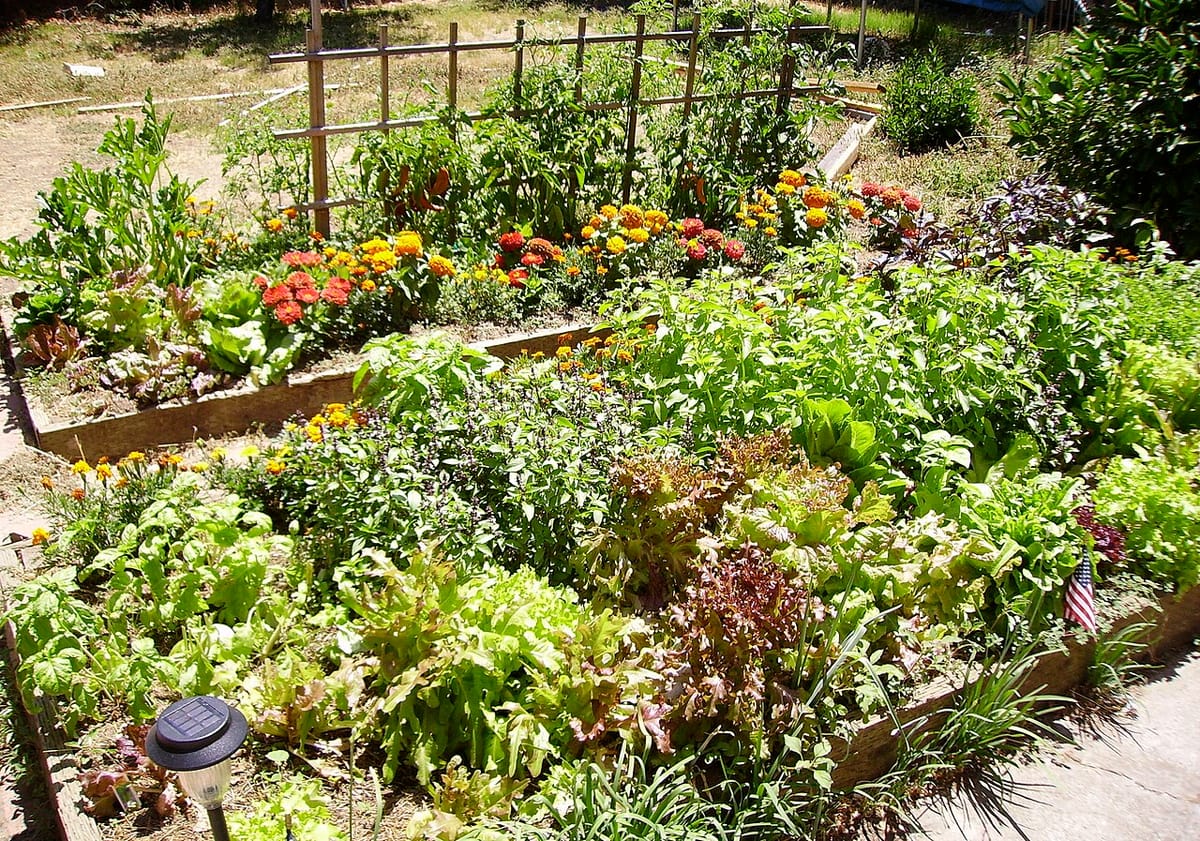
Companion planting is one of gardening’s most cherished traditions, and also one of its most confidently overstated. Ask around and you’ll hear firm, specific rules — basil makes tomatoes taste better, marigolds repel every pest in the yard, never plant this near that — delivered with a certainty that outpaces the actual evidence behind most of it. That doesn’t mean companion planting is nonsense; some pairings rest on real, well-documented mechanisms. It means the honest version of this topic requires sorting the genuine science from the garden folklore, which is exactly what this guide does.
The pairings with real mechanisms behind them
Nitrogen fixation: legumes feeding their neighbors. Beans and peas host nitrogen-fixing bacteria in root nodules, converting atmospheric nitrogen into a plant-available form that can benefit nitrogen-hungry neighbors and successor crops. This is genuine, measurable soil chemistry, not folklore — it’s the same mechanism behind the crop rotation practice of following legumes with heavy feeders like brassicas.
Physical structure and shade: the Three Sisters. The traditional Indigenous American planting of corn, beans, and squash together has the strongest combined evidence of any classic companion grouping: corn stalks provide a living trellis for climbing beans, beans fix nitrogen the corn uses heavily, and squash’s broad leaves spread across the ground, shading out weeds and helping retain soil moisture for all three. This works through structural and nutritional mechanisms that are straightforward to verify, which is part of why it’s held up so well across generations of use.
Attracting pollinators and beneficial insects. This is the best-supported “pest control” benefit companion planting offers — small-flowered plants like alyssum, dill, cilantro (left to flower), and cosmos draw in hoverflies, parasitic wasps, and other predatory or parasitic insects whose larvae consume aphids, caterpillar eggs, and other pests. It’s an indirect effect (the flowers aren’t repelling anything themselves), but it’s real and documented, and it’s the actual mechanism behind much of what popular companion planting lists attribute to direct pest-repelling magic.
Trap cropping. Planting a preferred host plant specifically to lure pests away from a main crop has genuine support — nasturtiums, for instance, are commonly used as an aphid trap crop, drawing aphids to themselves so a nearby vegetable crop is less heavily colonized. This works through the pest’s own preference, not through any repelling effect, and the trap plant typically needs to be removed or treated once it’s done its job of concentrating the pests.
Some documented antagonism, not just synergy. A few plants do measurably inhibit others nearby — alliums (onions, garlic) have some research support for suppressing the growth of beans and peas planted too close, likely through compounds released into the soil. This is one of the few “don’t plant these together” rules with real evidence behind it, in contrast to many other traditional antagonistic pairings that lack solid research support.
Alt: Three Sisters companion planting of corn, climbing beans, and squash together
Caption: Structure, nitrogen, and ground cover — three genuine mechanisms in one traditional planting.
The popular claims with weaker or mixed evidence
Marigolds as a broad pest repellent. This is likely the most repeated companion planting claim, and the evidence is considerably more limited than the folklore suggests. Some marigold varieties do show a genuine suppressive effect on certain soil-dwelling nematodes around their root zone specifically — a real, if narrow, benefit. The broader claim that marigolds repel aphids, beetles, and other above-ground pests through scent across an entire garden bed isn’t well supported by controlled research. Their most reliable actual benefit is the same pollinator-attraction effect covered above, which is valuable but different from what’s usually claimed.
Basil improving tomato flavor when planted nearby. A charming and widely repeated idea with no solid scientific support — there’s no established mechanism by which one plant’s proximity would alter another’s fruit flavor through the soil or air in this way. Basil and tomatoes do make sensible garden neighbors for practical reasons (similar water and sun needs, and basil’s flowers draw pollinators), just not through the specific flavor-enhancing effect often claimed.
Most specific “this repels that” scent-based pairings. Claims like specific herbs repelling specific pests through smell alone are common throughout companion planting lore, but the research support for most individual pairings of this type is thin, inconsistent across studies, or simply untested at the scale gardeners plant. This doesn’t mean interplanting herbs among vegetables is pointless — it often supports pollinators and diversifies the bed in useful ways — just that the specific repelling mechanism usually claimed isn’t well established.
Companion planting as a stand-alone pest control strategy. Perhaps the largest gap between folklore and evidence is the general expectation that a well-chosen companion planting scheme can substitute for monitoring and managing pests directly. Even the best-supported pairings here offer modest, supplementary benefits — none of them prevent an aphid colony, a squash bug infestation, or a fungal disease outbreak on their own, and treating companion planting as sufficient protection on its own is a common way real pest and disease problems go unnoticed until they’re well established.
A practical example: planning a companion bed around a tomato patch
Applying the evidence-based mechanisms above to an actual bed looks like this: basil planted nearby for its practical similarity in water and sun needs (not flavor enhancement), a border of alyssum or dill left to flower for pollinator and beneficial-insect support, and a few marigolds worked in for their narrower nematode-suppressing benefit and general pollinator draw — while skipping the specific “repels aphids” claim as the reason for including them. None of this replaces walking the bed regularly to catch actual pest problems early, per the pest identification guide, but it does build a bed that supports more beneficial insect activity than a monoculture planting would.
Practical guidance: what to do
Given this mixed picture, a sensible approach to companion planting focuses on the mechanisms with real support rather than chasing every traditional pairing for its claimed magic:
- Interplant legumes with nitrogen-hungry crops where rotation allows, taking advantage of the genuine nitrogen-fixing benefit.
- Border and interplant vegetable beds with small-flowered plants — alyssum, dill, cosmos, cilantro left to bolt — to draw in the pollinators and predatory insects that provide real, if indirect, pest management support, the same principle covered in our aphid control guide and pest identification guide.
- Consider a trap crop like nasturtiums near aphid-prone vegetables, understanding it needs monitoring and occasional removal once it’s drawn in a pest population.
- Keep alliums away from beans and peas, one of the few traditional antagonistic pairings with reasonable evidence behind it.
- Don’t rely on any companion planting pairing as a substitute for actual pest identification and management — even the best-supported benefits here are modest and supplementary, not a replacement for the direct, gentle-escalation approach that dedicated pest control requires.
Why the folklore persists anyway
Even where the specific mechanism claimed doesn’t hold up, many traditional companion planting practices produce gardens that perform reasonably well — and it’s worth understanding why, since it explains the folklore’s staying power. A densely, diversely planted garden bed does support more pollinators and beneficial insects than a single-crop monoculture, regardless of which specific pairing gets credited. Mixed plantings also make it harder for a pest specializing in one crop to find and colonize its entire target in one place. The garden that follows companion planting folklore closely is often also a garden that’s diverse, densely planted, and includes flowering plants throughout — all beneficial practices, even when the specific pairing story attached to them doesn’t survive close scientific scrutiny.
The honest takeaway
Companion planting isn’t a myth to dismiss wholesale, but it also isn’t the precise, rule-based system of specific magical pairings it’s often presented as. The real, documented mechanisms — nitrogen fixation, physical structure, pollinator attraction, trap cropping, and a small number of genuine antagonistic relationships — are worth building into a garden plan deliberately. The rest of the folklore is, at worst, harmless tradition that happens to coincide with good gardening practices like diversity and density, and at best, an interesting piece of gardening culture passed down without needing to be literally true to be worth knowing.
Frequently asked questions
Does companion planting actually work?
Some of it, yes, with real mechanisms behind it — attracting pollinators and beneficial insects, providing physical structure or shade, and improving soil through nitrogen fixation are all documented effects. Many classic companion planting claims (specific pairs that supposedly repel specific pests through smell alone) have much weaker or no scientific support and are better understood as garden folklore passed down through generations.
What is the most well-supported companion planting example?
The 'Three Sisters' combination of corn, beans, and squash has the strongest combined evidence — beans fix nitrogen the corn uses, corn provides a structure for beans to climb, and squash's broad leaves shade the soil, suppressing weeds and retaining moisture. This is a structural and nutritional relationship, not a pest-repelling one, which is part of why it holds up better than many other pairings.
Do marigolds really repel pests when planted near vegetables?
The evidence is mixed and pest-specific. Some marigold varieties have shown a genuine effect against certain nematodes in the soil around their roots, but the widely repeated claim that marigolds broadly repel aphids, beetles, and other above-ground pests through scent is not well supported by controlled research. Their more reliable benefit is attracting pollinators and predatory insects that indirectly help control pests.
Should I avoid planting certain vegetables next to each other?
A few documented antagonistic relationships exist — notably, some plants in the allium family (onions, garlic) can inhibit the growth of beans and peas nearby, an effect with some real research support. Most other 'never plant together' pairings in popular gardening lore lack strong evidence and are safe to disregard if space is tight.
What's the real benefit of interplanting flowers with vegetables?
The most reliable, well-documented benefit is attracting pollinators and beneficial predatory or parasitic insects — plants like alyssum, dill, and cosmos draw in hoverflies, parasitic wasps, and other insects that prey on common garden pests, providing genuine indirect pest control even though the flowers aren't repelling anything directly themselves.
Is companion planting worth doing if some of it is unproven?
Yes, selectively — focus on the pairings with real mechanisms (nitrogen fixation, physical structure, pollinator attraction, documented allelopathic effects) rather than chasing folklore pairings for their supposed pest-repelling magic. Even without every traditional claim panning out, a diverse, densely and thoughtfully planted garden is generally healthier than a monoculture regardless of the specific pairing science.
Can companion planting replace pest control methods entirely?
No — even the best-supported companion planting benefits are modest and supplementary, not a replacement for the direct identification and gentle-escalation pest management covered in dedicated pest guides. Companion planting works best as one layer in a broader approach, not a stand-alone solution to an active infestation.