Raised Garden Beds: How to Build, Fill, and Plant Your First One
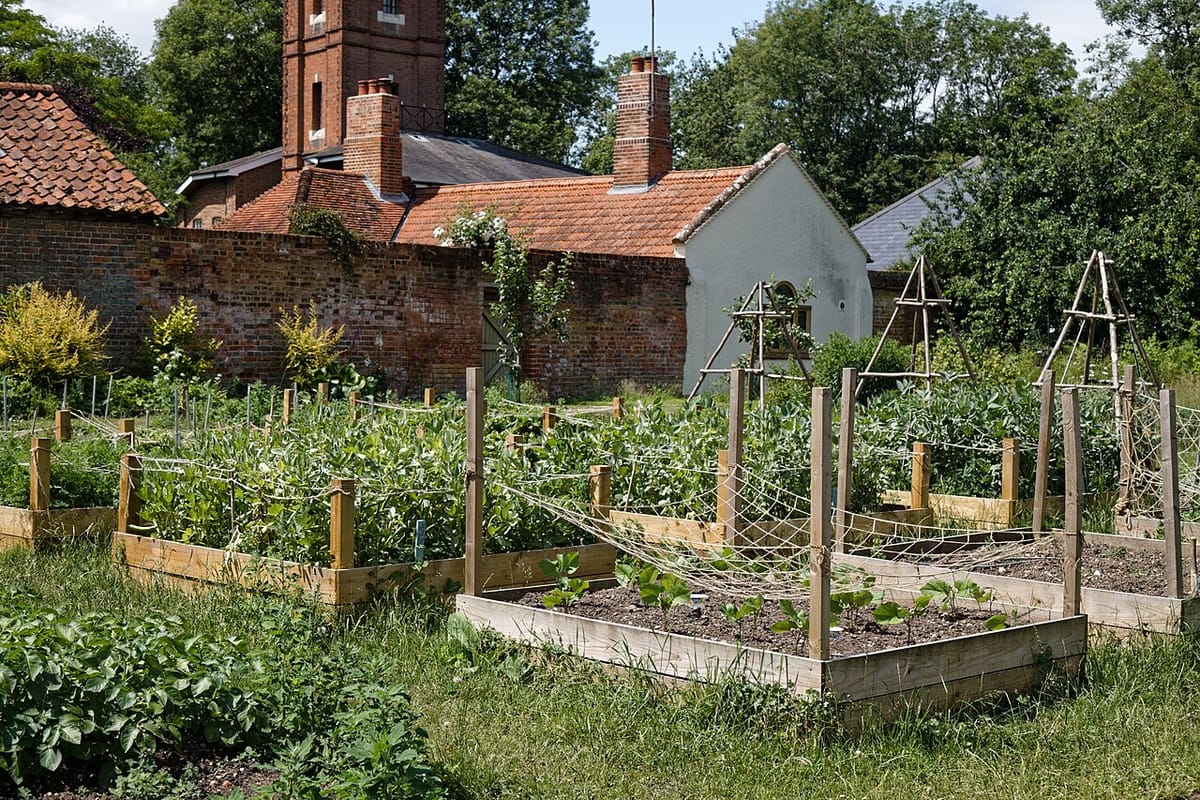
Raised beds are the rare gardening upgrade that pays off in every direction at once. The soil in them is whatever you decide it is — a gift wherever the native ground is clay, sand, rock, or mystery fill. They drain well and warm up earlier in spring, adding weeks to the season. Nobody steps on the soil, so it never compacts. Edges give weeds a border and give your knees a place to rest. And a framed garden simply gets tended more — the psychology is silly and real.
The costs are honest too: lumber and soil aren’t free, and beds dry out faster than ground-level gardens. This guide walks through the whole decision chain — whether, where, what size, what material, how to fill one without going broke, and what to plant the first season — with the trade-offs stated plainly.
Do you need raised beds?
Worth asking before buying lumber. Raised beds earn their cost when:
- native soil is poor, compacted, rocky, or suspect (near old buildings, where lead paint may have settled, a bed with a barrier underneath is the standard workaround);
- drainage is bad — beds lift roots out of the swamp;
- bending is a problem — a 24-inch bed with a wide cap rail is furniture you can garden from;
- grass and weeds are aggressive — a framed, mulched bed with defined edges is far easier to defend;
- you want an early start — raised soil warms weeks ahead of the ground.
If you have decent loam, good drainage, and a working back, an in-ground bed grows the same tomatoes for the cost of a shovel — our guide to starting a vegetable garden covers that route. Many gardens sensibly mix both.
Dimensions: the numbers that matter
Width: 4 feet, maximum. This is the one hard rule. You must reach the center of the bed from the side without stepping in — stepping in compacts the soil and defeats a main purpose of the bed. Most adults comfortably reach about 2 feet, so 4 feet works with access from both sides. A bed against a fence or wall gets reached from one side only: 2–3 feet wide, no more.
Length: whatever suits the site — 8 feet is standard because lumber comes in 8-foot sticks and the math stays tidy (one 8-footer plus one cut in half builds a 4×8 frame from three boards per course). Beds longer than 10–12 feet tempt you to step across them; add a path instead.
Height: match it to what’s underneath and to your back.
- 8–12 inches — the standard over workable soil. Roots use the bed and the loosened ground below; costs stay sane.
- 18 inches — comfortable to perch on the edge of, deep enough for anything, first step into back-friendly territory.
- 24+ inches — gardening without kneeling, and the right call over concrete, hardpan, or anywhere the bed must be self-contained. Soil volume (and cost) grows fast at this height; the filling strategies below matter most here.
Paths between beds: 18 inches minimum, 24 if a wheelbarrow will pass. Mulch or wood-chip paths over cardboard stay weed-free with almost no work.
Alt: Diagram of raised bed dimensions showing four-foot width, reach distance, and path spacing
Caption: Design for your arms: every inch of soil within a 2-foot reach of an edge.
Materials: what to build from
Cedar (or your region’s rot-resistant species — redwood, cypress, black locust). The default answer. Naturally rot-resistant untreated, safe around food by anyone’s standard, weathers to a handsome gray. A cedar bed lasts 10–15 years. Costs more upfront; costs least per year.
Pine (untreated). Half the price, a third the lifespan — 3 to 6 years before corners soften. A perfectly rational choice for testing whether you like raised beds before investing.
Pressure-treated lumber. The modern copper-based treatments (ACQ, copper azole) replaced the old arsenic-containing CCA formula for residential lumber back in 2004, and university extension services generally consider today’s treated wood acceptable for vegetable beds. The copper stays overwhelmingly in the wood; what little migrates moves millimeters, not feet. If it still nags at you — fair — line the inside walls with heavy polyethylene sheeting (walls only, never the bottom) or just spend up for cedar. Never use railroad ties (creosote) or found lumber of unknown treatment.
Galvanized metal. The stock-tank and kit-bed look: durable (20+ years), fast to assemble, and safe — the zinc coating is stable at garden pH. Metal walls warm soil quickly in spring (good) and radiate heat in extreme summers (mind the edge plants).
Stone, brick, and concrete block. Permanent, free if salvaged, endlessly configurable. Block cavities even plant herbs. Heavy labor once; zero maintenance forever.
Composite/recycled plastic boards. No rot, no splinters, tidy look; they flex on long runs (support every 4 feet) and cost cedar money.
Assembly, in one paragraph: cut boards to length, fasten courses to 4×4 corner posts (or use metal corner brackets) with exterior-grade screws, check square by measuring the diagonals, and set the frame on ground you’ve leveled — a lopsided bed waters itself unevenly forever. Sink corner posts a few inches into the ground for beds over 12 inches tall. The entire build is four straight cuts and sixteen screws; it is a first-timer’s project.
Filling: the part that surprises people
A 4×8 bed 12 inches deep holds 32 cubic feet of soil — about twenty-one 1.5-cubic-foot bags. An 18-inch bed wants half again more. Two strategies keep this affordable:
Buy bulk, not bags
Past roughly 15 bags, bulk soil delivered by the cubic yard (or picked up in a truck bed) costs a fraction of bagged. Landscape suppliers sell blended “raised bed mix” or “garden mix”; ask what’s in it — you want real topsoil and compost, not ground-up construction fill. One cubic yard = 27 cubic feet, so a 4×8×1-foot bed swallows just over a yard.
The classic self-blended recipe: half topsoil, half compost, with a few shovels of coarse material (perlite, coarse sand, fine bark) mixed in if the topsoil runs heavy. Don’t fill any bed with pure compost — it’s a wonderful amendment and a poor sole medium, slumping and drying strangely as it finishes decomposing. And note this is the opposite of container advice: beds are big enough to behave like ground, so real soil belongs here even though it never belongs in pots.
Bury wood in the bottom (hügelkultur, the practical version)
For beds 18 inches and deeper, fill the bottom third to half with coarse organic matter: rotting logs, branches, wood chips, straw, last fall’s leaves — packed down and watered as you layer. Cap with your soil mix on top (keep at least 10–12 inches of real mix for roots).
This isn’t just a cost dodge, though it’s a great one. The buried wood decomposes over years into a moisture-holding sponge that feeds soil life from below — deep beds built this way need less summer watering after year one. The one honest caveat: the pile settles. Expect the surface to drop a few inches the first season, and keep some mix aside to top up. Avoid burying walnut (allelopathic), diseased wood, or anything treated.
What goes at the very bottom
On soil: plain cardboard, overlapped, tape removed — it smothers the grass beneath and feeds worms as it vanishes. Not landscape fabric (it becomes a root-tangling filter mat), not gravel (a gravel layer raises the waterlogged zone into the bed — the same drainage myth we debunk for pots). Where burrowing rodents are established locals, staple half-inch hardware cloth across the frame bottom before setting it; it’s cheap insurance you can’t add later.
On concrete or contaminated ground: the bed is a giant container — 18 inches minimum, and consider a permeable liner to keep soil and surface separated.
Planting your first bed
Raised beds reward slightly different habits than row gardens:
Space by plant, not by row. Row spacing on seed packets assumes a farm tractor needs to pass. In beds, use the plant-to-plant figure in a grid — the square-foot method is the beginner-friendly version: 1 tomato per 2–4 squares, 4 lettuces or 1 kale per square, 9 bush beans or 16 radishes per square. Density shades out weeds and multiplies yield per bed.
Put tall things north (in the northern hemisphere): trellised tomatoes, peas, and cucumbers along the north edge so they don’t shade the rest. A cattle-panel trellis arched between two parallel beds turns the path into a food tunnel — the best trick in small-garden design.
A realistic first 4×8: two tomatoes (caged, north corners), three peppers, a 2×2-foot salad block resown monthly, a row of bush beans, basil and marigolds in the warm south edge, and a nasturtium spilling over a corner because gardens should have at least one indulgence. That bed feeds a household salads and sides from June to frost — the crop-by-crop reasoning is in our easiest vegetables guide.
Water deeply, mulch always. Beds drain beautifully, which cuts both ways — they dry faster than ground-level soil, especially in year one. Two inches of straw or shredded-leaf mulch plus a deep soak once or twice a week beats daily sprinkling in every way that matters. A soaker hose snaked under the mulch makes the whole job a spigot turn.
Keeping the bed good: the yearly rhythm
The magic of never-compacted soil is that maintenance is nearly nothing:
- Each fall or spring: spread one to two inches of compost on top. Don’t dig it in — worms handle incorporation, and undisturbed soil structure is the asset you’re protecting. A home compost pile exists to feed this exact habit.
- Top up settling with extra mix, especially over a hügelkultur base.
- Rotate families year to year — tomatoes-and-kin move beds on a three-year cycle to starve soilborne disease.
- Check screws and corners each spring; a loose corner re-screwed in April is a bulged wall avoided in August.
- Never step in. Still the rule. Lay a board across the bed if you must lean in for something.
A raised bed is one weekend of carpentry, one delivery of soil, and then a decade of gardening on ground that’s better than anything nature issued your yard. Build one this season; you’ll build the second one without consulting any guide at all.
Frequently asked questions
How deep should a raised garden bed be?
Over reasonable soil, 8–12 inches is plenty — roots continue down into the native ground below. Over concrete, compacted fill, or where you're isolating from the ground entirely, go 18–24 inches. Deeper also means less bending, which is the honest reason many gardeners choose tall beds.
Is treated lumber safe for vegetable beds?
Modern pressure-treated lumber (rated for ground contact, treated with copper-based preservatives like ACQ or CA) is considered acceptable for vegetable gardens by most extension services — the arsenic-based treatment of concern (CCA) left the residential market in 2004. If you'd rather skip the question entirely, use cedar, or line treated wood with heavy plastic sheeting on the soil side.
What is the cheapest way to fill a deep raised bed?
Fill the bottom third to half with coarse organic bulk — logs, branches, wood chips, straw, fall leaves — packed down and watered, then finish with soil mix on top (the hügelkultur approach). The buried wood decomposes slowly into moisture-holding sponge, and you've halved the number of soil bags. Expect the surface to settle a few inches the first year; just top it up.
What soil mix should go in a raised bed?
A reliable recipe is roughly equal parts good topsoil and compost, with a shovelful of coarse material (perlite, coarse sand, or fine bark) per wheelbarrow if drainage needs help. Buying in bulk by the cubic yard costs a fraction of bagged products once you need more than about 15 bags.
Should I put anything in the bottom of a raised bed?
On soil: nothing but cardboard to smother grass — roots should be able to continue into the ground, and gravel layers actively harm drainage. Hardware cloth stapled across the bottom is worth it where gophers or voles are a known problem. On concrete or contaminated soil: use a bed 18 inches or deeper and treat it as a giant container.
How many plants fit in a 4×8 raised bed?
Using roughly square-foot spacing: one tomato or pepper per 2–4 squares, four lettuce or one kale per square, nine bush beans or sixteen radishes per square. A practical first-year 4×8 layout: two tomatoes, three peppers, a 2×2 salad block, a row of beans, and herbs and flowers tucked into corners.
Do raised beds need more watering than in-ground gardens?
Somewhat — better drainage and exposed sides mean they dry out faster, especially in the first year before the soil ecosystem matures. Mulching the surface and watering deeply rather than daily closes most of the gap; drip lines or a soaker hose laid under the mulch close the rest.