Spider Plant Care: The Nearly Unkillable Houseplant, Done Right
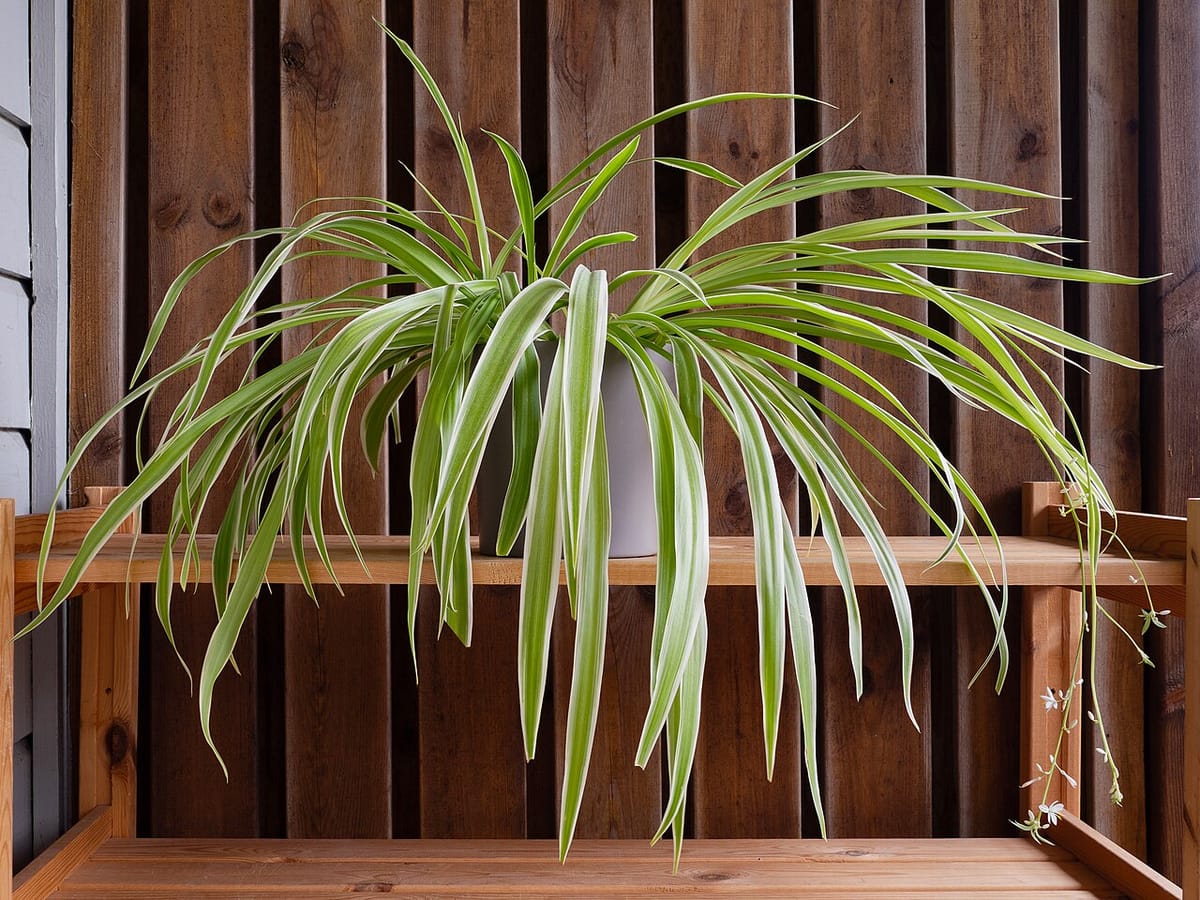
If pothos is the houseplant that teaches beginners to read a plant’s signals, the spider plant might be the one that teaches beginners not to worry so much in the first place. Few houseplants tolerate a wider range of light, watering mistakes, and general neglect while still looking presentable — which is exactly why it’s been a staple of offices, dorm rooms, and first-apartment windowsills for generations. It’s not entirely indestructible, though, and understanding its real preferences is the difference between a spider plant that merely survives and one that fills a hanging basket with arching, plantlet-laden abundance.
What makes spider plants so forgiving
Spider plants (Chlorophytum comosum) store some water and nutrients in thickened root structures, giving them a genuine buffer against inconsistent care that many other houseplants lack. Combined with a tolerance for a wide range of light conditions and a general indifference to less-than-perfect humidity, this makes them one of the most forgiving common houseplants available — which is exactly why they’re so often recommended for beginners, offices, and anyone who travels frequently or simply forgets to water on a strict schedule.
Light: adaptable, with one clear limit
Spider plants tolerate an unusually wide light range — from fairly low indoor light to bright indirect exposure — and will survive, if not thrive, in conditions that would stress many other houseplants. Medium to bright indirect light produces the fastest growth and the fullest, most vigorous plants, so while a spider plant will survive in a dimmer corner, a brighter spot (short of harsh direct sun) rewards it with noticeably better growth and more of the plantlet production that makes the plant so rewarding.
The one clear limit is direct, hot sun — a spider plant left in intense afternoon sun through a south-facing window can develop scorched, bleached, or crispy patches distinct from the more common fluoride-related tip browning covered below. A bright spot with indirect or filtered light remains the sweet spot; harsh direct sun for extended hours is the exception this generally easygoing plant doesn’t tolerate well.
Watering: err toward underwatering, not over
Water when the top inch or two of soil has dried out — in bright light during active growth, this might mean roughly weekly; in lower light or during winter dormancy, considerably less often. Spider plants store some water in their thickened, fleshy root structures, which is part of why they tolerate a missed watering far better than they tolerate soil that stays consistently soggy, a condition that risks the same root rot covered in our general houseplant watering guide.
When in doubt, the safer direction to err is toward slight underwatering rather than overwatering — a spider plant that dries out a bit too much recovers quickly and visibly once watered, while one sitting in chronically wet soil is dealing with a much harder problem to reverse.
Alt: Spider plant leaves showing healthy growth next to leaves with brown tip damage
Caption: Brown tips are the spider plant's signature complaint — and almost never a sign of a dying plant.
Brown tips: the spider plant’s most common complaint (and the least serious)
Ask any spider plant owner about problems and brown, crispy leaf tips top the list almost universally — and the reassuring news is that this is rarely a sign of a seriously struggling plant. The most common causes:
- Fluoride and chlorine in tap water, to which spider plants are notably more sensitive than many other houseplants. Watering with filtered or distilled water, or letting tap water sit out uncovered overnight (which allows some chlorine to dissipate, though not fluoride), often visibly reduces new tip browning over time.
- Low humidity, particularly during winter heating season, which dries leaf tips faster than the plant can compensate.
- Fertilizer salt buildup in the soil from regular feeding, which can be flushed out periodically by watering thoroughly enough that water runs freely through the drainage holes, carrying accumulated salts with it.
None of these causes are urgent, and existing brown tips can simply be trimmed off with scissors for appearance — they won’t turn green again, but new growth under adjusted watering conditions typically comes in cleaner.
Trim along the natural angle of the leaf tip rather than cutting straight across, which keeps the trimmed leaf looking more natural than an obviously blunt-cut edge — a small cosmetic detail, but one that makes a heavily trimmed plant look considerably tidier while the underlying watering fix takes effect over the following weeks of new growth.
Propagation: the spider plant’s built-in gift shop
Once mature — and especially once somewhat rootbound in its pot — a healthy spider plant sends out long, arching stems tipped with small plantlets, essentially miniature genetic clones of the parent plant, often already showing tiny root nubs at their base even while still attached. This is one of the most rewarding and easiest propagation opportunities in the houseplant world:
- Leave plantlets attached for a trailing, cascading display — many spider plant owners consider this the plant’s most attractive feature, and a mature hanging basket loaded with dangling plantlets is a striking display requiring no extra work.
- Or cut them free once they show some root development at the base, and either place the plantlet in a glass of water until roots lengthen further, or plant it directly into moist potting mix.
- New plants root readily either way, typically within a couple of weeks, giving away or expanding a spider plant collection essentially for free — a single mature parent plant can produce many plantlets over a growing season.
If a mature plant isn’t producing plantlets, patience is usually the answer — production is often triggered by the plant becoming somewhat rootbound and by seasonal daylight changes, so a young plant recently repotted into a roomy container may simply not be at the stage where it’s motivated to reproduce yet.
Repotting and feeding: minimal, low-stakes maintenance
Repot when roots visibly circle the pot or push up through the soil surface — typically every one to two years for an actively growing plant — moving up just one pot size, following the same modest-upsize principle that applies to most houseplants. A basic balanced liquid houseplant fertilizer at half strength, applied monthly during the growing season and skipped in winter, is plenty; spider plants aren’t heavy feeders and overfeeding contributes to the fertilizer-salt buildup that worsens brown tips.
Spider plants also tolerate being somewhat rootbound better than many houseplants — in fact, a slightly snug pot is part of what triggers the plantlet production covered below, so there’s little harm in leaving a repot a season longer than strictly necessary if the plant still looks healthy and vigorous.
Pet safety: one of the safe choices
Unlike many popular houseplants, spider plants are non-toxic to cats and dogs, making them a solid choice for pet-owning households navigating the pet safety considerations that rule out several other common options. Cats in particular sometimes show real interest in chewing the grass-like foliage, which won’t cause poisoning, though excessive plant-eating can still cause mild digestive upset from the fiber itself rather than any toxin — worth knowing if a cat seems unusually drawn to a spider plant’s leaves. Hanging a mature specimen out of easy reach, or providing a dedicated cat grass planting nearby as an alternative, redirects that chewing interest without needing to remove the plant from a pet-owning household entirely.
The reason it’s stuck around for generations
Spider plants have been a houseplant staple since long before the current wave of Instagram-friendly foliage, and the reason is straightforward: they tolerate an unusually wide range of light and watering conditions, recover quickly from the occasional missed watering, propagate themselves for free, and pose no risk to curious pets. It’s not a plant that demands close reading of subtle signals the way a fussier species might — it’s a plant that rewards basic, consistent care with rapid growth and a steady supply of new plants to share, which is about as good a beginner’s contract as houseplants offer.
Frequently asked questions
Why does my spider plant have brown tips?
Brown leaf tips are the spider plant's most common complaint and are usually caused by fluoride or chlorine in tap water, low humidity, or a buildup of fertilizer salts in the soil rather than a serious problem. Watering with filtered or distilled water, or letting tap water sit out overnight before use, often reduces new brown tips considerably.
How much light does a spider plant need?
Spider plants are remarkably adaptable, tolerating everything from bright indirect light to fairly low light, though they grow fastest and most vigorously in medium to bright indirect light. Direct, hot sunlight should be avoided, since it can scorch leaves and cause its own brown, crispy patches distinct from the fluoride-related tip browning.
How often should I water a spider plant?
Water when the top inch or two of soil has dried out, which in bright light during the growing season might mean weekly, and considerably less often in lower light or during winter dormancy. Spider plants tolerate a missed watering far better than they tolerate consistently soggy soil, which risks root rot.
What are the baby plantlets on my spider plant, and what do I do with them?
Those are plantlets, or 'pups' — small genetic clones the parent plant produces on long, arching stems, especially once the plant is mature and somewhat rootbound. They can be left attached as a decorative trailing feature, or cut off and rooted in water or moist soil to create entirely new, free spider plants.
Are spider plants safe for pets?
Yes — spider plants are non-toxic to cats and dogs, making them one of the safer common houseplant choices for pet-owning households. Cats in particular are sometimes drawn to chewing on the grass-like leaves, which won't cause poisoning, though excessive chewing can still cause mild digestive upset from the plant material itself.
Why isn't my spider plant producing any plantlets?
Plantlet production is often triggered by the plant becoming somewhat rootbound and by seasonal daylight length changes, so a young plant in a large pot with plenty of room may simply not be mature or stressed enough yet to trigger babies. Patience, or slightly delaying a repot to let the plant fill its current container more fully, often resolves this.
How do I propagate a spider plant plantlet?
Cut a plantlet free from its stem once it has small visible root nubs at its base, then either place it in a glass of water until roots grow further, or plant it directly into moist potting mix. Plantlets that already show some root development at the base transplant most reliably, whether started in water first or planted directly.