When to Start Seeds Indoors: Timing by Crop (Count Back from Frost)
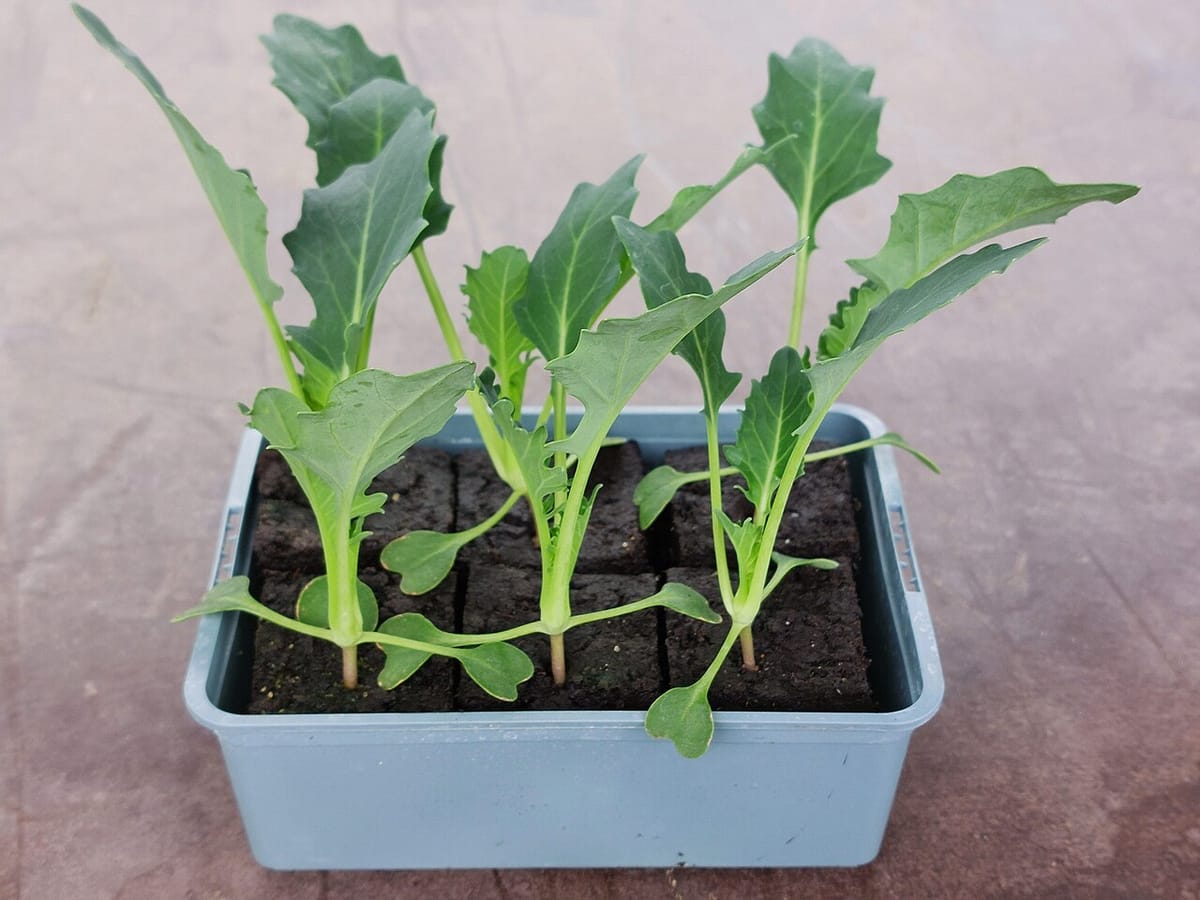
Every February, two tribes of gardeners make opposite mistakes. The eager tribe sows tomatoes the first week of the month and spends April wrestling four-foot, root-bound, flowering plants on a windowsill. The cautious tribe waits for reliably nice weather to think about seeds at all, and ends up transplanting seedlings into July heat. Both mistakes have the same cure: a calendar, worked backward.
Indoor seed starting is a timing puzzle before it’s anything else. Each crop wants a specific number of weeks of indoor growth — enough to build a stocky transplant, not so much that it outgrows its pot — and that count anchors to one date: your average last spring frost. Get the arithmetic right and everything else (lights, containers, hardening off) is straightforward mechanics. This guide gives you the arithmetic first, then the mechanics.
Step one: find your anchor date
Your average last frost date comes from your state’s cooperative extension service (searching “[your state] extension last frost date” finds it; your USDA zone narrows it but frost dates are the finer instrument). Two things to remember about it:
- It’s an average — meaning a coin flip. Frost after that date happens roughly one year in two, so “safe” planting is usually a week or two beyond it, and frost cloth stays handy.
- Everything in seed starting counts backward from it. “Start 6–8 weeks before last frost” means: frost date May 15 → sow tomatoes March 20–April 3.
Write the date at the top of a page. The rest of this article fills in the page.
Step two: the count-back chart
Weeks before last frost to sow indoors, and when to transplant out, for the crops most worth starting:
| Crop | Sow indoors | Transplant outside |
|---|---|---|
| Onions, leeks | 10–12 weeks before | 2–4 weeks before frost date |
| Celery | 10–12 weeks | 1–2 weeks after |
| Peppers | 8–10 weeks | 2 weeks after, nights >55°F |
| Eggplant | 8–10 weeks | 2 weeks after |
| Broccoli, cabbage, cauliflower | 6–8 weeks | 2–4 weeks before (they like cool) |
| Tomatoes | 6–8 weeks | 1–2 weeks after |
| Lettuce (for early heads) | 4–6 weeks | around frost date |
| Basil | 4–6 weeks | 2 weeks after |
| Marigolds, zinnias (head start) | 4–6 weeks | after frost |
| Squash, cucumbers, melons | 2–4 weeks, individual pots | 2 weeks after, soil warm |
And the don’t-bother list: carrots, beets, radishes, and other root crops (transplanting deforms the root — direct-sow), plus peas, beans, and corn (they sprint from direct sowing and sulk from transplanting). Zinnias and sunflowers also do perfectly well sown in place; indoor starts only buy a couple of weeks. When a packet says direct sow, it’s telling the truth.
Notice the pattern in the chart: the long-lead crops (onions, peppers, tomatoes) are the ones where seed starting matters — buy-or-start is a real decision. The short-lead crops are optional head starts. If this is your first year, start only tomatoes, peppers, and basil, and count everything else as next year’s expansion. (First garden entirely? The full startup sequence comes first; seed starting is chapter two.)
Step three: the setup (light is 80% of it)
Here’s the uncomfortable truth that separates catalogs from reality: a windowsill is not enough light. Late-winter window light — short days, low sun, glass filtering — is a small fraction of outdoor spring sun. Seedlings grown on it stretch: tall, thin, pale, hinged at the soil line. Legginess is not a variety problem or a watering problem; it is a light problem, nearly every time.
The fix costs less than a flat of nursery transplants:
- One LED shop light (ordinary 4-foot fixture, “daylight” spectrum) hung on adjustable chains 2–4 inches above the leaves, raised as plants grow. Purpose-made grow lights work too; they’re just not required at this scale.
- A $10 outlet timer running it 14–16 hours a day. Darkness matters too; don’t run 24/7.
- Total footprint: one basement or spare-room shelf.
The remaining 20%:
- Containers: cell trays, small pots, yogurt cups — anything with drainage holes, washed if reused (a rinse with diluted bleach prevents carryover disease).
- Medium: fresh, bagged seed-starting mix — fine, sterile, fluffy. Not garden soil (compacts, carries damping-off fungi) and not chunky potting mix for the smallest seeds. Moisten it before filling containers.
- Heat for germination: most seeds sprout fastest at 70–80°F soil temperature. The top of a refrigerator works; a seedling heat mat works better, especially for peppers, which are notoriously slow and cold-averse. Heat matters until sprouting; after that, cooler room temps (60s) grow stockier plants.
- A small fan on low, ruffling the seedlings a few hours a day. It circulates air against fungal problems and the flexing literally builds stronger stems — indoor wind training.
Step four: sowing and the first weeks
- Sow at the packet’s depth — the rule of thumb is twice the seed’s width; tiny seeds barely covered, big ones knuckle-deep. Two seeds per cell, snipping the weaker at first true leaves (snip, don’t pull — pulling wrecks the survivor’s roots).
- Label everything, immediately. Every March, a thousand gardeners become people with forty mystery brassicas. Variety and date, on a tag, at sowing.
- Cover for humidity (dome or plastic wrap) until sprouts appear, then uncover promptly — trapped humidity past germination is damping-off’s favorite weather.
- Water from below: set trays in an inch of water until the surface darkens, then drain. Overhead watering flattens seedlings and splashes fungi around.
- Feed lightly once true leaves appear: quarter-to-half-strength liquid fertilizer weekly. Seed-starting mix is nearly nutrient-free; unfed seedlings stall and yellow at the two-leaf stage.
About damping off, the heartbreak disease: a healthy tray one evening, seedlings toppled at the soil line by morning, a pinched brown thread where each stem was. There is no cure — only the prevention already baked into the steps above: sterile mix, clean containers, bottom watering, airflow, space. If a patch collapses, remove that container from the shelf and let the rest dry slightly.
Potting up: when roots circle the cell or true leaves crowd their neighbors — for tomatoes, usually week three or four — move seedlings to larger pots, handling by a leaf, never the stem (a seedling can spare a leaf; it has exactly one stem). Tomatoes get buried deeper with each move, growing roots along the stem — the same trick used at final planting.
Alt: Comparison of a stocky seedling grown under lights and a leggy seedling grown on a windowsill
Caption: Same seed, same day, different light. Legginess is an answerable problem.
Step five: hardening off (the step everyone regrets skipping)
Indoor seedlings have lived their whole lives without direct sun, wind, or a temperature swing. Set them straight into the garden and one bright afternoon will scald their leaves white — not fatal usually, but a two-week setback that erases the head start you spent eight weeks building.
Hardening off is the 7–10 day acclimation that prevents it:
- Days 1–2: one to two hours outside, full shade, sheltered from wind. Back in at night.
- Days 3–5: add an hour or two daily; introduce morning sun.
- Days 6–8: half-days working toward full days; more direct sun; outdoors overnight if nights stay above 50°F.
- Days 9–10: full sun, full days. Transplant on a cloudy, calm day or in the evening, water in well, and you’re done — the chart’s right-hand column has met the calendar.
Watch water closely all week: hardening seedlings in small pots dry out fast in real wind and sun.
The whole system on an index card
Find your last frost date → sow each crop its counted weeks ahead (tomatoes 6–8, peppers 8–10, don’t start root crops at all) → grow under a cheap shop light 14–16 hrs/day, 2–4 inches above the leaves → bottom-water, feed weakly weekly, run a fan → pot up by the leaf, never the stem → harden off over a week → transplant after frost.
That’s the entire craft, minus the part no card captures: the specific pleasure of a basement shelf glowing green in February while the garden outside is still snow. Gardeners with grow lights get spring six weeks before their neighbors do — and by the time the spring checklist reaches its planting phase, their transplants are stocky veterans waiting by the door.
Frequently asked questions
Can I start seeds indoors without grow lights?
Honestly, only marginally. Even a south-facing windowsill delivers a fraction of the light seedlings need in late winter, and window-grown seedlings almost always stretch leggy and weak. A basic LED shop light hung a few inches above the trays, running 14–16 hours on a timer, costs little and changes everything. If lights aren't an option, buy transplants for the slow crops and direct-sow the rest.
Why are my seedlings tall, thin, and floppy?
Legginess is a light problem — seedlings stretching toward a source that's too weak or too far away. Fix it by moving lights to 2–4 inches above the leaves and running them 14–16 hours daily. Mildly leggy tomatoes are salvageable (bury the stem at transplant); most other crops don't recover their stockiness.
What is damping off and how do I prevent it?
A fungal disease that topples seedlings at the soil line — healthy one day, collapsed the next. Prevent it with clean containers, fresh sterile seed-starting mix (not garden soil), watering from below, airflow from a small fan, and not overcrowding. Once it strikes a tray there's no cure, so prevention is the whole game.
Which seeds should NOT be started indoors?
Root crops (carrots, beets, radishes) hate transplanting — direct-sow them. Beans, peas, corn, and squash-family crops (zucchini, cucumbers, melons) grow so fast that indoor starts gain little, though squash can get a 2–3 week head start in individual pots in short-season climates. When a packet says 'direct sow,' believe it.
What does hardening off mean?
Gradually acclimating indoor seedlings to outdoor sun, wind, and temperature swings over 7–10 days: an hour of shade the first day, adding time and sun daily, indoors at night at first. Indoor leaves have never met direct sun or wind — skipping this step scalds and shreds them in an afternoon.
When do I transplant seedlings into bigger pots?
When the first true leaves (the second set, with the plant's real leaf shape) are established and roots begin circling the cell — typically 3–4 weeks after sowing for tomatoes. Handle seedlings by a leaf, never the stem: a plant can grow a new leaf but not a new stem.
Is starting from seed cheaper than buying transplants?
Per plant, dramatically — a packet of thirty tomato seeds costs less than one nursery transplant. But the setup (lights, trays, mix) runs $50–$100 up front, so seed starting pays off over seasons and quantity, not on six plants in year one. Its real advantages are variety choice (catalogs offer fifty times the nursery selection) and controlling timing yourself.