How to Force Bulbs Indoors for Winter Blooms
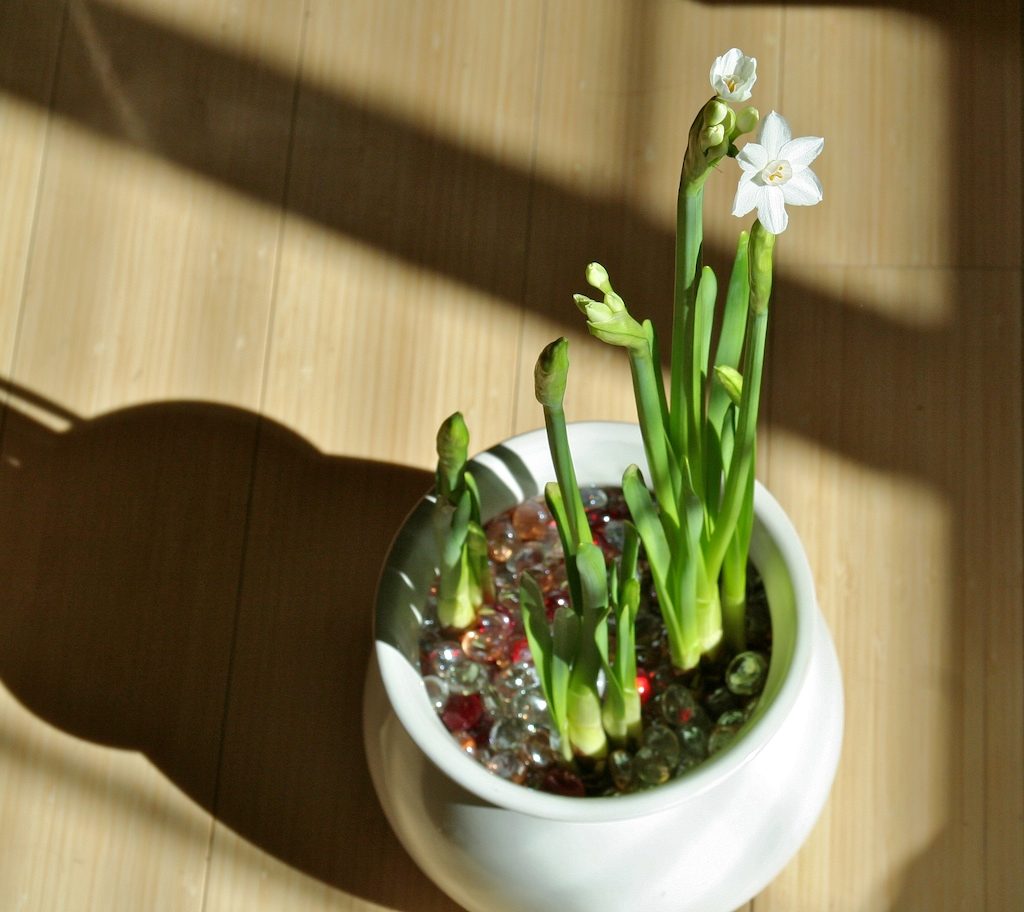
There’s a small, satisfying trick hiding inside the fall bulb-planting calendar: instead of tucking every bulb into cold garden soil to wait for spring, a handful can be kept back and coaxed into blooming indoors in the dead of winter instead — flowers on a windowsill while snow sits outside the glass. This is called forcing, and it splits into two different approaches depending on the bulb: some need no special preparation at all, while others need a deliberate cold period first, whether that cold comes from a refrigerator or an actual winter outdoors.
The two categories of forced bulbs
No-chill bulbs — paperwhite narcissus and amaryllis are the classic examples — bloom reliably indoors straight from a dry bulb, given only water, warmth, and light. No advance cold treatment is needed at all, which makes these two the easiest, most forgiving, and most popular choice for anyone forcing bulbs for the first time or working with limited lead time before a desired bloom date.
Chill-requiring bulbs — tulips, daffodils, hyacinths, and crocuses — need the same sustained cold period, roughly 12 to 16 weeks around 35 to 45°F, that they’d naturally experience overwintering in outdoor garden soil, covered in detail in our fall bulb planting guide. Forcing these indoors means either simulating that cold period artificially (commonly in a refrigerator) before bringing the bulbs into warmth and light, or purchasing bulbs that have already been pre-chilled specifically for indoor forcing, which skips that waiting period entirely.
An unheated garage, shed, or cold frame that reliably stays within the right temperature range can substitute for refrigerator space if chilling a larger quantity of bulbs than a kitchen fridge can comfortably hold — the requirement is the temperature range and duration, not the specific location, as long as the bulbs stay in the dark and are protected from freezing solid, which can damage the bulb tissue just as surely as too little cold can prevent proper blooming.
Forcing paperwhites: the fastest, most forgiving method
Paperwhite narcissus is the classic entry point into bulb forcing, and for good reason — it’s fast, requires no chilling, and needs nothing more elaborate than pebbles and water:
- Fill a shallow bowl with an inch or two of pebbles, gravel, or decorative stones.
- Nestle bulbs pointed-end up among the stones, packed reasonably close together for a fuller eventual display.
- Add water up to the base of the bulbs — touching the bottom of each bulb but not submerging it fully, which risks rot rather than root development.
- Place in bright light and keep the water topped up to that same level, checking every few days.
- Blooms typically appear within three to five weeks, making late November planting a reliable target for flowers timed to the holiday season.
Alt: Paperwhite bulb forcing sequence from planting in pebbles to full bloom
Caption: Pebbles, water, patience — no soil, no chilling, no complications.
Preventing paperwhites from flopping over
Paperwhites have a well-known reputation for growing tall and top-heavy, often flopping over well before their flowers finish blooming — a light-related stretching issue similar to seedling legginess, though paperwhites tend toward floppiness even under reasonably good conditions. A widely used trick addresses this directly: once shoots emerge and reach a few inches tall, replace the plain water with a diluted alcohol solution — a small amount of gin, vodka, or rubbing alcohol mixed into the water (roughly a 4 to 6 percent final alcohol concentration is the commonly cited target). This mildly stresses the plant in a way that stunts stem elongation without harming the flowers themselves, producing a noticeably shorter, sturdier, less floppy display.
Forcing amaryllis: bold, simple, and often sold as a kit
Amaryllis, the other no-chill option, produces dramatically large, showy blooms from a single substantial bulb, typically planted in a pot with the top half to third of the bulb left exposed above the soil line, watered modestly until growth appears, then more regularly as a flower stalk develops. Amaryllis bulbs are frequently sold pre-packaged as complete kits (bulb, pot, and growing medium together) specifically for holiday-season gift-giving, reflecting how popular and reliable this particular bulb is for indoor winter forcing.
Forcing tulips, daffodils, and hyacinths: the chilling step
For bulbs that require a genuine cold period, the process has an extra stage compared to paperwhites or amaryllis:
- Chill unchilled bulbs in a refrigerator for the required 12 to 16 weeks, kept in a paper bag or ventilated container, away from ripening fruit — apples and other fruit release ethylene gas that can damage or kill the flower bud developing inside the bulb during storage.
- Pot the chilled bulbs in standard potting soil once the cold period is complete, with the bulb’s tip at or just above the soil surface.
- Water thoroughly and move to a cool, dim spot for one to two weeks to encourage root development before exposing the pot to warmth and bright light.
- Move to a bright, warm spot once shoots emerge — blooms typically follow within two to three weeks from this point.
Purchasing bulbs specifically pre-chilled and labeled for indoor forcing skips the multi-month cold-storage step entirely, making this a faster and more convenient option for anyone who didn’t plan far enough ahead to chill bulbs from scratch.
Timing a display for a specific date
Working backward from a target bloom date is the practical way to plan a forced bulb display: paperwhites need roughly three to five weeks from planting to bloom, making them well suited to planning around a specific holiday or event with only a month or so of lead time. Pre-chilled tulips and hyacinths, once past their cold requirement, typically bloom within two to three weeks of being brought into warmth — a useful timeline for anyone starting from bulbs that have already completed the chilling stage rather than from scratch.
What happens to forced bulbs afterward
Paperwhites and amaryllis are generally treated as one-time indoor displays — paperwhites in particular rarely rebloom reliably after their forced indoor cycle and are usually composted once finished, though amaryllis bulbs can sometimes be nursed back toward a second bloom with a full year of dedicated care (regular feeding, a summer outdoors, and another dormancy period), a project for anyone attached to a specific bulb rather than the more typical single-season approach.
Forced tulips and daffodils can be planted outdoors once they finish blooming indoors and the foliage has died back naturally, following the same fall planting depth and technique as any other bulb — though it’s worth setting realistic expectations, since forced bulbs typically need a full season or more outdoors to recover their energy reserves before returning to a normal blooming cycle.
Whichever path is chosen, continue watering and providing bright light to a forced bulb’s foliage even after the flowers themselves fade, right up until the leaves yellow and die back naturally — this window is when the depleted bulb rebuilds at least some of the energy reserves it spent on the forced bloom, whether it’s headed for the compost pile or eventually back into garden soil.
Why this small trick is worth the effort
Forcing bulbs indoors is one of the few low-effort ways to bring real, living spring flowers into a house in the middle of winter — no grow lights, no elaborate setup, just a bulb, some water or soil, and a few weeks of patience. For anyone who’s already spent a fall afternoon planting bulbs outdoors for next spring, setting aside a handful of paperwhites or a pre-chilled amaryllis for an indoor display is a natural extension of the same seasonal ritual — just with a much shorter, considerably warmer wait for the payoff.
Frequently asked questions
What does 'forcing' bulbs mean?
Forcing means artificially triggering a bulb to bloom indoors, out of its normal outdoor season — either by providing the cold period it naturally needs in a controlled way (for bulbs like tulips and hyacinths that require winter chill) or by simply providing water and warmth (for bulbs like paperwhites and amaryllis that don't need pre-chilling at all).
Which bulbs don't need pre-chilling to bloom indoors?
Paperwhite narcissus and amaryllis are the two classic no-chill options, both of which bloom reliably indoors from a dry, unchilled bulb given only water, light, and a few weeks' time — making them the easiest and most reliable choice for anyone forcing bulbs for the first time or wanting blooms without weeks of advance planning.
How do I force paperwhites in water?
Fill a shallow bowl with an inch or two of pebbles or gravel, nestle the bulbs pointed-end up among the stones, and add water just up to the base of the bulbs without submerging them fully, which risks rot. Keep the water at that level, checked every few days, and place the bowl in bright light — blooms typically appear within three to five weeks.
Do tulips and daffodils need to be chilled before forcing them indoors?
Yes — unlike paperwhites and amaryllis, tulips, daffodils, hyacinths, and crocuses need a sustained cold period, typically 12 to 16 weeks at around 35 to 45°F, before they're ready to bloom, whether outdoors or forced indoors. This chilling can be done in a refrigerator (kept away from ripening fruit, which releases gas that can damage the bulbs) if starting with unchilled bulbs, or by purchasing pre-chilled bulbs sold specifically for indoor forcing.
How do I time forced bulbs to bloom for a specific date, like the holidays?
Count backward from the desired bloom date using the bulb's typical timeline — paperwhites take roughly 3 to 5 weeks from planting to bloom, making late November planting a reliable target for holiday-season flowers. Pre-chilled tulips and hyacinths, once past their cold requirement, typically bloom within 2 to 3 weeks of being brought into warmth and light.
Can forced bulbs be replanted outdoors afterward, or are they done?
Paperwhites and amaryllis generally cannot be forced to rebloom reliably and are typically treated as a one-time indoor display, though amaryllis bulbs can sometimes be nursed back to bloom again with a full year of care. Forced tulips and daffodils, once finished blooming indoors, can be planted outdoors afterward, though they often take a full season or more to recover and rebloom on a normal outdoor schedule.
Why are my forced bulbs growing tall and floppy instead of compact?
This is the bulb version of legginess — insufficient light causing the plant to stretch, common with paperwhites specifically, which are notorious for flopping even under decent conditions. A splash of diluted alcohol (a small amount of gin, vodka, or rubbing alcohol added to the water) is a widely used trick that stunts stem growth without harming the flowers, producing a more compact, less floppy display.