How to Make a Terrarium: A Simple Layering Method That Actually Works
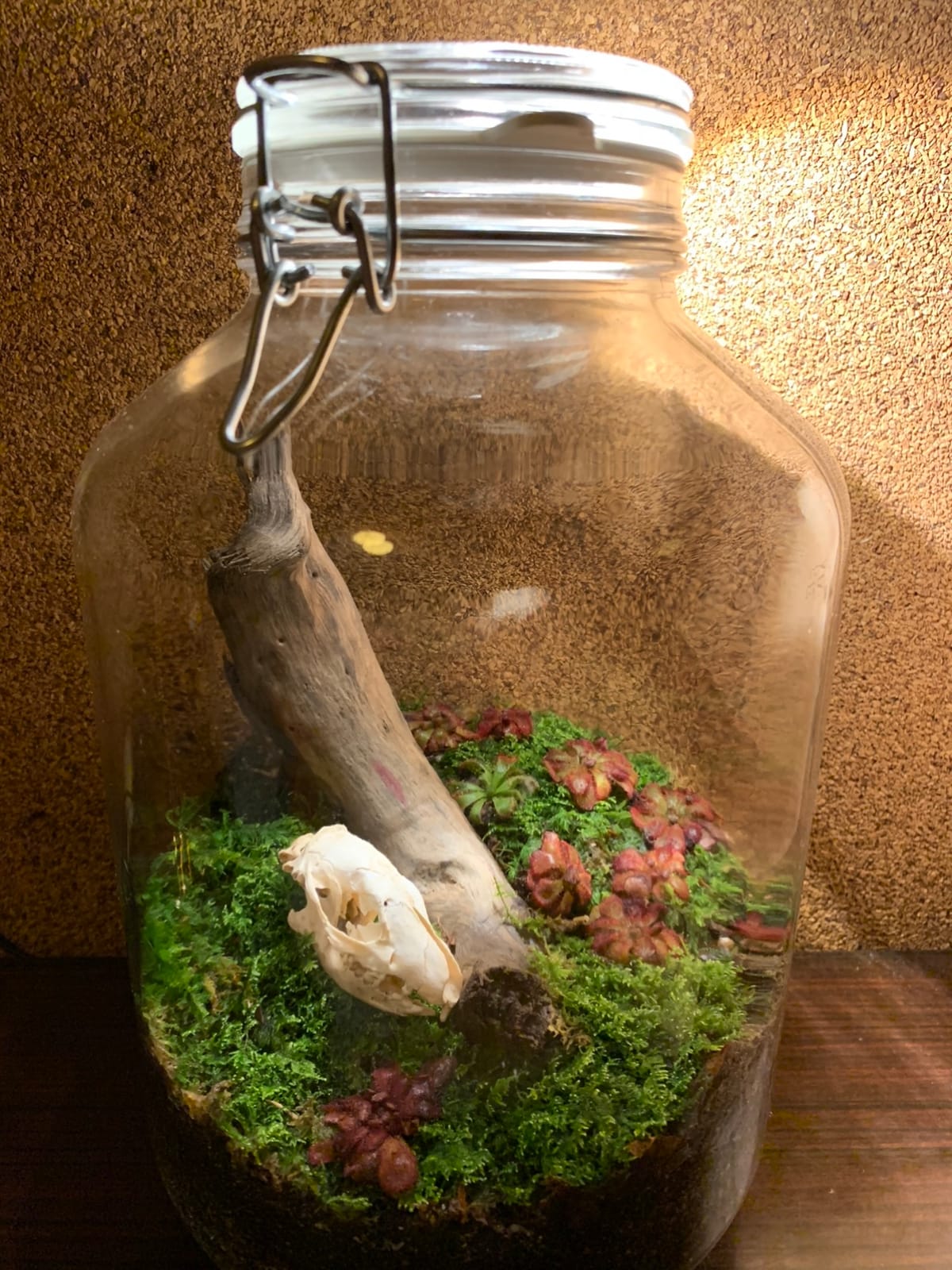
A terrarium solves a problem most houseplants never quite manage to fix: it makes watering someone else’s job. Build the layers correctly and a closed terrarium establishes its own small water cycle — moisture evaporates from the soil, condenses on the glass, and drips back down to be reabsorbed, largely without help, for weeks or months at a stretch. It’s less a houseplant than a tiny, mostly self-sufficient ecosystem, and building one correctly is a simple layering project rather than the delicate specialty craft it sometimes gets marketed as.
Choosing the container: clear, wide, and without a drainage hole
Almost any clear glass container works — a wide-mouthed jar, a repurposed aquarium, a specialty glass terrarium vessel, or a simple large jar all serve the purpose. Wider openings make planting and ongoing maintenance dramatically easier than a narrow-necked bottle, which requires long tools to plant and tend and is better attempted only after some experience with the wider, more forgiving format.
Terrarium vessels virtually never have a drainage hole, and that’s by design rather than a limitation to work around — the layering system described below substitutes for drainage entirely, a different approach from the drainage-hole-first rule that governs most other container gardening.
Open versus closed: choosing based on the plants you want
This is the most important decision, since it determines which plants will thrive:
Closed terrariums have a lid or sealed top, trapping humidity and creating a largely self-contained water cycle. They suit moisture-loving plants — small ferns, mosses, fittonia (nerve plant), and compact peperomia varieties — all of which thrive in the consistently humid environment a sealed container maintains. This is the format responsible for the terrarium’s reputation for going weeks between waterings, since the trapped humidity recycles moisture largely on its own.
Open terrariums, with no lid, allow more airflow and considerably lower humidity, making them the right choice for succulents and cacti, which need dry conditions between waterings and would rot quickly in a closed, humid environment. Open terrariums need more frequent attention than closed ones, closer to standard houseplant care, but suit a wider range of sun-loving, dry-adapted plants that a closed terrarium simply can’t support.
Choose the format based on the plants you want to grow, not the other way around — trying to grow ferns in an open terrarium or succulents in a closed one fights against each plant’s basic needs regardless of how carefully everything else is done.
The layering method
Building a terrarium is fundamentally about creating, in miniature, the drainage and growing conditions a normal potted plant gets from a drainage hole and open ground — just stacked in layers instead:
- Drainage layer: an inch or two of small gravel, pebbles, or coarse sand at the very bottom. This creates a reservoir space where excess water collects, physically separated from the soil and roots above it — the terrarium’s substitute for a drainage hole.
- Optional charcoal layer: a thin layer of activated horticultural charcoal above the gravel, which helps filter water and control odor as the terrarium’s internal ecosystem matures — particularly useful in closed terrariums, where trapped moisture and organic matter can otherwise develop a musty smell over time.
- Barrier layer (optional but recommended): a thin layer of sphagnum moss or landscape fabric between the gravel/charcoal and the soil above, which prevents fine soil particles from washing down into the drainage reservoir and muddying the clean separation between layers.
- Soil layer: a few inches of appropriate potting mix — a standard houseplant mix for ferns and moisture-lovers, a fast-draining succulent/cactus mix for an open, dry-adapted terrarium. This is where roots will live and grow.
- Plants: small specimens suited to the format (see below), planted at the same depth they were growing in their nursery pots, spaced to allow for some growth without immediately overcrowding the small space.
- Decorative top layer (optional): small stones, additional moss, or fine bark can finish the surface for visual appeal, though this is purely cosmetic and doesn’t affect the terrarium’s function.
Alt: Labeled cross-section of terrarium layers showing gravel drainage, charcoal, and soil
Caption: Five layers, one job each — this is the entire engineering behind a terrarium that waters itself.
Choosing plants: small, slow-growing, and matched to humidity
For a closed terrarium, look specifically for small varieties of moisture-loving plants: dwarf or small-leaved ferns, mosses, fittonia, small peperomia, and similar humidity-tolerant species. Avoid anything described as needing to “dry out between waterings” — that’s a succulent-family instruction and signals a plant unsuited to a closed terrarium’s consistently humid conditions.
For an open terrarium, small succulents and cacti — the same plants covered in our succulent care guide, chosen in miniature or slow-growing varieties — are the natural fit, since the open format’s lower humidity and better airflow match what these plants want.
Choose slow-growing, naturally small varieties for either format — a terrarium is a fixed, enclosed space, and a plant that wants to grow large will quickly outgrow it, requiring either aggressive pruning or eventual removal.
A fairy-garden-style terrarium — one of the more popular variations of the format — adds small decorative figurines, tiny structures, or miniature accessories among the planting, turning a functional mini-ecosystem into more of a whimsical display piece. The underlying layering and plant-care principles are identical; the decorative elements are purely additive and don’t affect how the terrarium functions.
Watering: considerably less than it looks like it should need
Closed terrariums need very little watering once established — the sealed environment recycles moisture through evaporation and condensation, and a well-balanced closed terrarium can go weeks to months between waterings. The reliable check is visible condensation on the glass each morning: its presence indicates the internal water cycle is functioning; its consistent absence over several days suggests the terrarium has dried out and needs a light watering.
Open terrariums need watering closer to a normal houseplant’s schedule, following the same finger-test approach covered in our general houseplant watering guide, adjusted for whichever dry-adapted plants are inside.
Light: bright and indirect, never direct sun
Direct sunlight is a genuine hazard for a closed glass terrarium specifically — the sealed container can trap heat dramatically, effectively cooking the plants inside much like a car left in the sun, even on a day that doesn’t feel especially hot outside the glass. Bright, indirect light — a few feet back from a sunny window, or a spot that receives filtered rather than direct sun — suits most terrarium plants well without the overheating risk.
Troubleshooting mold and excess moisture
Mold is the most common terrarium problem, usually signaling too much moisture, insufficient airflow, or decomposing organic debris (a dropped leaf, dead plant matter) left inside the enclosed environment. Address it by removing any visibly moldy material promptly, cracking the lid open for a day or two to increase airflow and let excess moisture escape, and watering more sparingly going forward. A terrarium that develops mold repeatedly usually needs either less frequent watering or slightly more ventilation than its current sealed setup provides.
Ongoing maintenance: mostly restraint
Once established, terrarium maintenance is refreshingly minimal: occasional light watering per the condensation check above, trimming plants that outgrow their space, and removing any dead or decaying material promptly to prevent mold. The most common mistake is overwatering out of habit — a terrarium, especially a closed one, punishes the same generous watering instinct that many other houseplants tolerate reasonably well, since there’s no drainage hole to carry away a mistake.
Why the format works so well for low-effort plant-keeping
A correctly built terrarium is one of the lowest-maintenance ways to keep living plants indoors, precisely because the layering system does the water-management work that would otherwise require frequent owner attention. It’s a small, contained demonstration of an actual ecosystem — evaporation, condensation, and reabsorption running in a loop — which is part of why the format has such staying power as both a design object and a practical way to keep moisture-loving plants like ferns and moss thriving indoors without the frequent care they’d otherwise demand in an open pot.
Frequently asked questions
What's the difference between an open and a closed terrarium?
A closed terrarium has a lid or sealed top, creating a humid, self-contained water cycle well suited to moisture-loving plants like ferns and mosses. An open terrarium has no lid, allowing more airflow and lower humidity, making it the better choice for succulents and cacti, which need drier conditions than a sealed environment provides.
What plants work best in a closed terrarium?
Moisture-loving, humidity-tolerant plants do best in a closed terrarium's naturally humid environment — small ferns, mosses, fittonia (nerve plant), and small peperomia varieties are all reliable choices. Avoid succulents and cacti in a closed terrarium, since the trapped humidity promotes rot in plants adapted to dry conditions.
How often does a closed terrarium need watering?
Rarely — a well-sealed closed terrarium largely recycles its own moisture through condensation and can go weeks to months between waterings once established, which is the whole appeal of the format. Check for visible condensation on the glass each morning as a sign the internal water cycle is working; consistently no condensation suggests it needs a light watering.
Why is my terrarium getting moldy?
Mold usually indicates too much moisture, poor airflow, or organic debris (dead leaves, plant matter) left to decompose inside the enclosed environment. Remove any moldy material immediately, crack the lid open for a day or two to increase airflow and let excess moisture escape, and water more sparingly going forward.
Do terrariums need direct sunlight?
No — and direct sun should generally be avoided, since a closed glass container can trap heat and effectively cook plants inside on a sunny windowsill, similar to how a car heats up in the sun. Bright, indirect light is ideal for most terrarium plants; a spot a few feet back from a sunny window works well.
What container works best for a first terrarium?
Any clear glass container with reasonable width for planting access works — a wide-mouthed jar, a fish bowl, a specialty glass terrarium vessel, or even a repurposed large jar all work well for a first attempt. Wider openings make planting and maintenance considerably easier than narrow-necked containers, which are better attempted once you have some experience.
Can I make a terrarium without a drainage hole in the container?
Yes — this is actually the norm for terrariums, since most terrarium vessels are sealed glass with no drainage hole at all. The gravel and charcoal layers at the bottom substitute for a drainage hole by creating a reservoir space below the soil where excess water collects, keeping it away from plant roots rather than allowing it to escape the container.