How to Grow Rosemary: Sun, Sharp Drainage, and Benign Neglect
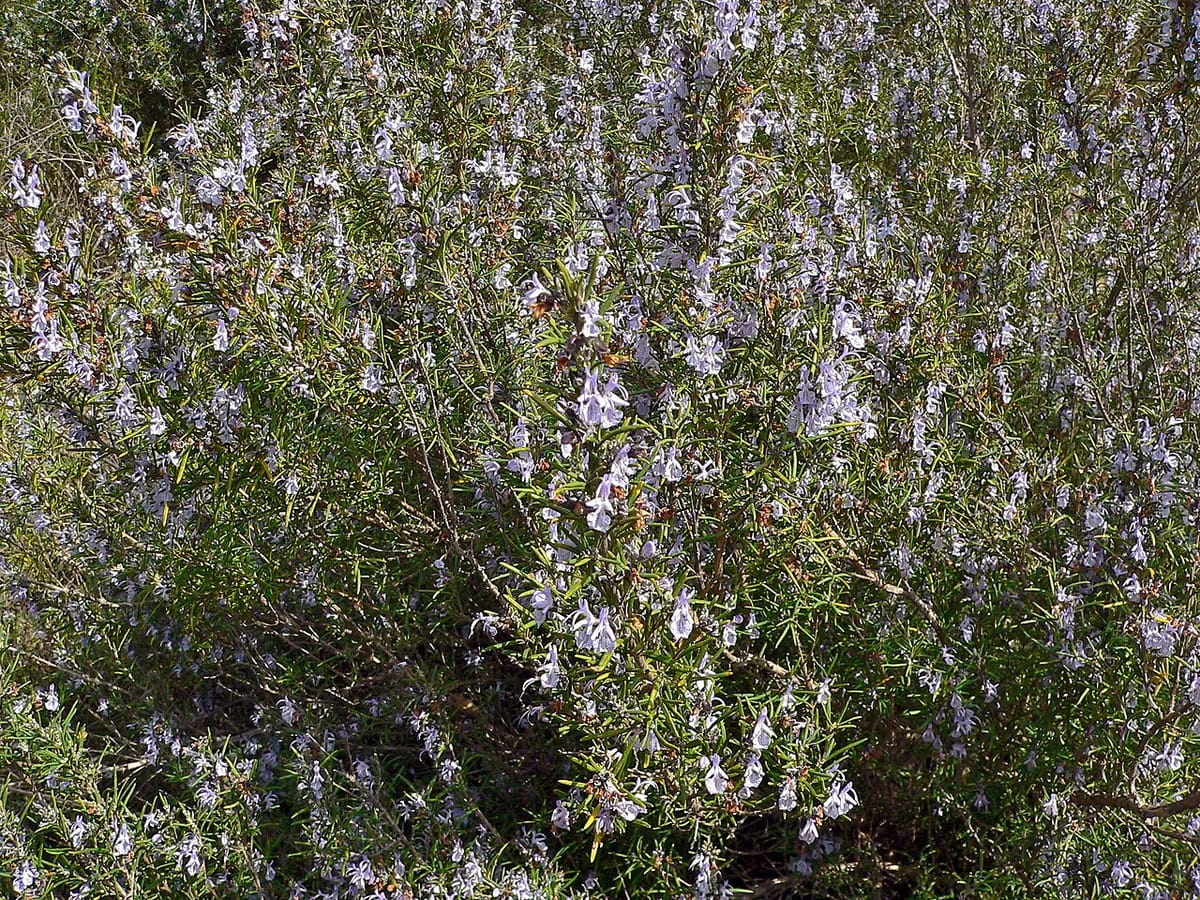
On a sun-blasted, stony hillside in coastal Spain — poor soil, no irrigation, constant salt wind — rosemary lives for decades and grows into fragrant, waist-high hedges. Take the same plant, put it in a well-tended garden bed with rich soil and a conscientious waterer, and it’s often dead by the second season. That contradiction is the entire lesson of growing rosemary well: it doesn’t die of neglect. It dies of hospitality.
Learn to withhold — water, fertilizer, fuss — and rosemary becomes what it’s supposed to be: a woody evergreen that hands you flavor twelve months a year, shrugs at drought, feeds early bees with its blue flowers, and perfumes your forearm every time you brush past it. Here’s the complete manual: siting and planting for the drainage that decides everything, the cold-climate pot strategy, pruning around the one fatal cut, and turning one plant into a lifetime supply.
Understand the plant: a shrub, not a leafy herb
First, recategorize it. Basil is an annual leaf factory; parsley is a biennial; rosemary is a woody evergreen shrub — closer kin, in care terms, to lavender than to anything in the salad. That means:
- It plays a long game: modest first-year growth, then years of steady expansion to three or four feet (more in mild climates) unless pruned.
- It keeps its needle-like leaves year-round — harvest at Christmas works the same as harvest in July.
- Its two mortal enemies are wet roots and (in cold climates) winter, in that order. Everything in its care traces to a dry-hillside ancestry: full sun, lean rocky soil, sharp drainage, dry air.
- It flowers — pale blue to deep violet, usually late winter through spring in mild zones — and early pollinators mob it when little else is open.
As covered in our herb garden guide, rosemary anchors “Team Mediterranean” alongside thyme, sage, and oregano: group it with those water-once-in-a-while colleagues, never in a pot or drip zone shared with thirsty basil.
Planting: drainage is the whole decision
Buy a plant, not seeds. Rosemary seed is slow, spotty, and a year from usefulness; a $4 nursery start harvests this summer. (‘Tuscan Blue’ and ‘Salem’ are good uprights; ‘Prostratus’ trails beautifully over walls; ‘Arp’ and ‘Madeline Hill’ are the cold-hardiness champions.)
In the ground (zones ~7/8+):
- Site: the sunniest, driest spot you own — six hours minimum, eight better. Against a south-facing wall is rosemary heaven: extra heat, reflected light, rain shadow, winter shelter. This is precisely the microclimate play that lets zone-7 gardeners keep a plant zone 8 would claim.
- Soil: lean and fast-draining. In heavy clay, don’t dig a hole and fill it with grit (that makes a bathtub); instead plant high — set the root ball an inch or two proud of grade in a broad, slightly raised mound of native soil mixed with coarse sand or fine gravel. Slopes and raised beds are naturally excellent.
- Skip the enrichment. No compost pocket, no fertilizer in the hole. Rich soil grows soft, floppy, bland, rot-prone rosemary. Lean soil grows the concentrated resinous flavor you’re after — with herbs from dry homelands, stress is the seasoning.
- Water to establish, then stop. Weekly through the first summer while roots reach out; after that, rain does the job in most climates, with a deep drink only in serious drought.
In a pot (everyone in zone 6 and colder, and anyone who likes moving it):
- Terracotta, emphatically — its evaporative walls are rot insurance. One size up from the nursery pot, with a real drainage hole and no saucer left full, ever.
- Mix: cactus/succulent potting mix, or regular mix cut by a third with coarse sand or perlite.
- Water when the top inch is dry — thoroughly, then not again until dry. In summer heat that may be twice a week; in a cool room in January, closer to twice a month. Rosemary in a pot dies by calendar-watering; the finger test from our houseplant watering system is the law here too.
- Feed a half-strength balanced liquid once or twice a season, or nothing. Pale growth says feed; lush floppy growth says you already overdid it.
The cold-climate winter playbook
Rosemary’s hardiness is honest but limited: reliable to about zone 8, negotiable in zone 7 (hardy varieties, wall microclimate, gravel-sharp drainage, unpruned going into winter, gravel mulch — winter wet is the bigger killer than winter cold). Zone 6 and below, don’t gamble the plant; run the two-address system:
- Summer outside in its terracotta pot, living its best hillside life.
- Before first frost, move it in — gradually if you can (a week in a bright porch or garage halfway house prevents shock-shedding).
- Inside, the deal is light-cool-dry: the brightest south window in the house (rosemary indoors in dim light drops needles steadily until spring or death, whichever comes first — a small clip-on grow light rescues marginal windows), the cooler the room the better (a bright unheated sunroom or barely-heated porch near 50°F is ideal; it wants semi-dormancy, not growth), and water only when an inch of soil is dry. Keep it far from radiators and vents, and give the room some airflow — still, warm, humid corners breed powdery mildew on indoor rosemary, visible as gray-white dust and fixed by light, air, and restraint.
- Back outside after last frost, re-acclimated to direct sun over a week.
Expect winter rosemary to hold, not grow. A few dropped needles are rent; wholesale browning means check the roots (too wet) or the light (too little).
Alt: Potted rosemary overwintering on a bright cool porch with frost outside the window
Caption: The winter contract: maximum light, minimum heat, almost no water.
Pruning: shape freely, but never cut into bare wood
Rosemary pruning has one commandment worth tattooing on the snips: old, leafless wood does not resprout. Cut a branch back into its bare woody base and that branch is finished — do it to the whole plant in a misguided “hard rejuvenation” and the whole plant is finished. Everything else is easy:
- Harvest-pruning (year-round): snip 2–4 inch sprig tips as the kitchen demands. Each cut forks the stem — regular harvesting literally builds a denser plant, the same tip-pinching economy that runs basil.
- Structural pruning (once a year, spring after frost or right after flowering): shorten the plant by up to a third, always cutting to a point with green needles below it. This keeps the shrub compact, furnished to the base, and productive — unpruned rosemary slowly becomes a bare-legged tangle with a green roof.
- The leggy inheritance: an old, woody, sparse plant can only be coaxed, not commanded — trim lightly into green growth over a couple of seasons and accept its architecture, or (honestly the better play) take cuttings and start its successor.
One plant becomes ten: cuttings
Rosemary propagates so willingly that no one should ever buy a second plant:
- In late spring or early summer, snip 4-inch tips of new growth (flexible, green — not woody).
- Strip needles from the lower half.
- Stick them two inches deep in moist potting mix or a glass of water on a bright sill (mix-rooted cuttings transition better, but water lets you watch the show).
- Bright indirect light, lightly moist, and in three to six weeks — roots. Pot the successes; expect to lose a few, which is why you took six.
Rooted fall cuttings on a winter windowsill are also the cold climate’s insurance policy: if the big pot fails in February, the dynasty survives.
Kitchen notes (the point of the whole exercise)
Rosemary is evergreen, so “harvest season” is any day ending in y — late morning for peak oils, new tips for tenderness, and never more than a third of the plant at once. Whole sprigs go under roast chicken and over potatoes (leaves pull off the woody stem after cooking, or strip them first by pinching the tip and zipping downward); stems sturdy enough become skewers with a built-in marinade. It dries better than nearly any herb — bundle, hang a week, strip and jar — though with a live plant by the door, drying is mostly for gifts.
Which is rosemary’s real economy: one four-dollar plant, sited on the dry sunny margin no vegetable wanted, pays out every roast, every focaccia, and every February soup for a decade — asking in exchange only the discipline every new grower finds hardest. Put the watering can down. It’s from Spain. It’s fine.
Frequently asked questions
Why does my rosemary keep dying?
Almost always water — too much of it. Rosemary evolved on rocky Mediterranean hillsides and its roots rot in soil that stays moist, which is exactly what rich garden soil, saucered pots, and attentive watering produce. The fix is gritty fast-draining soil, terracotta pots, and watering only when the soil has dried. Indoors, add insufficient light to the suspect list.
Can rosemary survive winter outside?
Reliably only in roughly USDA zone 8 and warmer, and in zone 7 with luck, shelter, and sharp drainage ('Arp' and 'Madeline Hill' are the hardiest named varieties, sometimes managing zone 6). Colder than that, grow rosemary in a pot and winter it indoors — winter-wet soil kills it even faster than cold air does.
How do I keep potted rosemary alive indoors over winter?
Give it your absolute brightest window (south-facing; supplement with a small grow light if it stretches), cool temperatures if possible, and dramatically less water — only when the pot is dry an inch down. Keep it away from radiators and heat vents, and check for the powdery mildew that dim, stuffy rooms encourage. Expect it to merely survive, not thrive; spring fixes that.
How and when should I prune rosemary?
Harvest-prune lightly year-round by snipping sprigs. Do structural pruning in spring after frost or right after flowering: cut back by up to a third to keep the shrub dense. The one iron rule: never cut into bare, leafless wood — old wood does not resprout, and a hard 'rejuvenation' cut into it usually kills the branch or the plant.
Should I grow rosemary from seed or from a plant?
From a plant or a cutting, almost without exception. Rosemary seed germinates slowly, erratically, and takes a year-plus to reach usable size. A nursery start costs a few dollars and gives you harvests this season — and free plants forever after, since 4-inch cuttings root readily in early summer.
Why is my rosemary turning brown from the bottom up or going gray-white?
Browning from the base with wilting despite moist soil is root rot — the classic overwatering death; improve drainage immediately and repot if potted, trimming dead roots. A gray-white dusty coating is powdery mildew, common on indoor plants in still air: more light, more airflow, less ambient humidity.
When is the best time to harvest rosemary for flavor?
Any time, honestly — rosemary is evergreen and usable year-round. Oils peak in late morning after dew dries, and new-growth tips are more tender and slightly milder than woody stems. For drying quantity, cut just before the plant flowers; for tonight's potatoes, cut whenever you're cooking.