Balcony Garden Ideas: Growing Real Food and Flowers in a Small Space
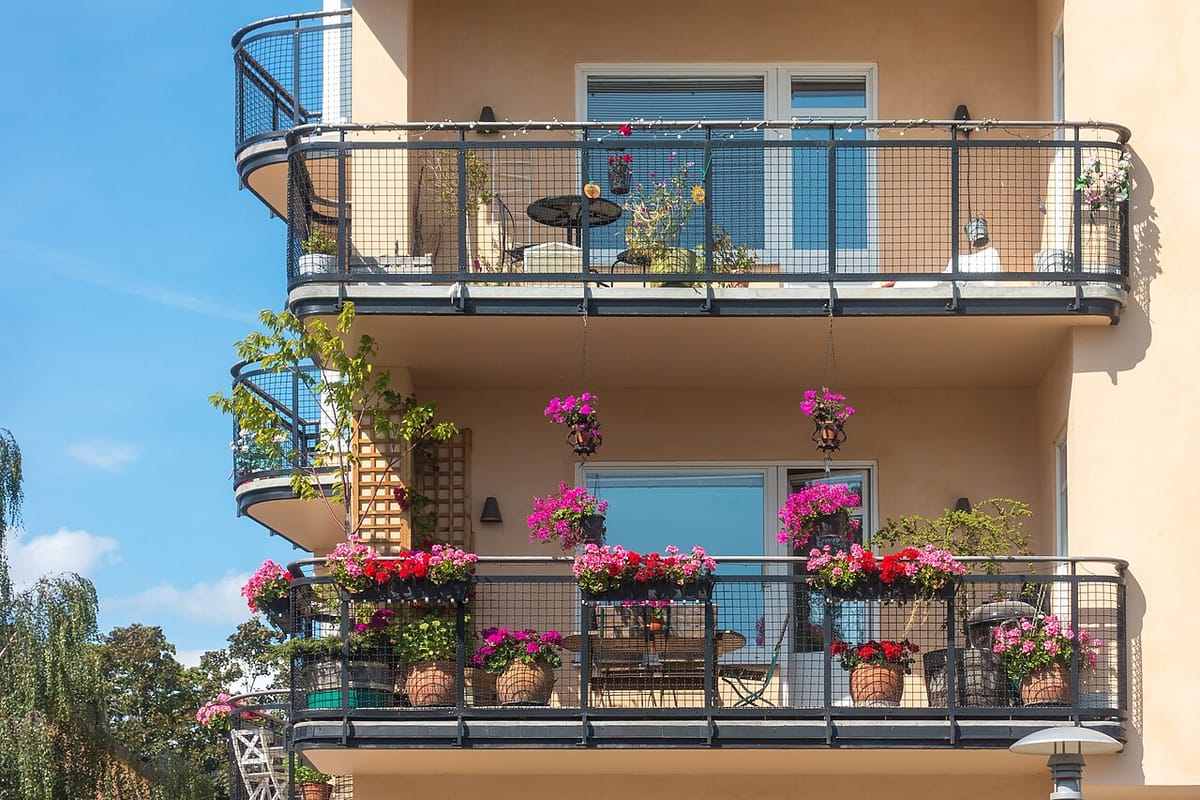
A balcony looks like the least promising growing space imaginable — no soil, limited square footage, often exposed to more wind and heat than a ground-level yard ever sees. And yet balcony gardens, done right, regularly out-produce far larger spaces per square foot, simply because everything on them is deliberately chosen and closely tended. There’s no wasted lawn, no forgotten back corner — just a compact, elevated space where every plant earns its spot.
This guide covers what changes when a garden moves from ground level to a railing several floors up: the weight and structural considerations most guides skip, the wind exposure that changes plant care, and the specific plants and vertical techniques that make a small elevated space productive.
The consideration ground-level guides skip: weight
Before anything else, a balcony garden has one constraint no yard ever faces: the floor itself has a weight limit, and unlike a garden bed, that limit is real and worth respecting. Building codes and balcony designs vary enormously, and older buildings or balconies not originally intended for heavy loads deserve real caution — checking with a building manager or the structure’s documentation before committing to a heavily potted setup is a reasonable, low-effort precaution, especially for anything beyond a few modest pots.
Practical weight-management habits:
- Distribute weight toward the balcony’s edges and support structure — typically near the building wall, where the floor is most directly supported — rather than concentrating heavy pots in the center of an unsupported span.
- Choose lighter materials. Fabric grow bags, plastic, and resin planters weigh considerably less than ceramic, concrete, or stone for the same volume — a meaningful difference once wet soil is factored in, since saturated potting mix is far heavier than it looks.
- Favor several medium pots over one enormous one. Beyond spreading weight more evenly, it also gives more flexibility to rearrange as plants grow or as the sun’s angle shifts through the season.
The consideration that surprises people: wind
Elevated balconies, particularly above the first few floors, routinely experience meaningfully more wind than a ground-level yard — funneled and accelerated by the building itself. This has two real consequences: containers dry out faster than the same setup would at ground level (wind pulls moisture from soil and leaves considerably quicker than still air), and tall or top-heavy plants are at genuine risk of wind damage or tipping, especially anything staked or trellised without adequate support.
A simple windbreak addresses much of this — a lattice panel, a solid section of railing screen, or simply positioning taller and more wind-sensitive plants against the building wall rather than the open railing edge, where wind exposure is highest. Check soil moisture more frequently than a ground-level garden guide would suggest, since a balcony’s wind exposure alone can shift watering needs considerably from what the same plant would need in a sheltered yard.
Alt: Lattice windbreak panel on a balcony protecting taller plants from wind exposure
Caption: The wind up here is real — a simple panel does more for plant health than most people expect.
Reading your balcony’s actual sun exposure
Balcony orientation matters enormously and is worth honestly assessing before choosing plants, exactly as it would for any garden layout decision:
- South-facing balconies (in the northern hemisphere) typically receive the most consistent direct sun, suitable for fruiting vegetables like tomatoes and peppers that demand six-plus hours daily.
- East-facing balconies get gentler morning sun, well-suited to lettuce, greens, and herbs that prefer to avoid the most intense afternoon heat.
- West-facing balconies often get strong, hot afternoon sun, which can stress cool-season crops but suits heat-loving plants well.
- North-facing balconies (in the northern hemisphere) receive the least direct sun and are generally limited to shade-tolerant greens, herbs, and ornamental foliage plants rather than fruiting vegetables, regardless of other effort invested.
Spend one clear day tracking actual sun hours before committing to a plant list — a balcony’s exposure is often less generous than it initially appears, especially with an overhanging floor above blocking part of the sky.
Heat: the other factor balcony gardens deal with more than yards
Beyond wind, elevated balconies — especially those with concrete or stone flooring, or a lot of glass and metal railing nearby — often run noticeably hotter than a ground-level garden, since these materials absorb and radiate heat back at plants throughout the day. This can push heat-tolerant plants (peppers, most herbs) to thrive in a spot that would stress cool-season crops like lettuce, which may need afternoon shade or a spot further from a heat-radiating wall to avoid bolting early, per the same heat-response patterns that apply in any garden. Dark-colored pots intensify this further, absorbing more heat than light-colored ones — a genuine advantage for warmth-loving peppers, and a genuine liability for anything that prefers cooler roots.
Building vertically: a balcony’s biggest opportunity
With floor space inherently limited, vertical growing space is where a balcony garden earns its real productivity — the same principle covered for small gardens generally, just more essential here given how little horizontal space exists to begin with.
Railing planters mount directly onto the balcony rail (inside-facing, for safety and to avoid anything falling to units below) and add meaningful growing space using zero floor footprint — excellent for a dense row of herbs or trailing flowers.
A freestanding trellis, supported by its own weighted base rather than drilled into the building (important in most rental or condo situations), lets vining crops like cucumbers or pole beans climb upward rather than sprawling across floor space no balcony has to spare.
Hanging baskets, suspended from an overhead structure or a bracket, use overhead space entirely uninvolved in floor-level planning — trailing tomatoes, strawberries, and flowering plants all perform well suspended this way.
Tiered plant stands stack multiple pots vertically in a single footprint, particularly useful for a dense herb collection or a run of small salad greens succession-sown across several levels.
Plants that perform on a balcony
Vegetables: dwarf and patio tomato varieties, peppers, bush beans, and lettuce or other greens are all reliable balcony performers — the same container-bred varieties and pot-sizing rules that apply to any container garden apply here, with wind and weight as the added considerations above.
Herbs are close to the ideal balcony crop — compact, productive in modest pots, and rewarding daily use exactly where they’re grown, following the same Team Mediterranean versus Team Moisture grouping that governs any container herb planting.
Vining crops — cucumbers, pole beans, even some compact melon varieties — do well specifically because a trellis converts floor-space-hungry sprawlers into vertical growers, a trade that matters more on a balcony than almost anywhere else in gardening.
Flowers for color and pollinator interest: trailing petunias and lobelia for hanging baskets and railing planters, and compact marigolds or zinnias for pollinator activity in a space that otherwise sees little of it.
Watering without creating a mess below
A balcony garden’s runoff has somewhere real to go — often directly onto a balcony below, a genuine and common source of neighbor friction in apartment buildings. Use pots with saucers that fully catch drainage rather than letting it drip through unmanaged, matching the general container drainage principles that apply everywhere but carry extra consequence here. Self-watering containers, which hold a water reservoir the plant draws from as needed, or a simple drip irrigation system on a timer, both reduce both the daily watering burden and the overflow risk considerably. Watering in the morning, rather than evening, also gives any excess time to be absorbed or evaporate before it becomes a dripping problem later in the day.
The condensed approach
Check the practical weight limit before loading up, choose lighter pot materials and distribute them toward supported edges, install a simple windbreak if the balcony runs windy, honestly assess actual sun exposure before choosing plants, and build vertically wherever the floor space runs out — railing planters, a freestanding trellis, hanging baskets, tiered stands. Handled this way, a balcony stops being the smallest, least promising space in a gardener’s life and becomes, often, the most closely tended and surprisingly productive one — precisely because every square foot of it had to be deliberately chosen rather than simply inherited with the property.
Frequently asked questions
How much weight can a balcony safely hold for container gardening?
This varies significantly by building and balcony construction, so check with a building manager or the structure's documentation before loading up heavily, particularly for older buildings or a balcony you didn't build yourself. As a general practice, distribute weight toward the balcony's edges and support structure (near the building wall) rather than concentrating heavy pots in the center of an unsupported span.
Do balcony gardens need special lightweight pots?
For weight-sensitive situations, yes — fabric grow bags, plastic pots, and resin planters are considerably lighter than ceramic or concrete for the same volume, and using several medium pots instead of one enormous one also distributes weight more evenly across the balcony floor rather than concentrating it at a single point.
How do I protect balcony plants from wind?
Elevated balconies, especially on higher floors, often experience considerably more wind than a ground-level garden, which dries out containers faster and can physically damage tall or top-heavy plants. A windbreak — lattice, a solid rail panel, or simply positioning taller plants against the building wall rather than the open railing — reduces both problems significantly.
What vegetables grow well on a balcony?
Compact and container-bred varieties do best: dwarf or patio tomatoes, peppers, bush beans, lettuce and other greens, and herbs are all reliable balcony performers. Vining crops like cucumbers and pole beans can also work well if given a trellis to climb vertically rather than sprawling, which most balconies don't have room for.
How much sun does a balcony actually need for vegetables?
The same as any vegetable garden — six to eight hours of direct sun for fruiting crops like tomatoes and peppers. Balcony orientation matters enormously here: a south-facing balcony in the northern hemisphere typically gets the most sun, while a north-facing one may only support shade-tolerant greens and herbs regardless of other efforts.
Can I install a trellis on a balcony without drilling into the building?
Yes — freestanding trellis panels supported by their own weighted base, or a trellis mounted directly into a large, heavy planter box, both provide vertical growing support without any permanent attachment to the balcony structure itself, which is often required in rental or condo situations where drilling isn't permitted.
How do I water a balcony garden without making a mess below?
Use pots with drainage saucers that fully catch runoff rather than letting excess water drip through to a balcony or unit below, and consider self-watering containers or a simple drip irrigation system on a timer for consistent watering without overflow. Watering in the morning also gives excess moisture time to be absorbed or evaporate before it becomes a dripping problem.