Why Your Orchid Stopped Blooming (And How to Get It to Flower Again)
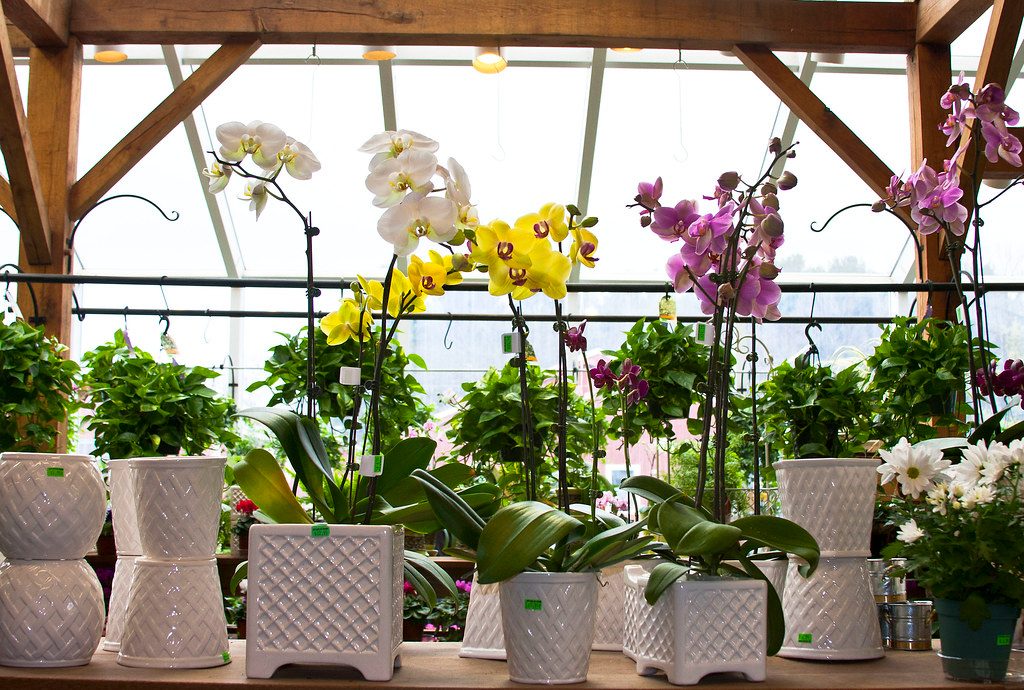
The most common orchid emergency isn’t an orchid emergency at all. Someone receives a Phalaenopsis in full bloom, enjoys it for a couple of months, watches the flowers wilt and drop one by one, and concludes the plant is dying. It usually isn’t. It has finished a bloom cycle, which is exactly what it was always going to do, and the question worth asking isn’t how to save it but what it needs in order to flower a second time.
That second bloom is where most orchids get stuck. Keeping a Phalaenopsis alive is easy — they tolerate neglect better than their reputation suggests. Getting one to rebloom is a different problem, and it comes down to a few specific conditions rather than general good care.
The bloom cycle is supposed to end
A healthy Phalaenopsis typically flowers for two to four months, sometimes longer, then drops its blooms and enters a rest period. During that rest the plant isn’t idle — it’s building leaf tissue and root mass, accumulating the energy reserves that a future flower spike will draw on. Flowering is expensive, and the plant has to earn it back before it can do it again.
This is why the timeline feels so slow compared to other flowering houseplants. Most Phalaenopsis rebloom somewhere between six months and a year after the last flowers fall. Nothing has gone wrong at month four when there’s still no spike. That’s simply the pace.
The way to tell a resting orchid from a failing one has nothing to do with flowers. Look at the leaves and roots instead: firm, green leaves and plump roots mean a healthy plant between cycles. Limp, leathery, or yellowing leaves, or roots that have gone brown and mushy, indicate a real problem worth diagnosing separately.
Light is almost always the missing piece
If an orchid looks healthy and simply won’t rebloom, light is the first thing to check and the most likely answer. This is the most common reason a well-cared-for orchid produces leaves indefinitely and flowers never.
The distinction matters because orchids can survive in surprisingly dim conditions. A Phalaenopsis on a north-facing windowsill or across the room from a window will keep its leaves and stay alive for years, which makes it easy to assume the light is adequate. Survival and blooming are different thresholds, and blooming needs considerably more.
What they want is bright, indirect light — an east-facing window is close to ideal, giving gentle direct morning sun and bright ambient light for the rest of the day. A west or south exposure works well with a sheer curtain to diffuse the harshest afternoon sun, which can scorch orchid leaves.
The leaves themselves report on light levels. Bright, slightly yellowish-green leaves indicate an orchid receiving good light for blooming. Dark, deep green leaves — the ones that look lush and healthy — usually mean too little light, because the plant has produced extra chlorophyll to compensate. A dark-leaved orchid that never blooms is the classic pattern, and moving it somewhere brighter is the fix.
The temperature drop that triggers spikes
Light provides the energy; a temperature shift often provides the signal. Phalaenopsis orchids commonly initiate new flower spikes in response to a drop of about 10 to 15°F between day and night temperatures, sustained over a few weeks. In their native range this cue corresponds to a seasonal change, and it functions as a trigger for reproduction.
Indoors, most homes are climate-controlled to a steady temperature year-round, which removes the cue entirely. That’s a large part of why an orchid in an otherwise well-lit spot may still stall.
Recreating the drop is usually simple. A spot near a window that cools noticeably overnight in autumn often does it on its own. Some growers move plants outdoors to a shaded, protected location for a few weeks in early fall, bringing them in before any risk of cold damage. What matters is a genuine, repeated day-to-night differential — not one cold night, and not a location cold enough to stress the plant.
Watering: what the ice cube trick gets right and wrong
The ice cube method is popular for a reason: it makes overwatering difficult, and overwatering kills far more orchids than underwatering does. Three cubes once a week is easy to remember and hard to overdo.
The problem is that it solves the right problem the wrong way. Orchids are tropical epiphytes, and near-freezing water sitting against their roots isn’t a condition they evolved with. A better method achieves the same protection without the cold: water thoroughly with room-temperature water, let it drain completely, then wait until the medium is nearly dry before watering again.
Roots are a more reliable guide than any schedule. Healthy, well-hydrated Phalaenopsis roots are plump and green; as they dry out they turn silvery-grey. When most visible roots have gone silvery, it’s time to water. This visual check adapts automatically to season, humidity, and your particular home in a way a fixed weekly routine can’t.
The one non-negotiable rule: never leave an orchid sitting in standing water. Water that collects in a decorative outer pot or saucer keeps roots saturated and is the direct path to root rot, which is the most common way these plants die. If your orchid came in a plastic nursery pot inside a decorative cachepot, lift it out to water, let it drain fully, and put it back.
Bark, not soil — and why that matters
Phalaenopsis orchids grow in coarse bark or a similar chunky medium, not potting soil, and this isn’t a stylistic choice. In the wild they’re epiphytes, anchoring to tree bark with roots exposed to open air rather than buried in earth. Their roots need airflow, and dense potting soil suffocates them.
This explains two things that confuse new orchid owners. First, why the pot looks so unlike a normal houseplant pot — the large gaps are the point. Second, why orchid pots have so much drainage: water is meant to run straight through rather than be held.
It also means repotting an orchid into regular potting soil is one of the more damaging things you can do to it, even though it feels like an upgrade. If a plant needs repotting — generally every one to two years, or when the bark has broken down into fine, soil-like particles that no longer drain freely — use a bark-based orchid mix. Breakdown of the medium is a genuine reason to repot, since decomposed bark holds far more water than fresh bark and quietly shifts conditions toward root rot.
Telling a new spike from a new root
Once an orchid starts responding to better conditions, a new growth appears at the base — and it’s hard to identify at first, because emerging roots and emerging flower spikes look alike.
The reliable differences are shape and direction. A root has a rounded, blunt tip and grows downward or outward, often wandering along the pot’s surface or out into the air. A spike is flatter and slightly angular, with a tip sometimes described as mitten-shaped, and it grows upward, orienting toward light.
If it’s ambiguous, wait. Within one to two weeks the direction becomes obvious. Both are good signs — new roots mean the plant is building the base it needs, and often precede a spike in the following cycle.
What to do with the old spike
After the last flower drops, the spike itself tells you how to handle it.
Still green and firm: leave it. Phalaenopsis can branch from a dormant node on an existing green spike and produce a second, usually smaller flush of flowers without growing a whole new spike. If you’d rather encourage a stronger new spike instead, some growers trim a green spike back to just above a lower node, which is a reasonable trade of a quick second flush for a better next cycle.
Brown, dry, and papery: it’s finished and won’t flower again. Cut it back near the base with clean snips. The plant will produce an entirely new spike when conditions are right.
Either way, a spent spike isn’t a sign of failure. It’s just a used one.
Feeding, lightly
Orchids are not heavy feeders, and bark medium supplies almost no nutrients on its own, so some fertilizer helps — but restraint matters more than quantity. A balanced fertilizer diluted well below label strength, applied roughly every second or third watering during active growth, is plenty. Over-fertilizing builds up salts in the medium and can damage roots, which is a worse outcome than mild underfeeding.
Many growers taper off while a plant is in full bloom and resume once new growth appears. Feeding is a minor lever here — no fertilizing routine compensates for inadequate light, which is where the real limitation almost always sits.
Common problems, briefly
Limp, leathery leaves most often signal a root problem rather than thirst. It’s counterintuitive: rotted roots can’t take up water, so an overwatered orchid shows the same wilting as a dehydrated one. Check the roots before adding more water — if they’re brown and mushy, the issue is root rot, and more water makes it worse.
Yellowing lower leaves are often normal aging, since orchids shed older leaves as they produce new ones. Several leaves yellowing at once, or upper leaves yellowing, is worth investigating alongside the other causes of yellowing houseplant leaves.
Buds that form and then dry up before opening — sometimes called bud blast — usually reflect a sudden environmental change during a sensitive window: a move to a new location, a cold draft, a heat vent, or a large swing in humidity. The plant isn’t damaged, and the next cycle typically proceeds normally once conditions are stable.
Aerial roots wandering outside the pot need no intervention at all. That’s normal epiphyte behavior, not evidence of a plant trying to escape a pot that’s too small.
A realistic expectation
The honest summary is that reblooming an orchid takes one meaningful change and then patience. Move it somewhere brighter, give it a real day-to-night temperature difference for a few weeks in autumn, water thoroughly but infrequently with proper drainage, and feed lightly. Then wait, possibly for months.
That waiting period is where most people conclude they’ve failed, when in fact nothing has gone wrong. An orchid that holds firm green leaves and plump roots for eight months without flowering is a healthy orchid doing what orchids do. The plant on the windowsill that seemed finished when its last flower dropped is, in most cases, simply partway through a cycle that’s longer than anyone expects.
Frequently asked questions
My orchid dropped all its flowers. Is it dead?
Almost certainly not. Dropping flowers at the end of a bloom cycle is normal and expected behavior, not a sign of decline — a Phalaenopsis orchid typically blooms for two to four months and then rests before producing another spike. As long as the leaves are firm and green and the roots are plump rather than shriveled or mushy, the plant is healthy and simply between bloom cycles.
How long does it take for an orchid to rebloom?
Most Phalaenopsis orchids rebloom somewhere between six months and a year after the previous flowers drop, depending heavily on light levels and whether the plant gets the temperature drop that triggers spike formation. This feels slow compared to most flowering houseplants, but it's the plant's normal pace rather than a sign anything is wrong.
Why won't my orchid rebloom even though it looks healthy?
Insufficient light is the most common reason a visibly healthy orchid refuses to produce a new flower spike, since blooming takes considerably more energy than simply maintaining leaves. An orchid can survive for years in low light while producing no flowers at all, which is why a plant that looks fine but never blooms usually needs to be moved somewhere brighter rather than fed or watered differently.
Should I water my orchid with ice cubes?
It's a popular method because it makes overwatering harder, but it isn't ideal — orchids are tropical plants, and applying near-freezing water directly against roots isn't something they encounter naturally. A better approach that solves the same problem is watering thoroughly with room-temperature water and letting it drain completely, then waiting until the medium is nearly dry before watering again.
What do I do with the flower spike after the blooms fall off?
If the spike is still green, you can leave it and it may branch and produce a second flush of flowers from a node further down. If it has turned brown, dry, and papery, it won't produce more flowers and can be cut back near the base, since the plant will grow an entirely new spike for the next cycle.
Why is my orchid growing what looks like a new root instead of a spike?
New roots and new flower spikes look similar when they first emerge, but they differ in shape and direction: roots are rounded at the tip and tend to grow downward or sideways, while spikes are flatter with a slightly mitten-shaped tip and grow upward toward light. Waiting a week or two usually makes it obvious which one you're looking at.
Are orchids poisonous to cats and dogs?
Common Phalaenopsis orchids are not considered toxic to cats or dogs, which makes them a reasonable choice for households where pets have access to plants. As with any houseplant, a pet that chews on foliage may still get mild digestive upset simply from eating plant material, so it's worth discouraging even with non-toxic species.