How to Grow Zucchini (and Actually Get Fruit, Not Just Flowers)
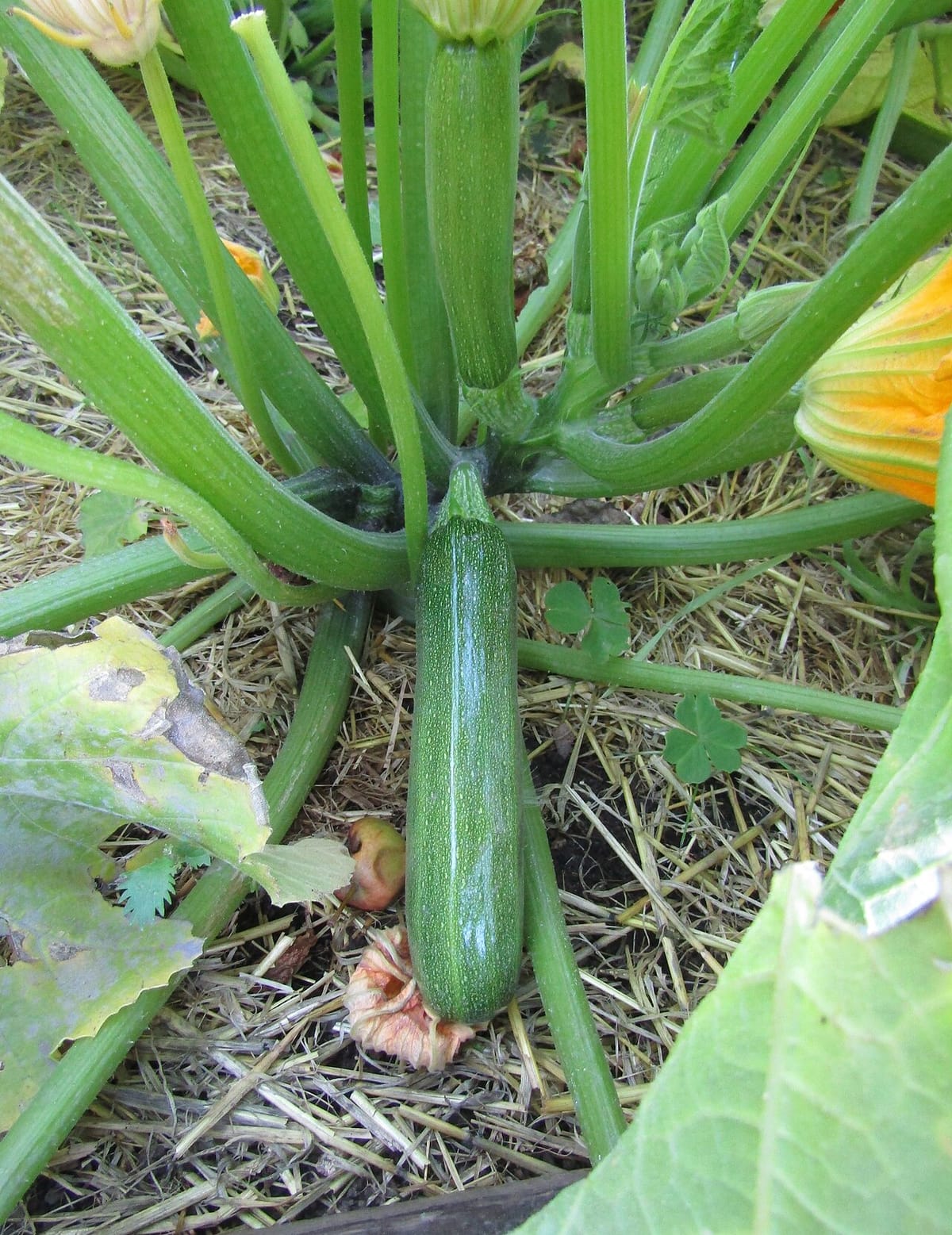
Zucchini is famous enough for its output that late-summer gardeners leave bags of the stuff on neighbors’ porches — and yet the two most common complaints about it are almost exact opposites: flowers with no fruit ever forming, or fruit that seems to appear overnight already the size of a baseball bat. Both trace back to the same underlying plant biology, once you understand how zucchini actually flowers and fruits. This guide covers that biology directly, plus the daily harvest habit that turns legendary productivity from an occasional surprise into a reliable, manageable supply.
Understanding zucchini’s flowers: why “no fruit” is often just early timing
Zucchini plants produce two distinct types of flowers on the same plant: male flowers, on a plain, straight stem, which appear first and in greater numbers early in the season, and female flowers, identifiable by a small swollen bulge just behind the petals — that bulge is the undeveloped fruit itself. Only female flowers can become zucchini, and only after a pollinator transfers pollen from a male flower to complete fertilization.
It’s completely normal for a young zucchini plant to produce several male flowers before any female flowers appear — this isn’t a problem to fix, just the plant’s natural sequence, and female flowers reliably follow within a week or two once the plant is established. The concern beginners often raise (“my plant is covered in flowers but never fruits”) is very frequently just this normal early-season male-flower phase, not an actual problem.
When fruit does start and then fails: the pollination gap
Once female flowers appear, a second common issue emerges: tiny zucchini that start developing, then yellow and shrivel before reaching harvestable size. This is almost always a pollination failure — the female flower opened and was never successfully pollinated (or was only partially pollinated), so the developing fruit can’t continue growing and the plant abandons it.
This is most common early in the season, before pollinator populations reach their summer peak, or in gardens with generally low bee activity. Hand-pollination solves it directly: using a small paintbrush or cotton swab, collect pollen from the center of an open male flower and transfer it to the center of an open female flower, ideally in the morning when flowers are freshly open. This takes seconds per flower and reliably improves fruit set in gardens experiencing this problem.
Attracting more pollinators to the garden generally — through the flowering companion plants covered in our companion planting guide — addresses the root cause for the rest of the season, reducing how often hand-pollination is needed as bee activity increases.
Alt: Hand-pollinating a zucchini flower with a small paintbrush
Caption: A few seconds of paintbrush work solves the most common early-season zucchini complaint.
Planting and spacing: give it real room
Zucchini seedlings look modest but grow into genuinely large plants — typically 2 to 3 feet across at maturity, sometimes more in rich, well-amended soil. Space plants accordingly; crowding forces competition for light and airflow, which in turn worsens the disease pressure covered below.
Plant after last frost, once soil has warmed — the same warm-season timing that applies to cucumbers and other cucurbits — in full sun, with compost worked into the planting area. Zucchini is a genuinely heavy feeder and producer; soil enriched with organic matter supports the vigorous growth the plant is capable of.
Zucchini can be direct-sown or started as transplants a couple of weeks ahead, though — like most cucurbits — it dislikes root disturbance, so if starting indoors, use individual pots large enough to avoid transplant shock rather than a shared tray, and harden off transplants over the usual 7-10 day period before moving them permanently outside.
The daily harvest habit that prevents baseball bats
Here’s the fact that explains zucchini’s famous late-summer surplus: in warm weather, a zucchini fruit can go from a few inches long to oversized within just two to three days. This is dramatically faster than most vegetables, and it’s the entire reason for zucchini’s reputation as an overwhelming producer — a garden checked every few days, rather than daily, reliably produces a crop of surprise baseball bats.
Check zucchini plants daily during peak summer production, harvesting fruit at 6 to 8 inches long for standard varieties (check the specific variety’s typical harvest size, since some heirloom types are picked considerably smaller or larger by tradition). An overgrown zucchini is still edible — best repurposed for baking, stuffing, or shredding into baked goods, since the texture toughens and seeds enlarge — but its presence is a signal to harvest more frequently, not a sign anything is wrong with the plant.
This daily habit does double duty: beyond preventing oversized fruit, frequent harvesting directly increases total production over the season. Like many vegetables, a zucchini plant slows fruit production once existing fruit matures and begins setting seed, since as far as the plant is concerned, its reproductive job is underway. Picking fruit while immature — before seed maturation — signals the plant to keep producing, the same mechanism covered for cucumbers and throughout our flower deadheading guide.
Common problems beyond flowering and harvest timing
Powdery mildew reliably appears on zucchini leaves by mid-to-late summer in most climates — the same fungal disease covered fully in our dedicated guide. Adequate spacing, base-watering rather than overhead watering, and resistant varieties (marked on seed packets) are the main prevention tools. Some late-season mildew on a plant that’s already produced for months is largely cosmetic and not worth aggressive treatment.
Squash vine borer causes sudden, otherwise-unexplained wilting of part or all of a zucchini vine — the larvae feed inside the stem, and checking the base for a small entry hole with sawdust-like frass distinguishes this from ordinary heat-stress wilting (which affects the whole plant evenly and typically recovers by evening). This pest is covered in more detail in our pest identification guide, including the slit-and-remove rescue technique for an affected vine caught early.
Squash bugs, flat grayish-brown insects often found in clusters with distinctive bronze egg masses on leaf undersides, are a common zucchini pest — checking leaf undersides weekly and scraping off egg clusters before they hatch is the most effective prevention.
Companion planting and crop rotation for zucchini
Zucchini benefits from the same companion planting logic that applies broadly across the vegetable garden — small-flowered plants like alyssum or dill nearby support the pollinators zucchini depends on, and nasturtiums can serve as a trap crop for aphids that occasionally cluster on tender new growth. Because zucchini shares disease susceptibility with other cucurbits, rotating its planting location year to year — rather than repeating the same bed annually — reduces the buildup of soil-borne pathogens that can otherwise accumulate around a favorite planting spot.
Zucchini also performs well in a large container if garden space is limited — a compact bush variety in a pot of at least 5 gallons produces a real harvest, following the same container-growing principles covered for other vining and sprawling vegetables, though even bush types benefit from the extra room a slightly larger pot provides.
A note on saving seed
If a favorite zucchini plant is an open-pollinated (non-hybrid) variety, seed can be saved from a fully mature, oversized fruit left on the vine specifically for that purpose — scoop out the seeds, rinse off the surrounding pulp, and dry them thoroughly before storing in a cool, dry place for next season. Hybrid varieties, marked as such on the seed packet, won’t reliably reproduce the parent plant’s traits from saved seed, so this shortcut works only with open-pollinated types.
The season, condensed
Expect male flowers first and don’t mistake that normal sequence for a failure; hand-pollinate with a paintbrush if fruit is shriveling before harvest size; give plants real spacing in enriched, full-sun soil; and above all, check plants daily once fruit starts forming — the single habit that separates a garden with a manageable, continuous zucchini supply from one that discovers a hidden baseball bat every few days. Handled this way, zucchini’s legendary productivity becomes a genuine asset rather than a running joke, and the neighbors can wait for you to actually offer some rather than finding an anonymous bag on their porch.
Frequently asked questions
Why does my zucchini plant have flowers but no fruit?
Zucchini produces separate male and female flowers on the same plant, and only female flowers (identifiable by a small bulge at the base) develop into fruit, and only after pollination transfers pollen from a male flower. Early in the season, plants often produce mostly male flowers first, which is normal — female flowers and successful fruiting typically follow within a week or two.
Why are my baby zucchini turning yellow and falling off?
This is almost always a pollination failure — the female flower wasn't successfully pollinated, so the tiny developing fruit shrivels and drops rather than continuing to grow. It's common early in the season before pollinator activity peaks, and can be addressed by hand-pollinating with a small paintbrush if bee activity seems low in your garden.
How do I hand-pollinate zucchini?
Using a small paintbrush or cotton swab, collect pollen from the center of an open male flower (identifiable by its plain, non-bulging stem) and transfer it directly to the center of an open female flower (identifiable by the small swollen fruit at its base), ideally in the morning when flowers are freshly open and pollen is viable.
Why did my zucchini turn into a giant baseball bat overnight?
Zucchini grows remarkably fast in warm weather — a fruit can go from a few inches to oversized in just two to three days, which is why checking plants daily during peak season matters. An overgrown zucchini is still edible (though best used for baking or stuffing rather than fresh eating, since the texture and seeds toughen) but its presence signals the plant needs more frequent harvesting to keep producing well.
How much space does a zucchini plant need?
Zucchini plants get considerably larger than their seedling size suggests — typically 2 to 3 feet across at maturity — so give each plant at least that much spacing, or more in fertile soil where growth tends to be even more vigorous. Crowded zucchini plants compete for light and airflow, worsening disease pressure.
How do I prevent powdery mildew on my zucchini leaves?
Adequate spacing for airflow, watering at the soil level rather than overhead, and choosing powdery-mildew-resistant varieties (marked on seed packets) are the main prevention strategies. Some late-season powdery mildew on zucchini leaves, once the plant has already produced well for months, is common and largely cosmetic rather than a serious threat to the harvest already achieved.
Why is my zucchini plant wilting even though the soil is moist?
Sudden wilting of an otherwise healthy-looking zucchini plant, especially if just one section of the vine is affected, can indicate squash vine borer — a pest whose larvae feed inside the stem. Check the base of the stem for a small entry hole and sawdust-like frass; this differs from ordinary heat-stress wilting, which typically affects the whole plant evenly and recovers by evening.