How to Grow Strawberries: Raised Beds, Gutters, and Years of Harvests
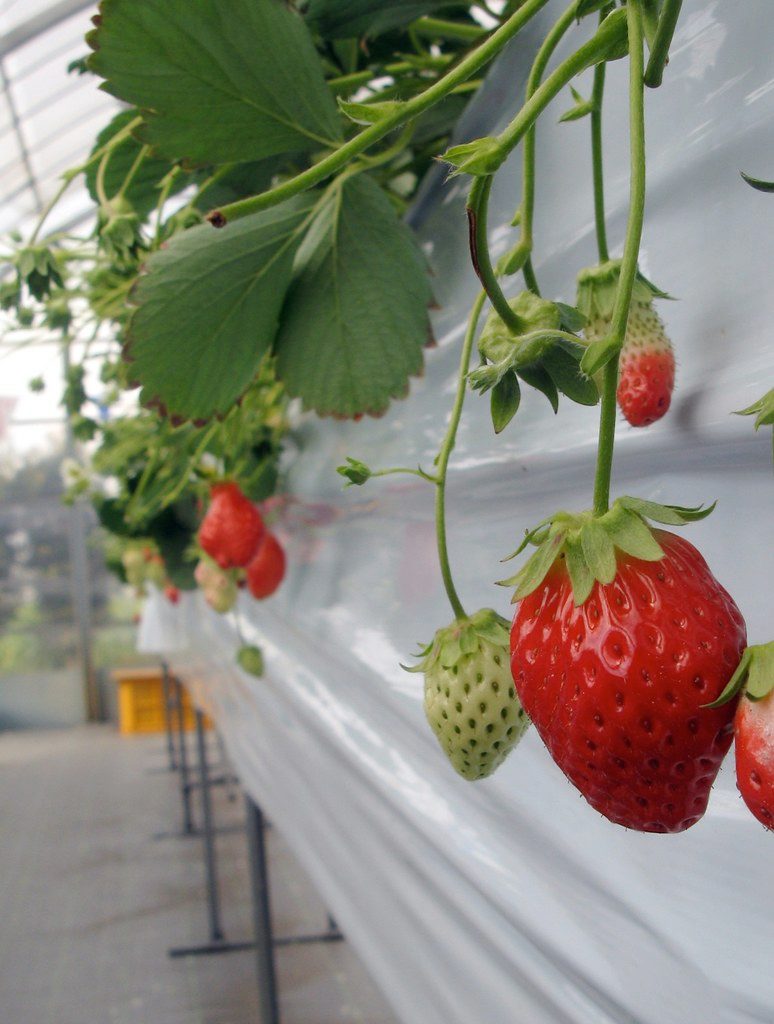
Strawberries occupy a rare spot in the home garden: an easy perennial crop that pays back for years from a single planting, tolerates raised beds, containers, and vertical systems equally well, and produces something a family eats faster than almost anything else grown at home. Few crops offer this combination of low effort and multi-year return, which is exactly why it’s one of the first fruits worth adding to a vegetable garden once the basics of annual crops feel manageable.
Choosing a type: June-bearing, everbearing, or day-neutral
This decision shapes the whole harvest experience more than any other choice:
June-bearing varieties produce one large, concentrated harvest in late spring or early summer — the highest total yield of the three types, and the natural choice if the goal is a big batch for freezing, jam, or preserving all at once.
Everbearing varieties produce two or three smaller flushes spread through the growing season, trading total yield for a more extended, if less dramatic, harvest window.
Day-neutral varieties produce continuously from late spring through fall as long as care stays consistent — the best fit for a household wanting a steady trickle of fresh berries for snacking rather than one big processing event, and generally the most compact and best-suited type for containers and vertical systems.
Building the bed: soil, pH, and spacing
Strawberries are genuine heavy feeders, wanting nutrient-rich, well-drained soil high in organic matter — a raised bed filled with roughly a 50/50 mix of quality topsoil and compost or well-aged manure suits them well, following the same raised bed fundamentals that apply to any raised planting.
Soil pH matters more for strawberries than for many garden crops — aim for a slightly acidic 5.8 to 6.2, confirmed with a soil test through your state’s cooperative extension service. Most unamended garden soils land close enough to this range without major intervention, but a test removes the guesswork, especially if plants seem to be struggling despite otherwise good care.
Space plants roughly one square foot apart, or about 12 inches, in a raised bed at least 10 to 12 inches deep to accommodate the root zone comfortably. Runner-producing varieties benefit from slightly more room to allow for the new plantlets they’ll send out over the season.
Alt: Diagram of strawberry spacing and soil depth in a raised bed
Caption: A foot of good soil and a foot of spacing — the whole bed-building formula.
Growing vertically: gutters, towers, and hanging systems
Strawberries are exceptionally well suited to vertical growing, which makes them a natural fit for space-constrained gardens that can’t dedicate a full bed to them. Rain gutters mounted along a sunny fence, with drainage holes added and filled with potting mix, are a widely used and inexpensive vertical system — plants tucked along the gutter’s length get full sun exposure with essentially zero ground footprint. Stacked planters, purpose-built strawberry towers, and hanging baskets all work on the same principle.
Day-neutral and everbearing varieties generally perform better in these vertical systems than sprawling June-bearing types, since their more compact, contained growth habit fits the smaller soil volume and tighter spacing vertical systems require. Whatever the system, full sun — six to eight hours daily — remains essential; strawberries grown in a shadier vertical spot for convenience will disappoint regardless of how clever the mounting system is.
Watering and mulching: consistency decides fruit quality
Strawberries want consistently moist soil, particularly during flowering and fruit development — the same consistency principle that governs tomato and cucumber fruit quality applies here too. Inconsistent watering is a common cause of small, dry, or misshapen berries, alongside incomplete pollination.
Mulching is especially valuable for strawberries beyond the usual water-retention and weed-suppression benefits covered in our mulching guide — straw mulch specifically (the source of the “straw” in strawberry, by one popular etymology) keeps developing fruit up off bare soil, reducing rot and slug damage on berries that would otherwise sit in direct soil contact as they ripen.
Planting time and the flower-removal trick for a stronger first year
Strawberries can be planted in early spring as bare-root crowns or potted starts, or in late summer/early fall in milder climates where they’ll establish over a longer window before winter. Whichever season, a lesser-known trick meaningfully improves the plant’s long-term productivity: removing the first flush of flowers in a newly planted strawberry’s first season, before any fruit sets. This feels counterintuitive — most gardeners want fruit as soon as possible — but a young plant that’s allowed to fruit immediately diverts energy into that first harvest rather than building the root system and crown structure that supports much larger harvests in years two through five. Nurseries and extension services commonly recommend pinching off first-year flowers specifically for June-bearing types planted in spring, trading a smaller first-season harvest for meaningfully stronger production afterward.
Understanding runners
Established strawberry plants, especially June-bearing varieties, send out runners — long horizontal stems that root at intervals and produce new plantlets, effectively cloning the parent plant. A few runners left to root are a free way to fill in a bed or start a new one; too many runners left unchecked crowd the bed and divert energy from fruit production on the established plants. Standard maintenance involves letting a modest number of runners root each season (useful for eventually replacing older, declining plants) while snipping off the excess to keep the bed from becoming an overcrowded mat.
Pollination and fruit quality
Strawberry flowers need pollinator visits to develop into full, well-formed berries — an incompletely pollinated flower typically produces a lopsided or undersized fruit rather than failing outright. Planting pollinator-friendly flowers nearby, per the mechanisms covered in our companion planting and native pollinator guides, supports the bee activity strawberries depend on for a full, well-shaped harvest.
Pests and problems
Slugs are a common strawberry pest, drawn to fruit resting near or on the soil — the straw mulch covered above is a real deterrent, and the broader slug control approach applies directly if pressure is heavy. Birds also readily take ripening berries; netting draped over the bed as fruit begins to color is the most reliable protection. Gray mold (botrytis), a fungal disease that shows up as a fuzzy gray coating on ripening or overripe berries, is more common in wet weather or overcrowded plantings — good airflow from proper spacing and prompt removal of any affected fruit are the main preventive steps, alongside the same base-watering-over-overhead-watering principle that reduces fungal pressure across most garden crops. Beyond these, strawberries are relatively low-maintenance compared to many garden crops, provided soil, water, and pollination are handled well.
Renovating and replacing an aging bed
A well-tended strawberry bed typically stays productive for three to five years before declining yields signal it’s time to refresh the planting — usually by rooting a batch of runners the season before, then removing the oldest, least productive parent plants and replacing them with the newly rooted ones. This rolling renewal approach means a single initial planting can, with modest ongoing management, supply berries indefinitely without ever needing to buy new plants after the first purchase.
The reward for a modest investment
A dozen strawberry plants, whether tucked into a raised bed corner or trained along a fence in gutters, cost little more than a single trip to the grocery store’s berry section — and unlike that grocery purchase, they keep paying out for years. Given decent soil, consistent water, and a sunny spot, strawberries are one of the most generous returns available in a home garden, and one of the few crops where the second, third, and fourth years cost less effort than the first. Few other plantings turn a single fall or spring afternoon into a standing harvest that outlasts most of the annual vegetables planted alongside it.
Frequently asked questions
How much space does a strawberry plant need?
About one square foot per plant in a raised bed, with roughly 12 inches between plants. Varieties that spread by runners can be planted a bit further apart to allow room for the new plantlets they'll produce, while non-runner-producing varieties can be spaced more tightly since each plant stays contained.
What's the difference between June-bearing, everbearing, and day-neutral strawberries?
June-bearing varieties produce one large, concentrated harvest in late spring or early summer and are the highest-yielding choice for preserving or freezing. Everbearing varieties produce two or three smaller flushes through the season. Day-neutral varieties produce continuously from late spring through fall, given consistent care — the best choice for a steady trickle of fresh berries rather than one big harvest.
Can strawberries be grown vertically or in containers?
Yes — strawberries are one of the best crops for vertical growing, commonly planted in gutters mounted along a fence or wall, stacked planters, or hanging baskets. Day-neutral and everbearing varieties, which stay more compact, generally suit vertical and container systems better than sprawling June-bearing types.
What soil pH do strawberries need?
Slightly acidic soil, roughly pH 5.8 to 6.2, is ideal. A soil test through your state's cooperative extension confirms your starting point, and sulfur or an acidifying amendment can lower pH if needed, though most garden soils fall close enough to this range without major adjustment.
What are strawberry runners, and should I let them grow?
Runners are long stems that produce new plantlets at their tips, which can root and become independent plants. Letting a few root fills in a bed over time for free, but letting all of them root eventually overcrowds the bed and reduces fruit production on the parent plants, so thinning excess runners is standard maintenance for June-bearing varieties especially.
How long do strawberry plants keep producing?
A well-maintained strawberry bed typically produces good harvests for three to five years before yields decline enough to warrant replacing older plants, often with rooted runners from the same bed. This makes strawberries one of the more generous perennial food crops for the space and cost involved.
Why are my strawberries small, dry, or misshapen?
Small or misshapen berries usually point to inconsistent watering or poor pollination — strawberry flowers need visits from bees or other pollinators to develop fully, and a partially pollinated flower produces a lopsided or undersized berry. Consistent moisture and encouraging pollinator activity nearby both improve fruit quality.